
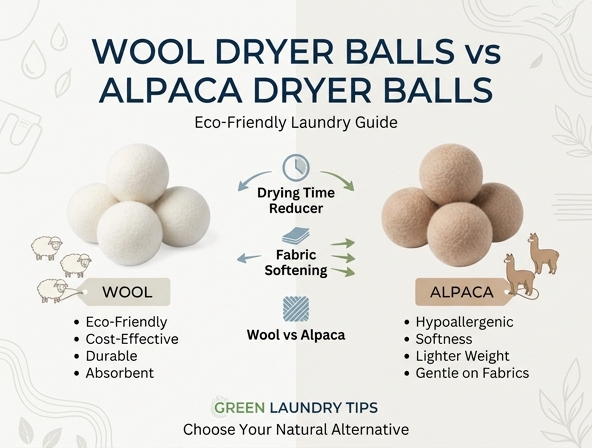
Tired of watching your utility bills climb while dealing with stubborn static cling and the chemical residues left behind by conventional dryer sheets? Achieving truly soft, toxin-free laundry can feel like an uphill battle for the eco-conscious household. As we increasingly phase out single-use plastics and synthetic additives from our daily routines, upgrading our laundry room essentials is the logical next step.
Embracing natural dryer balls grants you both significant energy savings and a hypoallergenic environment for your family. However, maximizing these benefits requires understanding fiber performance. While organic New Zealand wool is renowned for its density and durability, hypoallergenic Peruvian alpaca fiber offers a softer, virtually dander-free alternative for ultra-sensitive skin.
Below, we will analyze the key differences between wool and alpaca dryer balls-comparing their drying efficiency, lifespan, and overall sustainability-to help you choose the perfect fit for your green home.
Introduction: The Rise of Natural Dryer Balls
Every year, billions of single-use dryer sheets end up in landfills, contributing to a massive global waste problem. These disposable sheets are coated with synthetic fragrances and petroleum-derived chemicals that transfer onto your clothes and sensitive skin. Fortunately, there is a better way to achieve soft, static-free laundry without the ecological footprint. Wool and alpaca dryer balls have emerged as outstanding, eco-friendly, and reusable alternatives that naturally soften fabrics and reduce utility bills.
What Are Wool Dryer Balls?
Wool dryer balls are tightly felted spheres made from 100% natural sheep's wool. They are crafted by winding wool roving into dense balls and washing them at high temperatures to lock the fibers into a solid, durable shape. Here is how they work during a laundry cycle:
- They physically separate wet clothing items, preventing them from bunching together.
- They allow hot air to circulate more freely throughout the dryer drum.
- They absorb excess moisture, significantly reducing overall drying time.
What Are Alpaca Dryer Balls?
Alpaca dryer balls are premium, hand-crafted alternatives made from the luxurious fleece of alpacas. Alpaca fiber is uniquely hollow, making it incredibly lightweight, highly absorbent, and exceptionally soft to the touch compared to standard sheep's wool. Because alpaca hair lacks the rough scales found on sheep fibers, these balls offer a smoother exterior that gently tumbles with even your most delicate garments, minimizing fabric wear during the dry cycle.
Efficiency and Performance: Drying Time and Static Reduction
Both wool and alpaca dryer balls excel at lowering household energy consumption. By bouncing between layers of wet clothing, they maximize air circulation, which speeds up evaporation and can cut drying times by up to 25% or more. The science behind static reduction lies in the moisture-retention properties of these natural fibers; they maintain a microscopic level of humidity within the drum, preventing the build-up of electrical charges. However, alpaca fiber's hollow core provides a slight edge in moisture absorption, allowing it to draw wetness away from fabrics even faster than wool, leading to highly efficient drying cycles.
Hypoallergenic Benefits: Which is Better for Sensitive Skin?
Understanding Sheep's Wool and Lanolin
Sheep's wool contains lanolin, a natural wax secreted by the animal's sebaceous glands. While highly beneficial for protecting sheep, lanolin is a known allergen that can cause skin irritation, redness, and itching for individuals with eczema or severe skin sensitivities.
The Alpaca Advantage
In contrast, alpaca fiber is naturally lanolin-free. This makes alpaca dryer balls completely hypoallergenic out of the box. Families with newborns, allergic individuals, or those with sensitive skin will find alpaca fiber to be the safest choice to avoid skin flare-ups.
Durability and Longevity: Which Lasts Longer?
When investing in reusable laundry solutions, durability is a primary consideration. Both materials can last for up to 1,000 loads of laundry (roughly two to four years), but structural differences influence their breakdown over time:
- Sheep's wool has highly barbed fibers that felt together exceptionally tight, making wool dryer balls highly resistant to unraveling or shedding.
- Alpaca fiber is smoother and softer, which means it can slowly shed fine fibers or soften further over hundreds of cycles, sometimes reducing its physical integrity slightly faster than wool if not tightly felted during production.
Eco-Friendliness and Ethical Sourcing
Both materials are 100% biodegradable, meaning they will compost naturally at the end of their lifespan without leaving microplastics behind. However, alpacas have a lower overall environmental footprint due to their gentle grazing habits; they have soft pads on their feet instead of sharp hooves, which prevents soil erosion. Furthermore, ethical harvesting is highly common in alpaca farming, where animals are gently shorn annually to keep them cool during summer months, often on smaller-scale family farms where welfare is highly prioritized compared to large-scale commercial sheep farms.
Cost and Market Availability
Wool dryer balls are widely accessible and highly budget-friendly. Because sheep farming is a massive global industry, wool products can be found easily in local supermarkets, department stores, and online shops at low price points. On the other hand, alpaca dryer balls are often considered a premium luxury item. Alpacas are far less common than sheep, making their fiber rarer and more expensive to source. Consequently, alpaca dryer balls usually carry a higher price tag and are typically purchased through specialty eco-boutiques or directly from local farms.
Wool vs. Alpaca Dryer Balls Comparison Table
| Metric | Wool Dryer Balls | Alpaca Dryer Balls |
|---|---|---|
| Cost | Budget-friendly | Premium / Higher Cost |
| Lifespan | Extremely High (Up to 1,000+ loads) | Very High (Up to 1,000 loads) |
| Allergen Level | Low (May contain traces of lanolin) | Hypoallergenic (100% Lanolin-free) |
| Softness | Moderate | Exceptional |
Final Verdict: Wool or Alpaca for Your Laundry Room?
When to Choose Wool
If you are looking for an affordable, highly durable, and widely available entryway into eco-friendly laundry care, sheep's wool is the perfect choice. They perform exceptionally well for everyday garments and fit comfortably into any budget.
When to Choose Alpaca
If anyone in your household suffers from sensitive skin, eczema, or allergies, investing in alpaca dryer balls is highly recommended. Their lanolin-free fibers, unparalleled softness, and gentle care for delicate clothes make them well worth the slightly higher initial investment.
Leave a comment