
Creating an ergonomic home office is essential for long-term health, yet many professionals feel overwhelmed when selecting the core piece of their setup: the desktop surface. It is easy to get lost in endless spec sheets while trying to balance aesthetic appeal with daily functional durability.
Investing in the right material grants you a workspace that inspires daily productivity while effortlessly resisting coffee spills and heavy monitor mounts. For instance, the rich, natural grain of a solid oak top offers unmatched heirloom longevity, whereas bamboo's high tensile strength delivers a sleek, modern, and highly dent-resistant alternative.
However, making the right choice requires understanding that these materials behave differently under varying indoor humidity levels and daily wear. This guide compares solid wood and bamboo across key benchmarks-including durability, environmental impact, cost, and maintenance-to help you select the perfect foundation for your standing desk.
The Battle for Your Desktop: Solid Wood vs. Bamboo
Your standing desk is the foundation of your entire workday, affecting how you feel, how you focus, and how you perform. While much attention is paid to the lifting columns and motor speed, the tabletop itself is what you interact with every single second. Choosing between a premium solid wood desktop and a sleek bamboo desktop is a decision that impacts far more than just visual appeal. The right surface determines the ergonomics of your workspace, influences the tactile comfort of your arms, and dictates the overall longevity of your investment.
Understanding the Materials: Forest vs. Grass
To choose the best desktop, it helps to understand where these materials originate and how they are transformed into furniture. Solid wood is harvested from slow-growing hardwood trees like oak, walnut, maple, and cherry. These trees can take decades to reach maturity, resulting in dense, complex cell structures. In contrast, bamboo is not a tree at all-it is a fast-growing grass that can shoot up several feet in a single day and reaches full harvest maturity in just five to seven years. Once harvested, bamboo stalks are sliced into strips, boiled to remove starches, dried, and then compressed under immense heat and pressure with adhesives to create a solid, durable panel.
Durability and Daily Wear: Which Toughs It Out?
The Hardness Test
When it comes to resisting dings, scratches, and pressure marks from monitor arms, the physical hardness of the material is paramount. Solid hardwood desks, particularly oak and walnut, boast excellent natural density and structural integrity, though they can still be susceptible to sharp objects or heavy impacts. On the other side, bamboo in its natural state is incredibly resilient. When subjected to the carbonization process-which darkens the material-bamboo becomes slightly softer, but remains highly competitive with mid-range hardwoods.
Moisture and Scratch Resistance
Moisture tolerance is another crucial factor for any desk that plays host to daily coffee cups. Solid wood requires a high-quality protective sealant to prevent water rings and warping, as wood expands and contracts naturally with humidity. Bamboo, thanks to its dense manufacture and lamination, has excellent moisture resistance, but standing liquids can still damage the adhesive bonds over time if not wiped up promptly.
Aesthetic Appeal: Finding Your Home Office Vibe
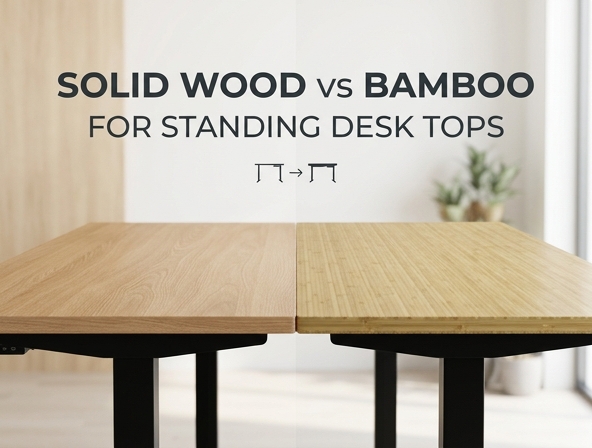
The visual impact of your desk sets the tone for your entire home office, shifting the atmosphere from warm and rustic to clean and modern. Solid wood options provide unmatched natural depth, displaying organic grain patterns, unique knots, and rich, deep color variations that mature beautifully over time. Bamboo offers a highly distinct, uniform appearance characterized by clean, linear grain patterns and small joints where the grass stalks were aligned, creating a sleek, minimalist aesthetic perfect for contemporary workspaces.
The Eco-Friendly Factor: Green Credentials Compared
For environmentally conscious remote workers, the choice of desktop material carries significant ecological weight. Bamboo is widely celebrated as an eco-friendly darling because it grows rapidly without the need for chemical fertilizers and self-regenerates from its own root system after harvesting. However, the manufacturing process requires energy-intensive compression and adhesives. Hardwoods, while taking much longer to grow, can still be highly sustainable if they are sourced from responsibly managed forests.
"Opting for FSC-certified solid hardwoods ensures that for every tree harvested, new growth is carefully nurtured, creating a carbon-sequestering workspace solution that can literally last for generations."
Weight and Stability: Supporting Your Sit-Stand Frame
A major factor often overlooked when designing an electric standing desk is the physical weight of the desktop. Solid wood is exceptionally heavy and dense, which adds substantial ballast to the lower half of your desk setup. This extra weight helps dampen vibrations and reduces the natural "wobble" that occurs when an electric frame is raised to its maximum standing height.
Motor Strain and Weight Capacity
However, this heavy weight means your electric motors have to work harder. A thick solid oak top can easily weigh twice as much as a bamboo top of the identical size. Using a heavy wood top reduces the remaining lifting capacity available for your monitors, computer towers, and desk accessories, whereas a lighter bamboo desktop preserves your motor's lifting power and longevity.
Maintenance and Care: Keeping Your Desk Pristine
To preserve the beauty and structural integrity of your desk surface, periodic maintenance is required. Both materials respond well to gentle, regular cleaning, but their long-term care needs differ significantly.
- Solid Wood Care: Requires regular dusting with a microfiber cloth and periodic oiling or waxing (every 12 to 18 months) to keep the wood from drying out or cracking.
- Bamboo Care: Does not require oiling but must be protected from prolonged exposure to standing liquids and direct, harsh sunlight which can degrade the laminated adhesive layers.
- General Cleaning: Avoid harsh chemical abrasives on both surfaces; a slightly damp cloth with mild dish soap is ideal.
Cost Analysis: Budgeting for Quality
Your budget is likely to be a major deciding factor in your purchase. Bamboo is generally the more affordable option, offering a highly durable and attractive premium wood-like feel at a fraction of the cost of true hardwoods. Solid wood desktops are a significant financial investment, reflecting the long growth cycle of the trees, craftsmanship, and shipping weights. However, the long-term value of solid wood is exceptional; it can be sanded down, refinished, and repaired indefinitely, whereas deep damage to laminated bamboo is often permanent.
Side-by-Side Comparison: At a Glance
| Feature | Solid Wood | Bamboo |
|---|---|---|
| Average Cost | High to Premium | Budget to Moderate |
| Durability | Excellent (can be refinished) | High (hard to refinish) |
| Weight | Very Heavy (aids stability) | Lightweight to Medium |
| Eco-Friendliness | Good (FSC-certified hardwoods) | Excellent (rapid self-regeneration) |
The Verdict: Choosing Your Perfect Work Surface
Selecting the ideal tabletop comes down to aligning your workspace priorities with your budget. If you seek a timeless, heirloom-quality piece with rich, unique grain patterns and are willing to invest in its long-term care and higher price point, solid wood is an unmatched option. If you prefer a highly sustainable, modern, minimalist aesthetic that is exceptionally resilient and budget-friendly, bamboo is the clear winner. Choosing your next desk surface is about finding the balance between form and function that fits your daily life. By matching your daily work habits, aesthetic desires, and lifting frame capacity to the correct material, you can build a highly supportive and inspiring environment for years to come.

Leave a comment