
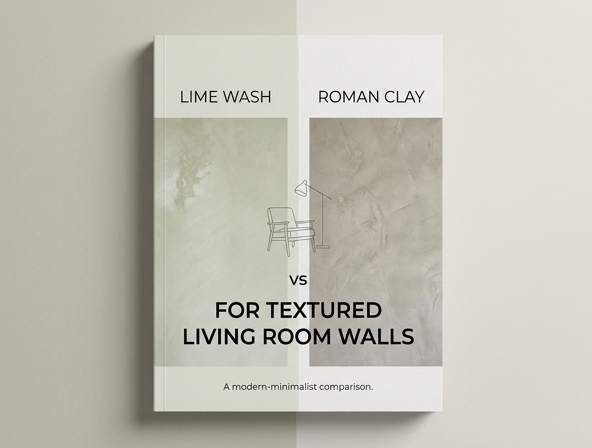
Achieving the perfect textured wall can be an overwhelming challenge, especially when trying to avoid a costly design mistake that looks more like unfinished drywall than a high-end sanctuary. Before selecting your product, it is essential to consider the rise of organic modernism, where tactile, light-catching surfaces are replacing flat paint as the foundation of contemporary interiors. Choosing the correct medium grants your living room a bespoke, plaster-like depth that instantly elevates the entire home's aesthetic value.
However, achieving this premium finish stipulates a clear understanding of your existing wall substrate and lighting conditions, as these materials behave differently under various applications. For example, the chalky, brushed movement of Portola's Limewash offers a rustic, Old-World patina, whereas the smooth, troweled application of Roman Clay delivers a modern, suede-like warmth. Below, we compare both finishes across application complexity, cost, and durability to help you select the ideal texture for your space.
Introduction: The Rise of Textured Living Room Walls
In recent years, modern interior design has shifted away from flat, sterile surfaces in favor of rich, tactile environments. Flat paint is no longer the default option for homeowners seeking to create a cozy and sophisticated sanctuary. Instead, the resurgence of textured finishes has taken center stage, bringing unparalleled depth, movement, and warmth to the heart of the home. Among the various techniques available today, Lime Wash and Roman Clay have emerged as the top two contenders. Both finishes offer a unique way to elevate living room walls, transforming plain drywall into a dynamic canvas of light and shadow.
Understanding Lime Wash: Old-World Charm
Lime Wash is one of the oldest decorative wall finishes, dating back to Roman times. It is made from crushed limestone that has been fired, slaked with water, and aged to form a lime putty. This natural mineral paint is colored with natural pigments, resulting in a unique, organic aesthetic that synthetics cannot mimic.
- Natural Limestone Origin: Formulated from pure, mineral-rich limestone without synthetic binders.
- High Breathability: Its highly porous nature allows moisture to escape, preventing mold and mildew growth.
- Suede-Like Visual Texture: It cures to a soft, chalky, and mottled finish that resembles natural suede or stone.
Understanding Roman Clay: Modern Elegance
Roman Clay is a contemporary plaster-based wall finish that has taken the design world by storm. Composed of natural clay, marble dust, and acrylic binders, it bridges the gap between traditional stucco and modern paint. It is applied to create a smooth plaster effect that oozes sophistication and architectural depth.
- Plaster-Based Formulation: Crafted with real clay and fine marble dust for an authentic mineral base.
- Marble-Like Depth: Provides subtle, organic movement and variation in tone across the wall.
- Modern Compatibility: Its refined, sleek finish makes it perfect for clean lines and contemporary decor.
Aesthetic Comparison: Cloud-Like vs. Plaster Finish
The Cloud-Like Texture of Lime Wash
Lime Wash offers a highly mineral, brush-stroked finish characterized by its cloudy appearance. Because the lime reacts chemically with the air, it naturally creates beautiful light-and-dark tonal variations. The resulting pattern looks like soft, rolling clouds, giving living room walls an ethereal, historic character.
The Sleek Movement of Roman Clay
In contrast, Roman Clay provides a more controlled and refined visual movement. Applied with a trowel, it features smooth, organic patterns with a delicate variation in sheen. Under different lighting conditions, the surface displays a soft, low-luster glow that highlights its architectural plaster depth without looking rustic.
Tactile Feel: Flat Matte vs. Smooth Plaster
While both finishes look exceptionally textured from a distance, they feel completely different when touched. Lime Wash dries to a very flat, matte surface that retains a dry, chalky feel. Touching a lime-washed wall feels like touching raw sandstone or historic plaster, which adds to its authentic, rustic appeal.
On the other hand, Roman Clay offers an ultra-smooth, velvety, and soft-to-the-touch surface. The application process compresses the clay and marble dust, resulting in a finish that feels polished and luxurious, akin to a finely sanded plaster wall or smooth honed marble.
Application Methods: Brush vs. Trowel
Applying Lime Wash
Lime Wash is highly approachable for DIY enthusiasts because it utilizes familiar painter tools. The process requires a specific block brush to build the characteristic cloudy depth.
- Apply a mineral primer to ensure the paint adheres correctly to standard drywall.
- Use a large block brush to apply the lime wash in overlapping cross-hatch patterns.
- Apply a second thin coat using the same technique to deepen the texture and color variations.
Applying Roman Clay
Roman Clay requires a completely different skillset and specialized tools. Instead of brushes, you must use a steel trowel or a plastic putty knife to scrape the clay onto the wall.
- Apply the first coat of clay using a trowel, keeping the layer incredibly thin and flat.
- Use short, random strokes in various directions to create organic movement.
- Apply a second coat to fill in low spots and create the final, smooth plaster texture.
- Lightly sand the dry surface with high-grit sandpaper to reveal the subtle marble-like variation.
For DIYers, Lime Wash is generally considered much easier and more forgiving, as brush strokes are intuitive, whereas troweling Roman Clay requires practice to master the hand pressure and angle.
Durability and Maintenance in High-Traffic Areas
Living rooms are active spaces where walls can easily get scuffed or dirtied. Understanding how both Lime Wash and Roman Clay handle daily wear and tear is crucial for choosing the right finish.
| Feature | Lime Wash | Roman Clay |
|---|---|---|
| Scuff Resistance | Prone to chalking and marks, but blends easily with the texture. | Moderately resistant; can burnish if rubbed hard. |
| Sealer Required | Optional mineral sealer for water-resistance. | Recommended protective sealer to prevent staining. |
| Cleaning Method | Cannot be scrubbed; wipe gently with a damp cloth. | Wipe with a mild soap solution and soft cloth. |
| Ease of Repair | Very easy to patch and brush over seamlessly. | Requires troweling and sanding, which can be tricky to blend. |
Cost and Budget Considerations
When budgeting for a living room transformation, both material and labor costs play a significant role. Lime Wash is generally the more budget-friendly option. The paint itself is highly concentrated (often diluted with water before application), and the brush-on method means DIYers can save significantly on labor costs. Professional labor for lime-washing a room is also relatively affordable because the application goes quickly.
In contrast, Roman Clay is a premium product with higher material and labor costs. Because it is a thick clay mixture, it covers less square footage per gallon than lime wash. Furthermore, the meticulous multi-coat troweling and sanding process makes professional application labor-intensive. However, the final look mimics expensive Italian plaster, offering incredible visual value for those seeking a high-end luxury aesthetic.
Design Compatibility: Which Best Suits Your Interior Style?
The Rustic Charm of Lime Wash
Lime Wash is inherently raw, earthy, and imperfect. This makes it the perfect match for design styles that celebrate natural textures and historic roots. It fits seamlessly into Mediterranean-style living rooms, rustic farmhouses, and spaces inspired by the Japanese philosophy of wabi-sabi, which finds beauty in imperfection.
The Refined Sophistication of Roman Clay
Roman Clay is sleek and elegant, making it highly compatible with cleaner, more contemporary interior aesthetics. It acts as an excellent backdrop for modern, minimalist, and transitional spaces. Its soft movement adds warmth to rooms filled with clean lines, polished stone, and sleek metal accents without clashing with the modern elements.
The Final Verdict: Which Textured Finish Wins?
Choosing between these two stunning finishes depends on your budget, application comfort, and design goals. You should choose Lime Wash if you want a budget-friendly option, love a dry, chalky, historic aesthetic, and want an easy, forgivable DIY project using a block brush.
Alternatively, you should choose Roman Clay if you prefer a sleek, smooth plaster feel, want to elevate a modern or minimalist living room with subtle depth, and do not mind investing more time or budget into achieving a highly refined, marble-like finish.
Leave a comment