
Renters often face a frustrating dilemma: how to make a sterile apartment feel like home without risking their security deposit. Traditional interior design rules rarely align with strict lease agreements that forbid permanent alterations, leaving design-conscious tenants stuck with uninspiring, plain white walls.
Fortunately, the evolution of temporary home decor offers a perfect bridge, granting renters the freedom to experiment with bold aesthetics without the fear of lease violations. However, successful application comes with a caveat: material performance depends heavily on your specific environment, as certain backings fail on textured orange-peel drywall while thriving on smooth, primed surfaces.
Whether you are considering a modern, self-adhesive vinyl or a classic non-woven paper paired with removable paste, choosing the right medium is essential. This guide compares peel-and-stick and traditional wallpaper across installation complexity, long-term durability, and damage-free removal to help you select the ideal option for your rental accent wall.
The Rental Decorating Dilemma: Peel-and-Stick vs. Traditional Wallpaper
Decorating a rental property is a delicate balancing act. On one hand, renters have a strong desire for personalization, wanting to transform sterile white walls into spaces that feel like home. On the other hand, strict landlord rules and the looming threat of a lost security deposit discourage any permanent changes. This tension has sparked a massive debate in the interior design community: peel-and-stick versus traditional wallpaper for rental accent walls. While temporary options promise risk-free customization, classic methods offer unmatched quality, leaving renters to weigh their aesthetic goals against lease limitations.
Understanding Peel-and-Stick (Self-Adhesive) Wallpaper
The Modern Temporary Solution
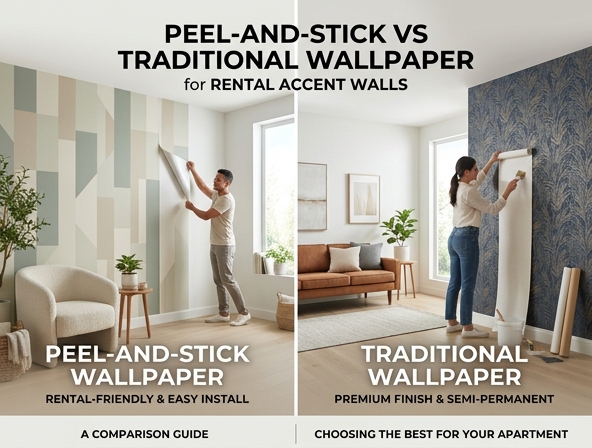
Peel-and-stick wallpaper, typically made of synthetic vinyl, features a pre-applied pressure-sensitive adhesive backing. Unlike classic wall coverings, it works exactly like a giant sticker. You simply peel off the protective backing paper and press the sheet directly onto a clean, flat surface. This ease of use has made it the darling of modern rental decor marketing, celebrated for its accessibility, quick application, and promise of clean removal when your lease ends.
Understanding Traditional (Paste-the-Wall/Paper) Wallpaper
The Classic Standard of Wall Decor
Traditional wallpaper consists of high-quality non-woven fibers or paper that requires a separate adhesive wet paste for application. Depending on the type, installers use either the paste-the-paper method, where adhesive is applied directly to the backing, or the modern paste-the-wall technique. This traditional method is highly regarded for its incredible longevity and high-end design appeal, offering a seamless and sophisticated finish that temporary vinyl struggles to replicate.
Ease of Installation: DIY-Friendly vs. Professional Precision
The installation process highlights a significant divide between these two design options. While peel-and-stick is marketed as a quick DIY project, aligning the sticky panels can be surprisingly difficult. Traditional wallpaper requires more preparation but offers a level of slide and adjustability during application that makes seamless patterns easier to achieve.
- Peel-and-stick has a steep learning curve because the sticky adhesive grabs the wall instantly, making alignment mistakes difficult to correct without stretching the vinyl.
- Traditional wallpaper wet paste allows the paper to glide smoothly across the wall, allowing for perfect pattern alignment before the adhesive dries.
- Peel-and-stick requires only a utility knife and a plastic smoother, whereas traditional wallpaper demands paste, rollers, a smoothing brush, and specialized cutting tools.
Damage Control: Which Option Truly Protects Your Security Deposit?
For renters, protecting the security deposit is the primary concern. Many believe the myth that peel-and-stick wallpaper is always 100% damage-free. In reality, cheap self-adhesive backings can bake onto drywall over time, tearing the paint and paper backing upon removal. Conversely, modern traditional wallpaper, especially non-woven varieties designed with strippable technology, can often be peeled off dry in full sheets without leaving a trace, debunking the myth that classic wallpaper is permanently fused to your walls.
Aesthetics and Texture: High-End Finishes vs. Matte Vinyl
The tactile and visual differences between these materials are stark. Traditional wallpapers offer deep embossing, breathable textures, and rich matte finishes that absorb light beautifully. Peel-and-stick alternatives, being vinyl-based, often feature a flatter, smoother surface that can sometimes reflect light in a way that betrays its temporary, plastic nature.
Traditional non-woven wallpaper brings a level of depth, luxury, and artistic texture that thin, synthetic self-adhesive vinyl simply cannot replicate on a rental wall.
Durability and Longevity in Rental Spaces
How these materials perform over time depends heavily on your rental environment. Vinyl peel-and-stick wallpaper is highly water-resistant, making it easy to wipe clean, but it struggles with extreme humidity. In bathrooms or near radiators, the self-adhesive backing can lose its grip, causing the corners to curl and peel. Traditional wallpaper, when paired with the right adhesive, remains firmly bonded for years, resisting drafty temperature shifts and resisting the fading effects of direct sunlight exposure.
Cost Analysis: Upfront Price vs. Long-Term Value
Understanding the financial commitment is crucial before starting your rental makeover. While peel-and-stick is often perceived as the cheaper option, its cost per square foot can be comparable to mid-range traditional options, especially when factoring in the potential need for professional installation or specialized tools.
| Wallpaper Type | Upfront Material Cost | Required Tools Cost | Professional Installation |
|---|---|---|---|
| Peel-and-Stick | Moderate to High | Low | Rarely Needed |
| Traditional | Low to Premium | Moderate | Recommended |
The Exit Strategy: Step-by-Step Removal Process Compared
When lease termination day arrives, your exit strategy matters just as much as your initial design choice. Removing wallpaper can either be a simple afternoon chore or a multi-day nightmare depending on what you installed and how it was applied.
- For peel-and-stick, start at a top corner and slowly pull the sheet downward at a forty-five-degree angle to avoid peeling the drywall paint.
- For strippable traditional wallpaper, gently pull the dry corner of the non-woven backing; the entire sheet should slide off in one clean movement.
- For standard traditional wallpaper, score the surface, apply a liquid wallpaper stripper or warm soapy water, and gently scrape away the softened paste with a putty knife.
The Verdict: Which Wallpaper Reigns Supreme for Rental Accent Walls?
Selecting the ideal wallpaper depends on your specific circumstances. If you are in a short-term lease and want a rapid, budget-friendly DIY project, peel-and-stick is a strong contender. However, for long-term renters who crave unmatched tactile luxury and absolute paint safety, investing in a high-quality strippable traditional wallpaper is the superior route. Evaluate your DIY confidence and review your lease agreement before making your choice. You can find beautiful options and inspiration on our curated rental design collections page.
Leave a comment