
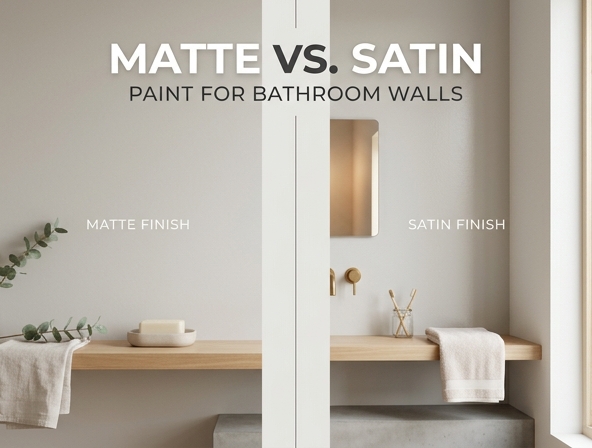
Keeping bathroom walls pristine is a constant battle. High humidity, water splashes, and soap scum quickly turn a serene, organized space into a high-maintenance headache. Before selecting a color palette, however, design-conscious homeowners must first understand how moisture interacts with different wall surfaces. Choosing the correct paint finish grants you a durable, easy-to-clean sanctuary that retains its fresh, spa-like appearance with minimal effort.
To manage expectations, it is important to stipulate that while no paint finish can substitute for proper bathroom ventilation, the right choice acts as your wall's primary defense. For instance, a satin finish offers a pearl-like sheen that actively repels moisture, whereas a matte finish provides a velvety, non-reflective surface that brilliantly hides drywall imperfections. In this guide, we will analyze the performance, aesthetics, and maintenance of both matte and satin paints to help you select the ideal finish for your bathroom.
Introduction: The Bathroom Paint Dilemma
Bathrooms present unique environmental challenges that test the limits of standard interior design. High humidity, steam from hot showers, and frequent splashes mean wall surfaces must withstand constant moisture exposure. Achieving a clean, organized look is essential, but choosing the right finish can be tricky. Homeowners often find themselves caught in a debate between matte and satin paint finishes. While seeking high moisture resistance to prevent mildew and peeling, one must also consider the aesthetic appeal of the space, ensuring it feels like a tranquil personal oasis rather than a utilitarian room.
Understanding Matte Paint: The Elegant, Low-Sheen Option
Matte paint is a non-reflective finish that absorbs light rather than bouncing it back. It is celebrated for its velvety texture and smooth, chalky depth, which creates a contemporary, sophisticated aesthetic. Traditionally, matte paints have been favored for low-traffic areas of the home, such as dining rooms or bedrooms, where walls are rarely touched or subjected to moisture. This luxurious, understated finish brings an element of high-end design to flat surfaces, softening the overall environment.
Demystifying Satin Paint: The Balanced, Pearl-Like Glow
Satin paint offers a balanced, pearl-like glow that sits comfortably between flat matte and high-gloss finishes. It reflects a moderate amount of light, giving walls a soft sheen that shifts beautifully under different light sources. Thanks to its tighter molecular structure, satin paint provides exceptional durability and easy maintenance, making it a highly versatile option for active, high-traffic spaces like family bathrooms, kitchens, and hallways where surfaces need routine cleaning.
Moisture and Humidity Resistance: The Ultimate Bathroom Test
The Vulnerability of Matte Finishes
Traditional matte paint has a porous structure that easily absorbs water vapor. When exposed to persistent steam and condensation in a bathroom, standard matte paint can trap moisture, leading to unsightly water stains, paint bubbling, and the growth of mold or mildew.
The Resilience of Satin Finishes
In contrast, satin paint cures to form a tight, water-resistant barrier. Its smoother, non-porous finish allows water droplets to bead up and run off the walls rather than soaking into the drywall. This protective layer is crucial for preventing humidity-driven damage in poorly ventilated spaces.
Washability and Scrub Resistance: Keeping Walls Spotless
Bathrooms require frequent cleaning due to soap scum, toothpaste splatters, and water marks. Satin paint features a harder, more resilient surface that allows you to easily wipe away residues with a damp cloth without risking damage to the paint film. Matte finishes, on the other hand, are highly susceptible to "burnishing"-a phenomenon where scrubbing a spot leaves a permanent shiny patch or wears down the paint layer entirely, altering the color uniformity.
Lighting and Space Perception: How Sheen Affects Room Size
The way light bounces around a bathroom significantly influences how large or small the room feels. Satin paint possesses light-reflecting properties that can help expand a compact bathroom visually. By bouncing both natural sunlight and artificial vanity light, satin finishes create dynamic light-reflection that makes small spaces feel brighter, airier, and more open.
Matte paint absorbs light, creating a flat visual boundary. While this can make a spacious bathroom feel incredibly cozy, intimate, and grounded, it might make a tiny, windowless powder room feel cramped because the lack of reflected illumination fails to push the walls outward visually.
Hiding Imperfections: Managing Wall Flaws and Dents
If your bathroom walls have plaster patches, texture inconsistencies, or minor dents, matte paint is your best ally. Because matte finishes do not reflect light, they mask surface flaws effortlessly, giving the illusion of a perfectly smooth, flawless wall. The light-absorbing properties create a uniform look that hides blemishes from every viewing angle.
Satin paint, with its pearl-like glow, does the opposite. The reflective surface highlights even minor dings, bad drywall seams, or uneven textures. When light hits a satin wall, any imperfection will cast a subtle shadow, making flaws more prominent and visible than they would be under a flatter finish.
Practical Application: Tips for Painting Bathroom Walls
Proper application is the secret to achieving a long-lasting, professional finish, regardless of the paint sheen you select. Follow these steps to prepare and paint your bathroom successfully:
- Clean the Walls: Scrub away soap scum, mold, and mildew using a mixture of warm water and a heavy-duty cleaner like TSP (trisodium phosphate), then let the walls dry completely.
- Patch and Sand: Fill any dents or holes with joint compound, let it dry, and sand it smooth. For satin finishes, sand meticulously to avoid visible bumps.
- Apply a Moisture-Resistant Primer: Use a high-quality, mold-inhibiting primer to seal the walls, ensuring excellent paint adhesion and long-term protection against humidity.
- Cut In and Roll: Paint the edges first using a high-quality synthetic brush, then use a low-nap roller for a uniform, streak-free coat.
- Apply Two Coats: Allow the first coat to dry fully according to the manufacturer's instructions before applying the second coat for optimal color depth and protection.
Matte vs. Satin: Head-to-Head Comparison
| Criteria | Matte Paint Finish | Satin Paint Finish |
|---|---|---|
| Durability | Low to Moderate | High |
| Shine Level | Very Low (Flat) | Medium (Soft Glow) |
| Ease of Cleaning | Moderate (Prone to burnishing) | Excellent (Scrub-resistant) |
| Moisture Resistance | Low (Unless specially formulated) | High (Naturally repels moisture) |
| Imperfection Hiding | Excellent | Poor (Highlights texture flaws) |
The Final Verdict: Choosing the Right Paint for Your Sanctuary
Selecting the ideal paint sheen comes down to evaluating your bathroom's physical characteristics and daily usage. If you have a large, well-ventilated master bathroom with older walls that show some wear, matte paint-specifically modern formulation matte paints designed for bathrooms-can provide an incredibly elegant, designer look while hiding flaws. Conversely, for high-use family bathrooms, small powder rooms, or spaces prone to heavy moisture and splashes, satin paint remains the safer, more durable choice due to its superior washability and protective barrier.
For a busy, high-humidity family bathroom, choose a high-quality satin paint to guarantee easy maintenance and long-term moisture resistance. For a well-ventilated master retreat or powder room where design aesthetics take center stage, opt for a moisture-resistant matte formulation to achieve a sophisticated, flawless finish.
Leave a comment