
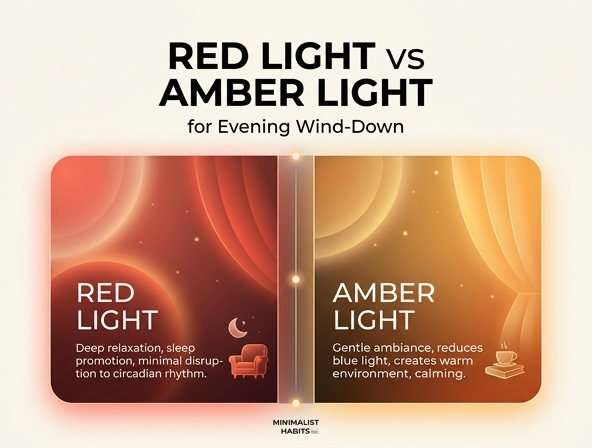
Struggling to wind down after a long day is an all-too-common frustration, with many of us tossing and turning despite feeling physically exhausted. Before reaching for sleep aids, however, it is crucial to understand how modern indoor environments-specifically the artificial blue light from our screens and overhead fixtures-disrupt the body's natural circadian biology.
By strategically replacing these harsh wavelengths with targeted evening lighting, you can effortlessly signal to your brain that it is time to rest, promoting deeper recovery. While optimizing your light exposure is not a universal cure-all for chronic insomnia, managing these spectrums serves as a powerful, evidence-based tool. For instance, utilizing a narrow-band 660nm deep red light offers distinct physiological advantages compared to a soothing 590nm amber glow.
In this guide, we will analyze the science behind both red and amber light, compare their direct effects on melatonin synthesis, and help you select the optimal hue to transform your evening routine.
Introduction: Why Your Evening Light Choice Matters
Modern evenings are flooded with artificial glow, a historical anomaly that plays havoc with our biological clocks. As the sun sets, our bodies rely on natural darkness to transition into a state of rest. Instead, bright screens and overhead fixtures send daytime signals to the brain, stalling our transition to sleep. Prioritizing proper sleep hygiene is no longer just an option; it is a necessity for long-term health. To combat this nocturnal disruption, a growing debate has emerged around the ideal evening illumination: is the deeply restorative wavelength of red light the superior choice, or does the warm, practical ambiance of amber light offer the perfect compromise for a restful night?
The Biology of Sleep: Circadian Rhythms and Blue Light
Our bodies operate on a 24-hour internal clock known as the circadian rhythm, which coordinates sleepiness and alertness based on environmental light cues. Specialized cells in our retinas, called intrinsically photosensitive retinal ganglion cells (ipRGCs), act as dedicated light detectors. These photoreceptors are highly sensitive to specific wavelengths, transmitting direct signals to the suprachiasmatic nucleus (SCN)-the master biological clock in the brain.
When these receptors detect high-energy short-wavelength light, specifically in the blue spectrum (around 450 to 480 nanometers), they signal the SCN that it is daytime. This immediately halts the synthesis of melatonin, the crucial hormone responsible for signaling sleep to the body. Consequently, exposure to standard household LEDs and digital screens late at night fools our biology into staying awake, delaying sleep onset and degrading sleep quality.
Red Light: The Ultimate Melatonin-Friendly Glow
The Biological Power of Deep Red Wavelengths
Red light occupies the long-wavelength end of the visible spectrum, typically ranging from 620 to 750 nanometers. Because our circadian photoreceptors are virtually blind to these long wavelengths, red light has a unique physiological property: it has zero impact on melatonin suppression. Utilizing this spectrum allows you to see in the dark without sending wakefulness signals to your brain, making it an incredibly powerful tool for deep sleep preparation.
- Preserves Melatonin Secretion: Allows natural hormone levels to rise organically as bedtime approaches.
- Minimizes Sleep Inertia: Waking up in the middle of the night under red light prevents the sudden alertness spike that makes falling back asleep difficult.
- Supports Cellular Recovery: Promotes a tranquil physiological state conducive to entering deep, restorative sleep phases.
Amber Light: The Cozy, Relaxing Alternative
The Balance of Function and Warmth in Amber Wavelengths
Amber light, sitting adjacent to red on the spectrum between 590 and 620 nanometers, mimics the soft, flickering glow of candlelight or a fading sunset. While it contains a minuscule amount of yellow-green spectrum, it filters out the vast majority of disruptive blue wavelengths. This makes amber a highly functional, visually comforting, and aesthetically pleasing alternative for general evening relaxation.
- Exceptional Visual Clarity: Offers superior contrast and brightness compared to red, making it much easier to read or navigate rooms.
- Warm, Cozy Ambiance: Creates a welcoming, candle-like atmosphere that naturally signals the mind to wind down.
- Significant Blue Light Reduction: Filters out the most damaging sleep-disrupting wavelengths while maintaining functional visibility.
Head-to-Head: Red vs. Amber on Melatonin Suppression
When evaluating these two options strictly through the lens of hormone preservation, red light is the undisputed biological champion. Because it sits entirely outside the sensitivity curve of circadian photoreceptors, it causes virtually no melatonin suppression. Amber light, while incredibly gentle, does have a minor impact if used at high intensities due to its proximity to the yellow-green spectrum. However, for everyday residential use, amber remains highly effective at preventing the sharp hormonal drop caused by standard white or blue light. The table below outlines how these two colors compare across key physiological markers.
| Feature | Red Light (620–750 nm) | Amber Light (590–620 nm) |
|---|---|---|
| Melatonin Suppression | 0% (None) | Minimal (Intensity-dependent) |
| Circadian Disruption | None | Very Low |
| Visual Acuity | Low | High |
| Ideal Use Case | In-bed reading & late-night wakeups | Evening relaxation & living areas |
Practical Usability: Visual Comfort and Functionality
While red light offers unmatched biological benefits, it can sometimes fall short in terms of practical usability. Human eyes are less sensitive to red wavelengths, meaning everything illuminated by a pure red bulb can appear highly saturated, monochromatic, and lacking in contrast. This makes fine-detail tasks like reading small print, navigating stairs, or finding items in a drawer somewhat challenging and can occasionally induce mild eye strain. Amber light, conversely, provides excellent contrast and visual comfort, allowing you to go about your evening routine without straining your eyes or sacrificing safety.
"Good lighting design balances physiological health with visual performance. While red light is perfect for the final hour before sleep, amber light offers the functional visibility required for safe movement and comfortable reading earlier in the evening."
Psychological Impact: Mood and Mental Relaxation
The color of our environment has a profound effect on our psychological state and nervous system. Red light creates a distinct, almost dramatic atmosphere that signals an immediate, absolute shift away from daytime activity. Because of its darkroom-like quality, it triggers a state of sensory containment, encouraging your mind to turn inward and disengage from external stressors. It acts as a powerful psychological boundary, dividing the active hours of the day from the quiet surrender of sleep.
Amber light offers a different, highly comforting psychological impact. Its golden hues evoke feelings of warmth, security, and tranquility, reminiscent of gathering around a hearth. Rather than feeling like a sudden shutdown, amber lighting facilitates a gentle, soothing transition. It lowers nervous system arousal, making it exceptionally effective at easing anxiety and melting away the cognitive tension accumulated throughout a busy workday.
Designing Your Red Light Sanctuary
Step-by-Step Bedroom Optimization
To fully capitalize on the biological benefits of red light, you should turn your bedroom into a dedicated, sleep-promoting sanctuary. This space should transition to pure red light in the final 30 to 60 minutes before you close your eyes, signaling to your brain that sleep is imminent.
- Select the Right Bulbs: Install dedicated red LED bulbs (specifically targeting the 630-660 nm range) in your bedside reading lamps.
- Utilize Smart Lighting: Program color-changing smart bulbs to automatically transition to a deep, low-intensity red spectrum starting one hour before your target sleep time.
- Set Up Path Lighting: Place low-wattage, motion-activated red nightlights in hallways or the bathroom to navigate safely during midnight awakenings without disrupting your melatonin.
Creating an Amber-Lit Evening Haven
How to Implement Amber Lighting in Living Spaces
Your living room and bathroom should serve as a bridge between active daylight and the darkness of night. Introducing amber light to these high-traffic areas creates a soothing, low-blue environment perfect for family interaction, winding down, or taking a warm evening bath.
- Swap Overhead Lights for Warm Fixtures: Replace bright, cool-white overhead bulbs with warm, low-color-temperature amber LED Edison bulbs (around 2200K) to eliminate harsh downward glare.
- Incorporate Natural Accents: Place genuine Himalayan salt lamps on side tables and bathroom counters to cast a soft, naturally filtered amber glow.
- Install Warm-to-Dim Switches: Use dimmable fixtures that shift to a deeper amber hue as you lower the brightness level throughout the evening.
The Verdict: Red, Amber, or a Strategic Combination?
Choosing between red and amber light does not have to be a binary decision. Instead, the most effective approach utilizes both strategically throughout the evening. By aligning your lighting choices with your physical and visual needs, you can construct a highly effective transition to restfulness. Use amber light early in the evening to maintain functionality and a warm, stress-free mood, then transition to red light right before sleep to maximize melatonin levels.
Your optimal nightly routine begins three hours before bed by turning off overhead white lights and illuminating your living spaces with soothing amber lighting. In the final hour before sleep, migrate to the bedroom and switch exclusively to deep red lighting for reading and winding down. This dual-layered approach offers the ultimate harmony of visual comfort and flawless biological alignment, ensuring you wake up fully restored every single morning.
Leave a comment