
Waking up with a stiff lower back and aching joints is an all-too-familiar struggle for those seeking relief from conventional, overly soft mattresses. As wellness enthusiasts pivot toward Japanese minimalist sleep systems to address this discomfort, understanding the biomechanical shift from plush springs to firm, floor-based alternatives is crucial.
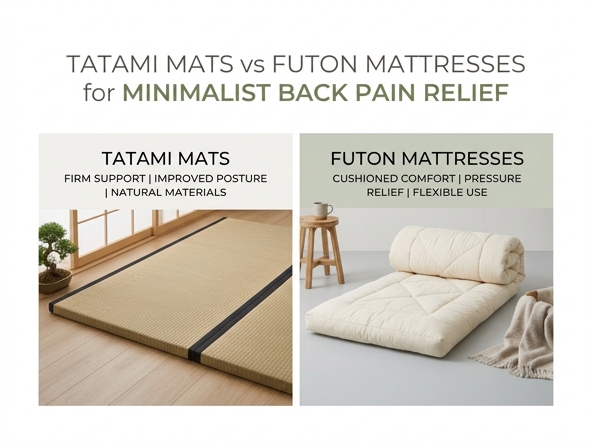
Transitioning to these traditional surfaces offers targeted orthopedic alignment that decompresses the spine, unlocking truly restorative sleep. However, it is important to note that switching requires an initial adjustment period as your musculoskeletal system adapts to firm support. While a dense, woven rush-grass tatami mat provides a rigid, breathable foundation, a layered cotton shikibuton (Japanese futon) offers customizable cushioning. In this guide, we will compare the structural differences, spinal support levels, and practical considerations of tatami mats and futons to help you choose the ultimate setup for your back health.
Introduction: The Minimalist Sleep Revolution for Back Pain
In an era dominated by thick memory foam and complex sleep technology, an unexpected trend is reclaiming the bedroom. Modern sleepers are looking backward in time, adopting ancient Japanese sleep customs to address chronic musculoskeletal issues. The minimalist sleep revolution is here, placing Tatami mats and Japanese futons at the center of the wellness conversation. As thousands of back pain sufferers trade their towering mattresses for floor-based alternatives, they discover that simpler designs can yield profound physiological benefits.
At the core of this transition lies a fundamental debate: is deep contouring support better than uncompromising firmness? For decades, consumers were told that plush cushioning was the key to comfort. However, the rise of minimalist bedding challenges this premise, suggesting that deep spinal recovery requires a firmer foundation. By stripping away the layers of synthetic foam, these traditional systems seek to balance the body's natural alignment without sacrificing restorative comfort.
The Science of Sleep: How Bedding Affects Spinal Alignment
Spinal health during sleep relies entirely on maintaining a neutral posture. The human spine features natural curves that must be supported continuously throughout the night. When a sleep surface fails to sustain these arches, muscles must work overtime to protect the spinal cord, leading to the familiar sensation of morning stiffness and chronic back pain.
Traditional soft Western mattresses often exacerbate this problem by creating a hammock effect. Because body weight is not distributed evenly, the heaviest parts of the frame-specifically the pelvis and hips-sink deeply into the plush cushioning. This sinking action causes the spine to sag out of its natural alignment, placing immense pressure on the surrounding ligaments and muscles.
Understanding the difference in sleep surface mechanics reveals why support matters:
- Sinking vs. Floating: Soft beds force the body to sink, while firm surfaces encourage the skeleton to float in alignment.
- Muscle Relaxation: A properly aligned spine allows deep core muscles to relax completely, facilitating cell repair.
- Intervertebral Decompression: Firm support helps keep the spaces between spinal discs open, reducing nerve pressure.
Unveiling the Tatami Mat: Origins, Material, and Firmness
The Tatami mat is a cornerstone of traditional Japanese architecture and domestic life, tracing its roots back over a thousand years. Originally a luxury item reserved for nobility, these mats evolved into the standard flooring for Japanese homes. Far from being a simple rug, a genuine Tatami is a structurally dense block designed to serve as both floor covering and a supportive sleeping foundation.
The construction of a traditional Tatami is entirely natural and meticulously detailed. The inner core consists of heavily compressed rice straw, providing weight and a rigid structural base. This core is wrapped in a tightly woven cover made from igusa, a natural rush grass, and finished with decorative fabric borders. This unique combination of organic materials results in a sleep surface that is incredibly firm yet uniquely yielding to the human frame.
The subtle elasticity of woven rush grass combined with a compressed straw core ensures that while the mat does not sag under body weight, it offers a microscopic degree of springiness that cradles the bones rather than bruising them.
Understanding the Japanese Futon: A Flexible Sleep System
To understand the Japanese sleep system, one must separate the traditional shikibuton, or floor futon, from its heavy, metal-framed Western namesake. A true Japanese futon is a thin, rollable mattress filled with natural fibers, designed to be laid directly on the floor or over a Tatami mat. It represents a philosophy of flexibility, where the bed is set up for sleep and packed away during the day to maximize living space.
Traditional shikibutons are typically filled with layers of pure cotton, wool, or sometimes hemp. Unlike synthetic memory foam, which traps heat and contours to the point of collapse, these natural fibers compress gradually under weight. This thin layer of cushioning provides just enough surface softness to protect the skin and joints, while relying on the solid floor beneath to supply the primary structural support.
The Orthopaedic Benefits of Sleeping on a Tatami Mat
Sleeping directly on a Tatami mat offers distinct orthopaedic advantages for individuals struggling with chronic back pain. The primary benefit of this firm surface is its ability to prevent pelvic sinking. Because the pelvis is the heaviest part of the human anatomy, it easily compresses soft mattresses, pulling the lumbar spine into an unnatural downward curve. A Tatami mat offers an uncompromising, flat plane that holds the hips level with the chest and shoulders.
By distributing body weight evenly across its wide surface area, the Tatami mat eliminates the concentration of pressure in any single zone. This even weight distribution promotes active spinal decompression, allowing the muscles surrounding the spine to release tension. Back sleepers find that this flat surface holds their body in an ideal neutral posture, mimicking the natural alignment of standing upright.
How a Floor Futon Alleviates Pressure Points
While firmness is crucial for maintaining spinal alignment, an overly rigid surface can create intense pressure points on the body's bony protrusions. This is where the Japanese floor futon excels. By adding a thin, dense layer of cotton or wool over a firm foundation, the shikibuton distributes body weight more gently without sacrificing spinal integrity.
The compressed fibers of a shikibuton respond dynamically to the body's natural contours. This specialized response helps prevent joint pain while protecting the spine through the following mechanisms:
- The natural cotton fibers compress slightly under the shoulders and hips, relieving pressure on these prominent joints.
- The shallow depth of the cushioning prevents the body from sinking deeply enough to disrupt spinal alignment.
- The dense packing of the natural filling material maintains a consistent support profile across the entire length of the body.
The Ultimate Synergy: Pairing Tatami with a Shikibuton
While either component can be used individually, pairing a Tatami mat with a shikibuton represents the optimal configuration for back health. This traditional combination was not designed by accident; it evolved over centuries to create a balanced sleep environment. The Tatami mat acts as a breathable, semi-flexible box spring, while the futon provides the necessary surface cushioning.
The magic of this synergy lies in how the materials interact. The woven rush grass of the Tatami is highly porous, offering exceptional moisture absorption and air circulation. When laid over the Tatami, the cotton shikibuton can breathe from underneath, preventing the buildup of sweat and heat. Together, they create a sleep system that yields slightly under pressure points while maintaining a firm, flat, and supportive base that actively works to prevent spinal misalignment.
Head-to-Head: Tatami Mats vs. Futons for Back Pain Relief
| Feature | Tatami Mat alone | Japanese Shikibuton alone | Combined System |
|---|---|---|---|
| Firmness Level | Extremely Firm (Rigid) | Firm with slight cushion | Balanced Firmness |
| Pressure Relief | Minimal | Moderate | Optimal |
| Best Sleep Style | Strict Back Sleepers | Back and Stomach Sleepers | Back, Stomach, and Side Sleepers |
| Ease of Transition | Difficult for beginners | Moderate transition curve | Easiest transition |
Pros and Cons: Choosing Your Minimalist Bedding for Spinal Health
To determine the best path forward for your spinal health, it is helpful to weigh the advantages and drawbacks of both the Tatami mat and the Japanese futon sleep systems.
The Tatami Mat System
- Pros: Unmatched firmness keeps the lumbar spine completely flat; excellent for lower back pain relief; highly breathable; natural aroma promotes relaxation.
- Cons: Extremely rigid for side sleepers; requires regular airing out to prevent mold; heavy and difficult to store away daily.
The Japanese Shikibuton
- Pros: Gentle cushioning for shoulders and hips; relieves upper back tension; highly portable and easy to fold; fits easily into modern closets.
- Cons: Requires frequent sunning and beating to maintain loft; can compress and feel too hard if not maintained; lacks structural support if used on a soft surface.
Final Verdict: Which Minimalist Bed Should You Choose?
Selecting the right minimalist bedding setup depends heavily on your unique body shape, preferred sleep position, and the nature of your back pain. For those suffering from acute lower back pain who sleep exclusively on their backs, starting with a Tatami mat paired with a thin shikibuton provides the most stable spinal alignment. Side sleepers or those with upper back and shoulder pain will benefit from a thicker, multi-layered wool futon to accommodate their joints while maintaining floor-level support.
If you are new to floor sleeping, a gradual transition is highly recommended to allow your muscles and ligaments time to adjust to the firm alignment. The combined Tatami and shikibuton system offers the safest and most therapeutic starting point, delivering both the structural integrity your spine needs and the subtle cushioning your body craves for a restorative, pain-free sleep.

Leave a comment