
Staring at outdated kitchen cabinets can feel deeply overwhelming, especially when the fear of a peeling, amateur paint job stalls your DIY ambitions before you even buy a brush. While kitchen remodeling yields some of the highest returns on home equity, complete cabinetry replacement remains prohibitively expensive for most homeowners.
Fortunately, refinishing your existing layouts grants you a designer-level aesthetic at a fraction of the cost, saving thousands of dollars. However, achieving a durable finish requires a critical stipulation: you must match the paint chemistry to your specific cabinetry material. For example, a heavy-grained oak door demands a different grain-filling approach than flat MDF, and chalk paint's thick, ultra-matte adhesion behaves far differently than milk paint's historic, self-leveling soak on raw pine.
In this ultimate guide, we will contrast prep times, application methods, and long-term durability to ensure your cabinet refinishing project delivers a professional, lasting finish.
Introduction: The Ultimate Cabinet Paint Showdown
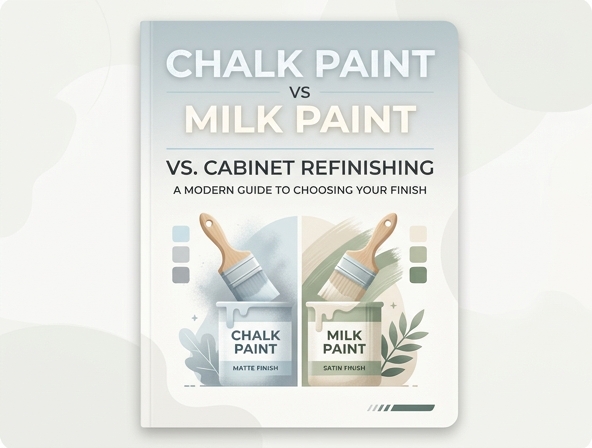
Giving your kitchen cabinets a fresh coat of paint is one of the most transformative home improvement projects you can undertake. However, stepping into the world of specialty finishes often leads to a classic debate: Chalk Paint vs. Milk Paint. Both of these popular mediums offer distinct paths to a beautiful kitchen, but they behave very differently in practice.
Choosing the right paint is not just about picking a color; it directly impacts the durability of your high-use kitchen surfaces, the aesthetic style of your home, and the amount of physical effort required to complete the project. Understanding the fundamental differences between these two finishes will save you time, money, and frustration.
Understanding Chalk Paint: Characteristics and Benefits
Chalk Paint is a specialized, decorative paint known for its ease of use and unique texture. Developed as a user-friendly option for furniture and cabinetry, it has become a staple in the DIY community due to its excellent coverage and forgiving nature.
- Mineral-Based Composition: It contains calcium carbonate, talc, and other minerals that give it its heavy body and rich pigment concentration.
- Velvety Matte Finish: It dries quickly to a signature, ultra-matte, chalky texture that hides imperfections beautifully.
- Low-Prep Nature: One of the biggest draws for DIYers is that it requires very little sanding or priming before application on most surfaces.
Because of these traits, Chalk Paint clings effortlessly to wood, metal, and laminate, making it an incredibly versatile choice for busy homeowners looking for a fast transformation.
Understanding Milk Paint: Characteristics and Benefits
Milk Paint is an ancient, incredibly durable paint formula that has been used for centuries to protect and beautify wooden furniture and structures. Unlike modern synthetic paints, it offers an organic aesthetic that synthetic alternatives simply cannot match.
- Organic Ingredients: It is made from natural ingredients including milk protein (casein), lime, and natural earth pigments, making it completely non-toxic and eco-friendly.
- Powder Format: It is sold in a dry powder form that you mix with water prior to application, allowing you to control the thickness and opacity of the paint.
- Authentic Historical Texture: It penetrates wood fibers deeply, creating an authentic, rustic look that ages beautifully over time without peeling.
This traditional formula is highly favored for historical restorations and rustic cabinetry where showcasing the natural beauty and variation of wood is key.
Chalk Paint vs. Milk Paint: Side-by-Side Comparison
| Feature | Chalk Paint | Milk Paint |
|---|---|---|
| Prep Work Required | Minimal; rarely requires sanding or priming | Moderate to High; requires clean surfaces and often a bonding agent |
| Texture & Finish | Smooth, solid, velvety matte | Variable, historical, chippy, or deeply matte |
| Durability (Unsealed) | Low; easily marks and absorbs moisture | High; cures hard and resists chipping naturally on porous wood |
| Shelf Life | Years (pre-mixed liquid form) | Indefinite as powder; hours to days once mixed with water |
| Eco-Friendliness | Low VOC, but contains some synthetic binders | Zero VOC, 100% natural, biodegradable ingredients |
Prep Work Demystified: What Kitchen Cabinets Require
The Truth About No-Sanding Claims
Many DIY enthusiasts are drawn to Chalk Paint because of the famous no-prep marketing. While it is true that Chalk Paint has superior adhesion and can cling to glossy, pre-finished cabinets with minimal effort, omitting sanding completely can be risky in a kitchen environment. Grease, oils, and cooking residue must still be thoroughly cleaned off with a degreaser to ensure a lasting bond.
Preparing for Milk Paint Adhesion
Milk Paint requires a different approach. On bare, porous wood, it absorbs beautifully without any prep. However, most kitchen cabinets have a factory finish, polyurethane coat, or previous paint layer. Because Milk Paint is water-based and contains no synthetic binders, it will chip and flake off finished wood. To prevent this, you must mix a synthetic bonding agent directly into the first coat of Milk Paint, and lightly sand the cabinet surface to create grip.
Durability and Sealing: Protecting Your Cabinets
Securing Chalk Paint with Soft Wax
Chalk Paint is porous and vulnerable to water and grease stains in its raw state. To protect kitchen cabinets, you must apply a protective topcoat. The traditional choice is paste wax, which creates a rich, satin sheen. However, wax requires periodic reapplication and does not hold up well against harsh chemical cleaners. For heavy-duty kitchen environments, a matte water-based polyurethane is highly recommended instead of wax.
Sealing Milk Paint for High-Traffic Use
Once cured, Milk Paint is incredibly hard and water-resistant on its own, but kitchen use demands extra protection. To preserve its gorgeous, matte color and prevent food stains, it must be sealed. You can use finishing oils, such as hemp oil or tung oil, which sink into the paint and enhance the natural grain. For maximum protection against spills and frequent wiping, a water-based polyacrylic topcoat provides the ultimate barrier.
Aesthetic Showdown: Modern Distressed vs. Authentic Chippy
The Controlled Elegance of Chalk Paint
If you prefer a contemporary, clean look with a soft finish, Chalk Paint is the ideal option. It flows smoothly onto surfaces, providing solid, uniform coverage that hides the wood grain. When distressed with fine-grit sandpaper, it yields clean, predictable wear patterns along the edges of your cabinet doors, making it perfect for modern farmhouse, cottage, or coastal styles.
The Unpredictable Charm of Milk Paint
Milk Paint is prized for its historic, organic personality. When applied to previously finished surfaces without a bonding agent, it resists adhesion in random areas, causing the paint to flake and crackle. This creates an authentic chippy vintage texture that cannot be replicated by synthetic paints. Because of this unpredictability, every cabinet door becomes a unique piece of weathered art, ideal for rustic designs.
Practical Factors: Shelf Life, Mixing, and Cost
Understanding Shelf Life and Preparation
The physical formats of these paints dictate how they are stored and used. Choosing between a ready-to-use liquid and a dry powder affects both your workflow and long-term project planning.
- Chalk Paint comes premixed in liquid form, meaning you can open the can, stir, and immediately begin painting. Its shelf life is exceptionally long, lasting for years if the container is sealed tightly.
- Milk Paint is purchased as a dry powder. You must mix it with warm water in equal parts, usually using a blender or a whisk. Once mixed, it must be used within a few days, or it will spoil due to the organic milk proteins.
Cost Comparison and Cleanup
The financial investment and maintenance of your workspace are also key considerations when remodeling your kitchen.
- Chalk Paint is generally more expensive per ounce up front, but it eliminates the need for purchasing separate primers in most scenarios. Cleanup requires only warm, soapy water.
- Milk Paint powder is highly cost-effective because you only mix what you need, leaving the dry powder to sit on your shelf indefinitely. It is also incredibly easy to clean up with water before it fully cures.
Step-by-Step Cabinet Application Guide
- Preparation: Remove all hardware, clean the cabinets thoroughly with a degreasing agent, and scuff-sand lightly to ensure maximum paint adhesion.
- Mixing (for Milk Paint): Whisk the Milk Paint powder with warm water at a 1:1 ratio, let it sit for 15 minutes, and add a bonding agent if painting over pre-finished wood. (Skip this step for pre-mixed Chalk Paint).
- Application: Apply the first thin coat using a high-quality synthetic brush or roller, allowing it to dry fully according to manufacturer instructions.
- Second Coat: Apply a second coat to achieve complete coverage and desired color depth.
- Distressing (Optional): Gently sand edges and details with fine-grit sandpaper to achieve an aged look.
- Sealing: Lock in the color and protect against kitchen moisture by applying a clear polyacrylic topcoat, finishing oil, or protective paste wax.
The Final Verdict: Which Paint Wins for Your Cabinets?
The right choice depends on your specific goals and comfort level. If you are looking for a fast, predictable project with minimal preparation and a clean, modern-matte look, Chalk Paint is the superior choice for your kitchen cabinets. It is highly forgiving for beginners and saves valuable time on prep work.
If you prefer an organic, environmentally friendly option and crave an authentic, distressed character that gets better with age, Milk Paint is the clear winner. While it requires a bit more hands-on preparation and mixing, it delivers unmatched historical charm and long-lasting durability that synthetic paints cannot duplicate.
Leave a comment