
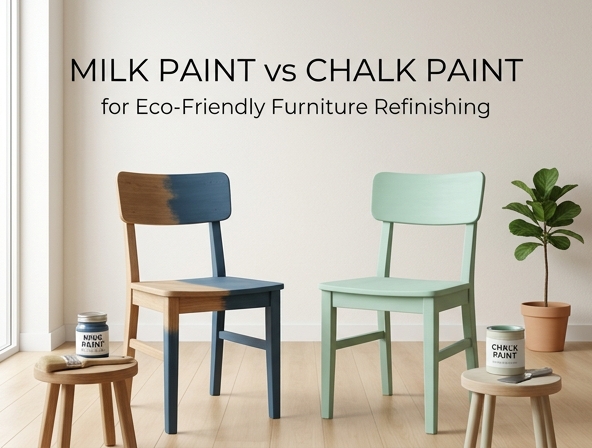
Finding a truly non-toxic, durable paint for your family's living spaces often feels like an uphill battle, especially when conventional finishes release harmful VOCs for years after drying. As the sustainable design movement grows, the market has been flooded with green alternatives, making it difficult to separate genuine eco-performance from clever marketing. Choosing the right bio-based finish grants you the power to revitalize your space safely, though it is important to stipulate that natural paints have unique curing times and surface prep requirements compared to standard acrylics.
For instance, while a chalk-finished oak dresser offers a velvety, matte charm, a milk-painted pine cabinet provides a historically authentic, breathable shield. To help you navigate these nuances, this guide compares milk paint and chalk paint across durability, environmental footprint, and ease of application, ensuring your next DIY project aligns perfectly with your ecological values.
Introduction: The Quest for the Perfect Green Finish
The rise of sustainable home decor has driven design enthusiasts to seek safer, non-toxic alternatives to traditional petroleum-based paints. As we strive to reduce our indoor carbon footprint, two major contenders have emerged at the forefront of the green design revolution. Both milk paint and chalk paint offer beautiful, low-impact ways to revive old furniture and walls. While both products promise an escape from the harsh chemicals of standard latex and oil paints, they differ significantly in their chemistry, application, and final look. Choosing the right option requires understanding how these eco-friendly giants stack up against one another.
What is Milk Paint? The Ancient, Biodegradable Classic
Milk paint is one of the oldest known paint formulas in human history, with origins tracing back to ancient Egyptian tombs and early American colonial homes. This remarkable coating is made from completely natural ingredients, primarily *casein* (milk protein), *lime* (calcium hydroxide), and natural earth pigments. Sold exclusively in a dry, powdered form, it contains absolutely no volatile organic compounds (VOCs) and is entirely biodegradable. By mixing this historic powder with water, users create a fresh, non-toxic paint that is so pure it can safely be composted back into the earth after use.
What is Chalk Paint? The Modern, User-Friendly Alternative
Developed in the late twentieth century, chalk paint represents a modern breakthrough in decorative coatings. Formulated with a water-based emulsion and a dense calcium carbonate base, this paint is sold as a pre-mixed, ready-to-use liquid. It completely revolutionized the DIY furniture painting community by eliminating the need for tedious prep work. Users can skip the exhausting tasks of sanding, priming, and stripping old finishes, as chalk paint clings effortlessly to almost any surface while emitting very low odors and minimal chemical compounds.
Composition and Preparation: Powder vs. Liquid
The physical state of these paints dictates how you begin your project and how long you can store your leftover supplies.
- Milk paint requires you to mix equal parts powder and water, stirring thoroughly to dissolve lumps and letting it sit for a short period to activate the ingredients.
- Chalk paint is ready to go straight from the retail shelf, requiring only a thorough stir of the pre-mixed liquid before dipping your brush.
- The dry powder form of milk paint boasts an indefinite shelf life when stored in an airtight container, whereas wet chalk paint can dry out or spoil over time once the can is opened.
Eco-Credentials: VOCs, Sourcing, and Biodegradability
When evaluating the true ecological impact of your paint choice, it is essential to look beyond marketing buzzwords and examine the raw ingredients and life cycle of the product.
Milk paint represents the gold standard of environmental purity, being completely biodegradable, compostable, and naturally zero-VOC. Chalk paint, while highly eco-friendly with low-VOC formulations and water-soluble bases, relies on synthetic binders that prevent it from being fully compostable.
Aesthetic Outcomes: Chippy Vintage vs. Smooth Matte
Your choice of paint will heavily influence the texture and character of the finished piece, leading to two distinct artistic outcomes. Milk paint naturally resists glossy, pre-existing finishes, creating a spontaneous, authentically aged, and chippy look that cannot be easily replicated. Chalk paint, by contrast, dries to a highly consistent, velvety, and ultra-matte surface that serves as a perfect canvas for distressing or smooth modern styling.

Durability and Sealing Requirements
Both paint styles are porous by nature and require a protective topcoat to resist moisture, oils, and general wear over time. The choice of sealant depends on the final placement of the furniture.
| Paint Type | Natural Durability | Recommended Sealants | Best Use Cases |
|---|---|---|---|
| Milk Paint | Extremely hard once fully cured; petrifies over time. | Hemp oil, tung oil, or wax | High-wear wood furniture, cabinets, and outdoor pieces |
| Chalk Paint | Soft and prone to scratching without protection. | Clear paste wax or water-based poly | Low-wear accent furniture, mirrors, and decorative items |
Application and Surface Compatibility
Understanding how these paints interact with different materials will save you valuable time during the application phase.
- Raw Wood: Milk paint absorbs deeply into porous wood fibers, acting more like a durable stain that will never peel or chip.
- Non-Porous Surfaces: On laminate, glass, or metal, milk paint requires an added synthetic bonding agent to adhere, otherwise it will flake off.
- No-Prep Adhesion: Chalk paint adheres beautifully to almost any clean surface, including metal, plastic, and varnished wood, without requiring primers or bonding agents.
Cost, Shelf Life, and Project Budgets
Planning a budget-friendly DIY project involves calculating both the initial purchase price and the potential for waste. Because milk paint is sold as a light powder, shipping costs are lower, and you only mix the exact amount you need for a specific job. The remaining *dry powder* can sit on your shelf for years without degrading. Chalk paint carries a higher upfront cost per quart and, because it is sold wet, must be used before it dries out or spoils from bacterial exposure. For long-term crafters, the powdered option offers superior economic value.
The Verdict: Which Eco-Friendly Paint Wins?
The ideal selection rests on the specific goals of your home improvement project. If your priority is absolute environmental purity, historical authenticity, and a unique weathered look, milk paint stands out as the premier organic choice. If you prioritize convenience, rapid application across varied surfaces, and a flawless modern matte texture, chalk paint serves as the superior user-friendly alternative. Your final decision will match your personal workflow and the unique character you wish to bring to your living space.
Leave a comment