
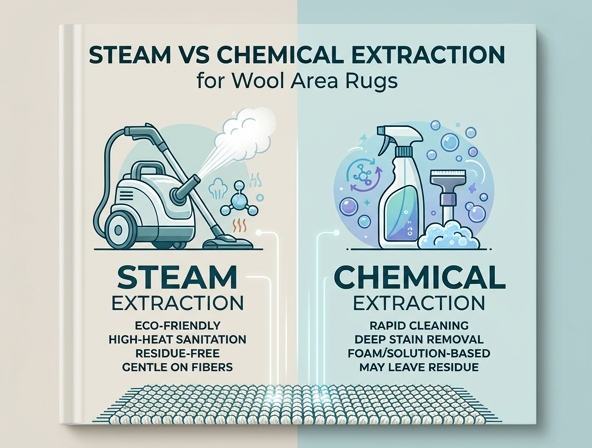
Owning a premium wool area rug adds warmth and elegance to a home, yet maintaining its pristine condition often feels like navigating a minefield. Many homeowners struggle with the paralyzing fear of ruining a costly investment during routine cleaning. To address this, we must first understand the delicate anatomy of wool-a natural protein fiber that reacts uniquely to moisture and temperature.
Selecting the correct care method grants you the peace of mind that your rug's vibrant colors and plush texture will endure for decades. However, safe maintenance requires strict adherence to fiber science; improper thermal exposure can cause irreversible fiber shrinkage, while aggressive chemical pH levels strip the wool's natural lanolin, leaving it brittle. In this guide, we will contrast steam extraction with chemical cleaning, outlining the mechanics, risks, and best practices for each approach so you can confidently protect your fine textiles.
Introduction to Wool Rug Care
Wool area rugs are unmatched in their natural beauty, offering a luxurious texture and vibrant colors that can anchor any room's design. Beyond their aesthetic appeal, wool fibers possess an inherent resilience and durability, making them capable of withstanding decades of foot traffic. However, beneath this rugged exterior lies a highly delicate, protein-based structure of natural keratin. Because wool behaves similarly to human hair, it is highly sensitive to improper cleaning treatments. Utilizing the correct deep cleaning method is essential for preserving their longevity and ensuring these heirloom-quality textiles do not suffer irreversible damage.
The Dilemma: Steam vs. Chemical Extraction
When professional deep cleaning becomes necessary, homeowners are often confronted with a major technical debate: hot water extraction versus low-moisture chemical cleaning. Often referred to colloquially as steam cleaning, hot water extraction relies on high-pressure water to flush out embedded soils. In contrast, low-moisture chemical extraction utilizes specialized compounds to attract and isolate dirt. Choosing between these two primary professional cleaning methodologies requires a careful assessment of the rug's construction, dye stability, and backing materials.
Understanding Steam Cleaning for Wool Rugs
Hot water extraction, commonly known as steam cleaning, does not actually use dry steam to clean. Instead, it involves spraying a heated cleaning solution onto the rug under controlled pressure, followed immediately by powerful vacuum extraction to draw out the water and dissolved soils. Because standard synthetic carpet cleaning parameters can ruin natural wool, technicians must strictly calibrate their equipment.
For delicate wool fibers, the water temperature must be kept below 150°F (65°C), and the pressure must be significantly reduced to prevent stretching, distortion, or fiber damage.
This careful regulation ensures that the deep-cleaning action of the water does not degrade the natural lanolin coating that protects the wool scales.
The Pros and Cons of Steam Cleaning Wool
Steam cleaning is highly regarded for its deep-cleaning power, but it also carries significant risks if not executed by an experienced professional.
The Benefits of Steam Cleaning
- Deep sanitization of the entire rug pile down to the backing.
- Effective extraction of deeply embedded allergens, dust mites, and fine particulates.
- Revitalizes crushed fibers, restoring the rug's original loft and bounce.
The Drawbacks and Risks
- High risk of wool fiber shrinkage if the water temperature is too hot.
- Dye migration or color bleeding, particularly in non-colorfast or antique rugs.
- Prolonged drying times that can foster mold, mildew, or dry rot in the foundation fibers.
Demystifying Chemical Extraction Methods
Chemical extraction, often categorized under dry or low-moisture cleaning, bypasses the use of heavy water saturation. Instead, this process utilizes specialized absorbent compounds, absorbent pads, or encapsulating polymers that are applied directly to the rug fibers. These compounds work like tiny sponges, breaking down grease and soil upon contact.
After the formula has had sufficient time to bind with the dirt, the entire mixture is thoroughly vacuumed or buffed out of the pile. This ensures that the wool fibers remain dry and stable throughout the entire process, drastically reducing the physical stress placed on the textile.
The Pros and Cons of Chemical Extraction
Low-moisture chemical cleaning serves as an excellent alternative for specific types of wool rugs, though it is not a universal solution.
The Benefits of Low-Moisture Cleaning
- Rapid drying times, often allowing the rug to be walked on within a couple of hours.
- Virtually zero risk of structural shrinkage, warping, or dye bleeding.
- Excellent for surface maintenance and brightening the appearance of delicate fibers.
The Drawbacks of Chemical Cleaning
- Potential for chemical residue to remain in the pile if not thoroughly vacuumed.
- Less effective at removing deeply embedded grit, pet urine, or heavy allergen buildup near the rug backing.
- Some cleaning chemicals may emit strong odors or cause sensitivities for chemically sensitive individuals.
Key Risks to Wool Fibers: Moisture vs. Chemicals
| Risk Category | Excessive Heat and Moisture (Steam) | High pH Chemical Solvents (Chemical) |
|---|---|---|
| Fiber Integrity | Causes fiber swelling, scale interlocking, and potential shrinkage or warping. | Strips natural lanolin, leading to dry, brittle, and easily frayed wool fibers. |
| Color Stability | Triggers dye bleeding or migration, especially in vegetable-dyed or antique rugs. | Can cause chemical bleaching, yellowing, or severe discoloration of delicate dyes. |
| Drying Hazards | Prolonged dampness leads to musty odors, mold, mildew, and backing rot. | Leaves sticky chemical residues that attract dirt faster over time. |
Safe Step-by-Step Maintenance for Wool Rugs
Implementing a proper home maintenance routine is the most effective way to prolong the lifespan of your wool rug and delay the need for intensive professional deep cleaning.
- Vacuum the rug regularly, at least once a week, using a vacuum cleaner with the beater bar turned off to avoid pulling or pilling the delicate wool fibers.
- Attend to spills immediately by blotting with a clean, dry white cotton cloth; never rub or scrub, as this pushes the liquid deeper into the wool core.
- Apply a small amount of lukewarm water to dilute remaining residue, then blot again from the outside of the stain inward to prevent spreading.
- Rotate your rug 180 degrees every six to twelve months to ensure even wear and prevent localized sun fading from windows.
- Shake or beat the rug outdoors once or twice a year to release deeply settled dust and sand that vacuums cannot reach.
Consistent execution of these simple steps preserves the integrity of the pile and protects your textile investment for years to come.
Knowing When to Call a Professional Rug Cleaner
While routine home care can manage surface dirt, certain complex issues require the specialized skills of a certified textile conservator. Attempting to resolve severe contamination issues at home often exacerbates the damage, leading to permanent structural or aesthetic ruin.
You should immediately bypass DIY methods and seek a certified professional if your rug is an antique, hand-knotted heirloom, or if it has suffered from severe pet waste contamination. Urine, in particular, requires specialized enzyme treatments and full-submersion washing that cannot be replicated at home. Furthermore, if you notice any signs of dye bleeding or color migration during a minor spill cleanup, professional intervention is critical to lock the dyes and restore the visual balance of the textile.
The Final Verdict on Wool Rug Preservation
The choice between steam cleaning and chemical extraction is not about finding a single superior method, but rather about selecting the appropriate treatment for your specific textile. Heavily soiled, modern wool rugs with stable synthetic backings benefit immensely from the deep sanitization of carefully calibrated hot water extraction. Conversely, delicate, antique, or hand-dyed wool rugs are far safer undergoing low-moisture chemical extraction to prevent fiber warping and dye run.
Prioritize safety over aggressive stain removal. By aligning the cleaning method with your rug's age, construction, and exact level of soiling, you ensure that its natural beauty and structural integrity remain intact for generations to come.
Leave a comment