
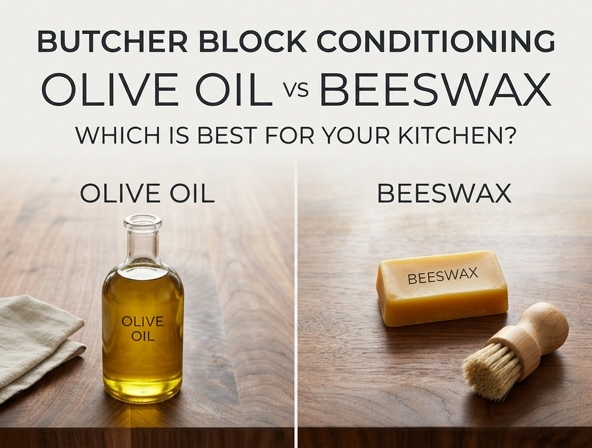
Keeping a kitchen butcher block looking pristine is a constant struggle for culinary enthusiasts. Over time, daily use and frequent washing strip the wood of its natural moisture, leaving it dry, dull, and highly susceptible to cracking. Before reaching for any bottle in your pantry, it is crucial to understand that wood is a porous, organic material requiring a specific type of protective barrier to block moisture and harmful bacteria.
Choosing the correct conditioner not only restores a rich, deep luster but also grants long-term durability and food-safe hygiene to your prep surface. However, a key stipulation remains: not all natural oils behave the same way on wood. While common culinary ingredients like extra virgin olive oil offer instant hydration, they can quickly oxidize and go rancid, whereas natural yellow beeswax provides a resilient, water-resistant seal that locks in moisture without spoiling.
This guide will analyze the science, application methods, and long-term performance of olive oil versus beeswax to help you choose the ultimate protector for your kitchen investment.
Introduction: Why Your Butcher Block Needs Conditioning
A beautiful butcher block is the centerpiece of many modern kitchens, offering both rustic charm and a robust workspace for culinary preparation. However, wood is a living, organic material that requires constant care. Over time, exposure to water, soap, and dry air strips away its natural moisture, causing the wood fibers to shrink, warp, and eventually split. Regular conditioning is essential to prevent these deep cracks, which can harbor dangerous bacteria and ruin your countertop's structural integrity. By maintaining a proper hydration barrier, you ensure your butcher block remains food-safe, hygienic, and beautiful for decades to come.
The Case for Olive Oil: A Household Staple
When a wooden cutting board or countertop begins to look dull, many homeowners reach for the nearest bottle of olive oil. It is incredibly accessible, affordable, and already sitting in almost every kitchen pantry. As a liquid vegetable oil, it easily penetrates the dry pores of wood, darkening the grain and giving the surface an immediate, rich luster. Because it is a natural, edible product, it feels like an intuitive and safe choice for a surface that comes into direct contact with food daily.
The Power of Beeswax: Nature's Protective Shield
Beeswax is a natural substance secreted by honeybees, celebrated for centuries as one of nature's most effective protective agents. Unlike liquid oils that merely soak into the wood, beeswax solidifies at room temperature, creating a durable physical barrier on the wood's surface. This barrier actively repels water, prevents stains, and seals out moisture. Historically used to preserve wood, leather, and even ancient Egyptian artifacts, beeswax remains an unrivaled organic sealant that keeps wood hydrated from within while shielding it from external elements.
Olive Oil as a Conditioner: Pros and Cons
- Low Cost and Availability: Olive oil is inexpensive and easily found in any grocery store, requiring no special trips to a hardware shop.
- Easy Application: Its liquid form allows for quick application with a simple cloth, absorbing rapidly into dry wood fibers.
- High Risk of Rancidity: Because olive oil is a non-drying vegetable fat, it decomposes over time when exposed to oxygen, creating an unpleasant, sour smell.
- Sticky and Tacky Residue: As the oil breaks down, it can leave a sticky film on the wood surface that attracts dust, dirt, and food debris.
Beeswax as a Conditioner: Pros and Cons
- Superior Water Resistance: Beeswax creates a highly effective hydrophobic seal that causes water to bead up rather than soak into the wood.
- Exceptional Durability: A single application of beeswax lasts significantly longer than liquid plant-based oils, reducing how often you need to condition.
- Inherent Food Safety: Pure beeswax is completely non-toxic, chemical-free, and naturally resistant to microbes, making it perfectly safe for food prep surfaces.
- Application Effort: Because it is solid at room temperature, it requires more physical effort to melt, spread, and buff into a smooth finish.
Head-to-Head: Durability and Moisture Protection
When comparing these two substances, the difference in protection is stark. Olive oil acts solely as an internal hydrator; it does not dry or harden, meaning it easily washes away with mild dish soap and water. Consequently, wood treated with olive oil remains vulnerable to staining, liquid absorption, and drying out within days of application. On the other hand, beeswax acts as a physical shield. It bonds to the surface, filling in microscopic scratches and creating a water-resistant topcoat that withstands daily wiping. Beeswax is the clear winner for durability, keeping your wood safe from moisture and wear long after olive oil would have washed away.
Food Safety and Hygiene: Rancidity vs. Pure Protection
Food safety is the most critical factor when choosing a wood conditioner. While olive oil is edible, its tendency to oxidize poses a hidden hazard. As the oil goes rancid, it produces a foul odor and becomes a breeding ground for harmful bacteria. When you prep fresh ingredients on a rancid board, you risk cross-contaminating your meals.
Pure, food-grade beeswax is naturally antimicrobial and hydrophobic, meaning it actively repels moisture that bacteria need to survive, making it the far safer hygienic choice for kitchen surfaces.
By choosing a stable, non-spoiling barrier like beeswax, you keep your prep station sanitary and free from toxic chemical additives or sour, decaying fats.
The Ultimate Hybrid: Beeswax and Mineral Oil Blends
To get the best of both worlds, wood care professionals recommend combining beeswax with food-grade mineral oil. Mineral oil is a non-drying, food-safe petroleum product that never spoils or goes rancid. It penetrates deep into the dry wood grain, hydrating the core of the timber. Meanwhile, the beeswax melts into the mixture and rises to the surface, creating a hard, protective exterior wax coat. This dynamic duo provides deep conditioning from the inside out and a water-resistant seal on the surface, ensuring maximum longevity for your butcher block.
Step-by-Step: How to Apply Conditioner to Your Butcher Block
- Scrape off any food residue and clean the butcher block thoroughly using a mild soap and warm water, then let it dry completely for at least 24 hours.
- Scoop a generous amount of the beeswax and mineral oil blend onto a clean, lint-free microfiber cloth or paper towel.
- Rub the conditioner into the wood surface following the direction of the grain, ensuring even coverage over the top, sides, and edges.
- Allow the mixture to sit and cure for at least four to six hours, letting the wood absorb the mineral oil and the wax begin to solidify.
- Use a fresh, dry cloth to vigorously buff the surface in circular motions, removing any excess residue and revealing a smooth, satin sheen.
The Verdict: Which Conditioner Reigns Supreme?
When deciding how to care for your kitchen countertops, the choice is clear. Special considerations must be made for surfaces that touch our food, and olive oil simply poses too many risks. Its susceptibility to rancidity, stickiness, and bacterial growth makes it a poor candidate for long-term wood care. Beeswax, especially when blended with food-grade mineral oil, provides a durable, water-resistant, and entirely food-safe solution that keeps wood healthy and sanitary. Investing a small amount of time in applying a proper beeswax-based conditioner every few weeks will preserve the beauty, structural integrity, and safety of your butcher block for years to come.

Leave a comment