
Homeowners often struggle to keep their cedar fences looking pristine, watching helplessly as weathering quickly turns rich, warm timber into a dingy, mold-covered grey. While cedar is celebrated for its natural durability, its soft fibers remain highly vulnerable to environmental wear. Restoring this wood not only instantly revives your property's curb appeal but can also add years to the fence's lifespan.
However, successful restoration requires a strict stipulation: the wrong cleaning method will permanently ruin the wood. For instance, improper techniques frequently cause irreversible splintering, "furring," and deep-seated structural rot. To help you avoid these costly mistakes, this guide will compare high-pressure washing against low-pressure chemical soft washing, outlining the pros, cons, and best practices for preserving your cedar investment.
Introduction: The Beauty and Vulnerability of Cedar Fences
Cedar wood is highly prized for its rich, warm hues and rustic charm, which instantly elevate any property's curb appeal. However, outdoor exposure leaves this beautiful material vulnerable to harsh natural elements. Over time, relentless UV rays grey the wood, while moisture invites the growth of unsightly mold, mildew, and algae. Homeowners are left with a frustrating dilemma: how to clean and restore the fence's original radiance without causing permanent damage to the wood fibers. Choosing the right cleaning method is critical to preserving both the aesthetics and structural integrity of your investment.
Understanding Cedar as a Fencing Material
To properly care for cedar, we must understand its biological makeup. Cedar is a softwood, characterized by a tight grain and lightweight composition. It is naturally imbued with organic oils that provide inherent rot-resistance and ward off insect infestations. Despite these defensive properties, its delicate fiber structure is easily compromised. Forceful cleaning techniques can easily strip these beneficial oils and destroy the outer layers of the wood, highlighting why cedar requires specialized, gentle care to maintain its structural health over the long term.
What is Pressure Washing?
The Mechanics of High-Pressure Cleaning
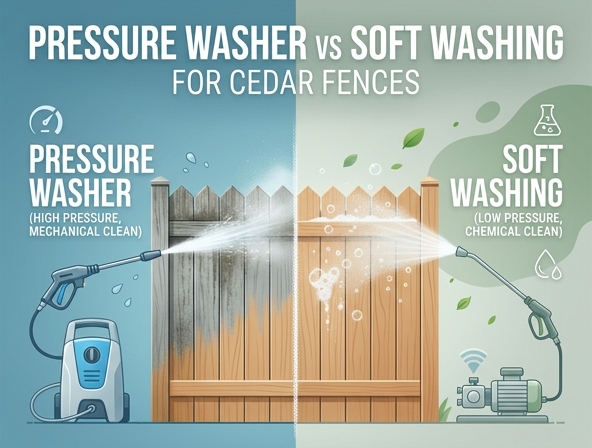
Pressure washing is a cleaning method that relies on a motorized pump to expel water at highly elevated pressures, typically measured in pounds per square inch (PSI). This technique utilizes sheer physical force to mechanically blast away accumulated dirt, grime, and surface contaminants. While this high-powered approach is traditionally popular for hard, durable surfaces like concrete, it presents a significant risk when applied to softwoods, where the intense physical impact can quickly become destructive.
What is Soft Washing?
The Gentle Alternative
Soft washing is a modern, low-pressure alternative designed specifically for delicate surfaces. Instead of relying on brute force, this method combines low-pressure water delivery with specialized, biodegradable chemical solutions. These cleaning agents safely sanitize the surface by breaking down organic growths like mold, mildew, and algae at their source. By eliminating high physical impact, soft washing cleans thoroughly without risking structural degradation to sensitive materials like cedar.
Pressure Washing vs. Soft Washing: Side-by-Side Comparison
When deciding how to restore a cedar fence, comparing the two methods side-by-side reveals stark differences in safety, efficacy, and efficiency:
- Deep spore eradication: Soft washing uses sanitizing solutions that kill mold and algae spores at the root level, whereas pressure washing only removes the surface layer, leaving roots behind to regrow quickly.
- Structural safety: Pressure washing poses a high risk of splintering and scarring soft cedar fibers, while soft washing poses zero physical risk due to its low-pressure application.
- Water consumption: Soft washing uses significantly less water because the chemical solution does the heavy lifting, unlike pressure washing which requires continuous high-volume water flow.
- Longevity of the clean: Because soft washing completely sanitizes the wood, the clean lasts up to four times longer than pressure washing, which often triggers rapid regrowth of surviving spores.
The Hidden Dangers of High-Pressure Washing on Cedar
Using high-pressure washing on cedar can lead to severe, irreversible damage that shortens the lifespan of your fence. The intense PSI easily causes wood furring-a fuzzy texture where wood fibers have been torn apart-and deep splintering that ruins the smooth finish. Furthermore, the high velocity of the water strips the wood of its natural protective oils, leaving it dry and defenseless. Worse yet, high pressure can inject water deep into the cellular structure of the wood, trapping moisture inside and accelerating the onset of internal rot.
Why Soft Washing is the Superior Choice for Cedar Preservation
Soft washing stands out as the ideal method for maintaining the health and appearance of cedar fencing for several key reasons:
- It eliminates organic growth entirely by neutralizing mold, mildew, and algae at the root level with specialized sanitizers.
- It preserves the natural wood grain by avoiding high-pressure abrasion, keeping the cedar fibers intact and smooth.
- It extends the overall lifespan of the fence by preventing the micro-tears and water-logging associated with traditional pressure washing.
Step-by-Step Guide to Safely Soft Washing a Cedar Fence
The Proper Soft Washing Procedure
To clean your cedar fence safely and effectively, follow this structured process:
- Protect surrounding vegetation: Thoroughly pre-wet all grass, shrubs, and flowers surrounding the fence with clean water to prevent them from absorbing the cleaning solution.
- Mix the cleaning solution: Combine a biodegradable surfactant with a mild sodium hypochlorite solution, diluted appropriately to ensure it is safe for wood fibers.
- Apply the solution evenly: Use a low-pressure agricultural sprayer to apply the mixture starting from the bottom of the fence panels and working your way up.
- Allow dwell time: Let the solution sit on the wood for 10 to 15 minutes, allowing it to actively dissolve organic material without letting it dry out.
- Rinse thoroughly: Use a wide-angle nozzle under low pressure to gently rinse away the loosened dirt, dead spores, and chemical residue.
Post-Cleaning Maintenance: Staining and Sealing Your Cedar Fence
Once your cedar fence is completely clean, taking steps to protect the freshly exposed wood is vital. Before applying any finish, you must allow the wood to dry completely, which typically takes 24 to 48 hours of dry, sunny weather. Applying a high-quality, UV-blocking sealant or penetrating stain during this window is essential. This protective coating locks out moisture, prevents the return of organic growth, and safeguards the wood from sun-induced greying, ensuring your cedar fence remains structurally sound and visually stunning for years to come.
Conclusion: Protecting Your Cedar Fence Investment
Choosing soft washing over high-pressure washing is the most effective and safest decision you can make for your cedar fence. By avoiding destructive high pressure and focusing on targeted sanitization, you preserve the natural beauty, oils, and structural integrity of the wood. Regular maintenance scheduled every two to three years will keep organic growth at bay and dramatically extend the lifespan of your fence, saving you from premature replacement costs and keeping your home's exterior looking its absolute best.
Leave a comment