
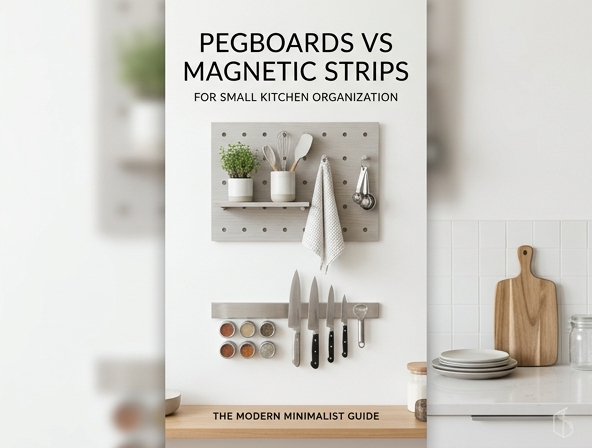
Cooking in a small kitchen often feels like a constant battle against clutter, where every meal prep begins by shuffling appliances just to find a free square foot of counter space. Traditional cabinetry often fails to utilize the most valuable real estate in a compact layout: the walls.
Transitioning to vertical storage not only reclaims your workspace but also streamlines your culinary workflow. However, selecting the right system requires analyzing your specific inventory; while a sleek magnetic strip is ideal for securing chef's knives and metal spice tins, a pegboard offers the versatile grid structure needed for hanging bulky colanders or cast-iron skillets.
In this comparison, we will analyze pegboards and magnetic strips across durability, installation ease, and aesthetic appeal to help you determine the ultimate storage solution for your culinary workspace.
Introduction: The Battle for Tiny Counter Space
In a tiny kitchen, every square inch of counter space is prime real estate. The daily battle against cluttered countertops, jammed drawers, and overflowing cabinets can turn meal prep into a stressful chore. When horizontal surfaces fail, the smart solution is to look upward and exploit unused wall space. Two heavyweight contenders dominate the vertical organization arena: pegboards and magnetic strips. Both promise to rescue your kitchen from chaos, but they do so in completely different ways.
The Case for Pegboards: Ultimate Versatility
A kitchen pegboard is a perforated board made of wood, metal, or plastic that mounts securely to your wall. It serves as a highly customizable blank canvas for your culinary tools. By utilizing the grid of pre-drilled holes, you can arrange, rearrange, and expand your storage setup as your collection of kitchen gadgets grows. This system offers unparalleled flexibility because it does not restrict you to one type of storage accessory.
- Hooks for hanging ladles, spatulas, and heavy pans.
- Wire baskets for holding onions, garlic, or dish towels.
- Miniature shelves for staging spice jars and small cookbooks.
The Case for Magnetic Strips: Sleek Minimalism
Magnetic storage strips offer a sleek, modern alternative that embraces the principles of minimalist design. Usually constructed from stainless steel, wood, or heavy-duty plastic embedded with powerful neodymium magnets, these strips mount flush against your backsplash or walls. They take up virtually zero physical depth, making them incredibly space-efficient. Beyond their clean aesthetic, the primary appeal is unmatched speed and convenience. Instead of rummaging through a drawer or untangling hooks, you can grab your chef's knife or metal tongs in one fluid motion and snap them back into place just as easily.
Round 1: Physical Footprint and Space Efficiency
When wall space is at a premium, the physical footprint of your storage solution matters immensely. Pegboards require a relatively large, continuous flat wall surface to justify their installation and look cohesive. They also protrude several inches from the wall once you account for the mounting spacers and the items hanging off the hooks. On the other hand, magnetic strips are the champions of tight micro-spaces. They can be mounted in narrow gaps that would otherwise go unused, such as the side of a refrigerator, a tiny sliver of backsplash beneath cabinets, or even inside cabinet doors. For extremely confined culinary spaces where every millimeter counts, the low-profile nature of the magnetic strip makes it the superior choice.
Round 2: Storage Versatility and Weight Capacity
The utility of your storage system depends heavily on what you need to store. Pegboards excel at heavy lifting and can accommodate an incredibly diverse array of items, regardless of their material. From heavy cast-iron skillets to wooden rolling pins and plastic colanders, if it has a loop or can sit on a shelf, the pegboard can hold it. Magnetic strips, however, are strictly limited by material physics: items must be ferromagnetic. While they are ideal for high-carbon steel knives, stainless steel shears, and metal-lidded spice tins, they cannot hold ceramic, glass, wood, or plastic tools.
| Storage System | Supported Materials | Ideal Kitchen Items | Weight Capacity |
|---|---|---|---|
| Pegboard | Wood, Metal, Plastic, Ceramic | Cast iron pans, colanders, cutting boards, rolling pins | High (dependent on wall anchors) |
| Magnetic Strip | Ferromagnetic Metals | Chef's knives, kitchen shears, metal spice jars | Moderate (dependent on magnet strength) |
Round 3: Installation and Renter-Friendliness
Installing these systems requires different levels of DIY confidence and lease agreement compliance. Mounting a pegboard is a multi-step project. It requires creating a spacer frame so hooks can insert behind the board, drilling multiple anchors into drywall or studs, and leveling a heavy panel. This results in several significant holes that will need patching when you move out. Magnetic strips are far simpler to install. Many models require just two screws, while lighter versions can be mounted to tiles or glass using heavy-duty, double-sided mounting adhesive.
Round 4: Visual Clutter vs. Design Aesthetics
The visual impact of your storage choice will set the tone for your entire kitchen. Pegboards lean heavily into a rustic, industrial, or classic utilitarian aesthetic. While highly charming, an exposed pegboard displaying various shapes, sizes, and colors of cookware can quickly border on visual clutter if not meticulously organized. Magnetic strips offer a starkly different design ethos. They celebrate clean lines and open space, showcasing your knives like pieces of functional art. This creates a polished, professional kitchen feel where tools are displayed with geometric precision.
"Visual noise in a small kitchen can make the space feel even smaller than it is. Streamlined storage solutions like magnetic bars reduce visual friction, making the room feel calm and organized." - Interior Design Weekly
Round 5: Ease of Cleaning and Maintenance
Kitchens are notorious zones for airborne grease, flour dust, and moisture. Maintaining your storage system is vital for food safety and aesthetics. Pegboards, with their hundreds of tiny holes, hooks, and intricate accessories, are notorious dust and grease traps. Cleaning a pegboard thoroughly requires removing every single item and wiping down individual pegs and the board surface. Magnetic strips, by contrast, are incredibly easy to sanitize. Because they are flat, solid bars of metal or sealed wood, you can clean them in seconds with a quick wipe. To clean your magnetic strip, simply wipe it down weekly with a damp microfiber cloth and a mild degreasing soap, then dry it immediately to prevent moisture build-up.
Budget Comparison: Cost of Setup and Accessories
When budgeting for your kitchen upgrade, you must consider both upfront costs and long-term accessory additions. A basic pegboard sheet is quite inexpensive, often costing around $15 to $30. However, the true cost lies in the accessories. Purchasing individual packs of specialized hooks, wire baskets, and custom shelves can quickly add up, turning a budget project into a $75+ investment. Magnetic strips have a slightly higher entry cost relative to their size, with high-quality wooden or stainless-steel strips ranging from $20 to $50. However, they require very few additional accessories unless you choose to invest in metal-bottomed spice jars, which typically cost around $15 for a set of six.
The Verdict: Which Should You Choose?
Choosing between a pegboard and a magnetic strip comes down to evaluating your specific cooking habits, the layout of your space, and your aesthetic preferences. Both systems offer excellent ways to free up valuable counter space, but they serve different culinary lifestyles. Use this quick decision guide to make your final choice:
- Choose the Pegboard if you have a large collection of diverse, non-magnetic cookware (like cast iron pans, wooden spoons, and plastic colanders) and want maximum flexibility to reorganize your layout over time.
- Choose the Magnetic Strip if you are working with an extremely tight kitchen or backsplash, prefer a modern minimalist aesthetic, and want quick, direct access to your most-used knives and metal utensils.
- Combine Both if you have the space! Use a magnetic strip for your premium knives next to the stove, and mount a small pegboard on an adjacent wall for bulky pots, pans, and colanders.

Leave a comment