
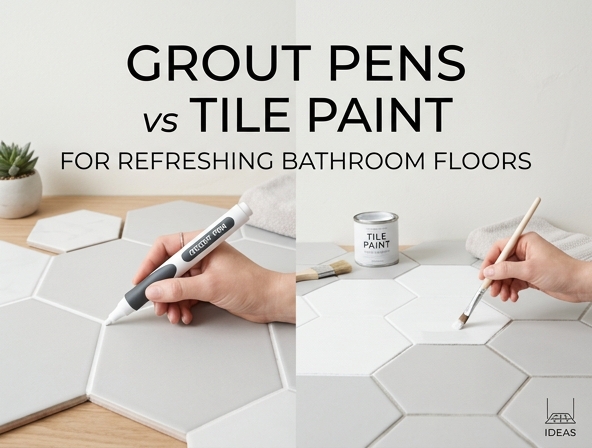
Staring at discolored, grimy bathroom floor tiles can make the entire space feel unclean, no matter how hard you scrub. While a complete retiling project is often the ultimate goal, rising material and labor costs mean major demolitions are frequently delayed or postponed indefinitely.
Fortunately, modern surface restorers grant budget-conscious DIYers the ability to achieve a pristine, high-end aesthetic for a fraction of the cost. However, it is important to stipulate that these solutions are cosmetic enhancements designed for surface-level wear, rather than permanent structural fixes for cracked substrates. Still, simple interventions-such as reviving stained joints with a dark charcoal grout pen or coating outdated beige ceramic with a crisp white tile paint-can yield dramatic, professional-looking results. To help you navigate your options, this guide compares the durability, application, and overall performance of grout pens versus tile paint to determine the best budget-friendly path for your bathroom refresh.
Introduction: Revive Your Bathroom Floors Without the Renovation Price Tag
Stepping into a bathroom with dingy, stained grout and outdated floor tiles can immediately dampen your mood. Over time, moisture, soap scum, and foot traffic take a heavy toll on bathroom floors, leaving them looking tired and dirty no matter how hard you scrub. A full bathroom remodel is expensive and disruptive, but you do not have to live with unsightly floors.
Fortunately, you can achieve a dramatic transformation on a budget. Two highly effective, renter-friendly DIY solutions can breathe new life into your space: grout pens and tile paint. Both options offer a cost-effective way to restore or completely change the look of your bathroom floor without the mess and expense of a full renovation.
What is a Grout Pen and How Does It Work?
A grout pen is a handheld marker filled with specialized, water-resistant paint designed specifically to restore the look of stained grout. Instead of scraping away old mortar, you simply draw over the existing grout lines to hide stubborn discoloration and mildew stains.
These pens are incredibly user-friendly and offer a quick way to brighten your bathroom floor. Here is how they work and why they are so popular:
- Color Coverage: They physically seal over deep-set stains with an opaque, highly pigmented formula.
- Precision Nib: The felt-tip applicator allows you to target narrow grout lines without getting paint on the tiles.
- Anti-Mold Properties: Many modern grout pens contain advanced anti-bacterial formulas to prevent future mold growth.
- Quick Drying: The ink dries rapidly, making the bathroom usable again within hours.
What is Tile Paint and What Are Its Benefits?
Tile paint is a specialized coating formulated to adhere to smooth, non-porous surfaces like ceramic, porcelain, or stone. Unlike standard wall paint, it is engineered to withstand the extreme moisture, humidity, and temperature fluctuations of a typical bathroom.
This solution offers a comprehensive makeover for your entire floor surface. Key benefits include:
- Total Transformation: It covers both the tiles and the grout lines simultaneously, creating a uniform, clean look.
- Superior Moisture Resistance: The paint forms a durable, waterproof barrier that shrugs off standing water and steam.
- Color Versatility: It allows you to completely change the color of your floor, shifting from outdated shades to modern neutrals.
- Cost Efficiency: It mimics the clean look of newly installed tiles at a fraction of the cost of raw materials.
Ease of Application: Grout Pens vs. Tile Paint
When choosing between these two projects, the effort required for preparation and application is a major factor. Grout pens offer a straightforward, highly localized fix. The preparation is simple, requiring only a clean, dry surface before you begin drawing. The physical application demands patience and a steady hand to keep the pen aligned, but the process is highly controlled and mess-free.
In contrast, painting your tile floor is a much more demanding multi-step process. You must deeply scrub, sand, and prime the entire floor to ensure proper paint adhesion. Applying the tile paint requires careful rolling and brushing to avoid brush marks and uneven patches. While grout pens offer instant gratification, tile paint requires a significant investment of time, physical labor, and careful technique to achieve a flawless finish.
Durability and Moisture Resistance on Bathroom Floors
Bathroom floors must endure constant challenges, including heavy foot traffic, dripping water, and aggressive cleaning chemicals. A grout pen is excellent for aesthetic touch-ups, but its thin layer of pigment may wear away over time in high-traffic zones. It provides good water resistance but is best suited for dry or occasionally damp areas rather than surfaces subjected to standing water.
Tile paint provides a much tougher, thicker protective barrier that handles heavy daily wear, standing water, and frequent scrubbing far better than a standard grout pen.
Because tile paint forms a continuous, sealed membrane over both the tiles and the grout, it effectively blocks water from seeping underneath. However, the longevity of tile paint heavily depends on how well the surface was prepared. If the floor is subjected to harsh, abrasive scrubbers, even high-quality tile paint can chip or peel, whereas a grout pen can easily be touched up in minutes.
Cost and Budget Analysis
Both methods are incredibly affordable compared to a full bathroom tile replacement, but they cater to different budget scales. A grout pen is the ultimate budget-friendly tool, requiring almost no supporting supplies. Painting tiles, while still highly economical, requires a broader suite of tools to ensure a professional and long-lasting finish.
| Project Type | Required Materials | Average Cost Range |
|---|---|---|
| Grout Pen Refresh | 1-2 Grout Pens, basic cleaner | $10 - $25 |
| Tile Painting Project | Tile paint, specialty primer, rollers, painter's tape, sealer | $50 - $120 |
Step-by-Step Guide: Refreshing Your Floor with a Grout Pen
- Deep Clean the Grout: Scrub the grout lines thoroughly with a stiff brush and a heavy-duty cleaner to remove grease, soap scum, and mold.
- Dry Completely: Allow the floor to dry for at least 24 hours to ensure the ink adheres properly to the porous grout.
- Activate the Pen: Shake the pen vigorously with the cap on, then press the tip down repeatedly on a piece of scrap paper until the ink flows.
- Apply with Precision: Trace along the grout lines using steady, even pressure, keeping a damp cloth nearby to instantly wipe away any excess ink that gets on the tile surface.
- Let It Cure: Allow the ink to dry completely according to the manufacturer's instructions before exposing the floor to any moisture.
Step-by-Step Guide: Transforming Floors with Tile Paint
- Scrub and Prep: Clean the entire floor using a heavy-duty degreaser, ensuring all soap scum, dirt, and oils are completely removed.
- Lightly Sand the Surface: Use fine-grit sandpaper to scuff up the glossy surface of the tiles, creating a texture that allows the paint to bond.
- Apply Specialty Primer: Roll on a high-adhesion bonding primer designed specifically for ceramic or porcelain surfaces and let it dry.
- Paint the Tiles: Apply two thin, even coats of specialty tile paint using a high-density foam roller for a smooth finish, allowing ample dry time between coats.
- Seal the Floor: Apply a clear, water-resistant polyurethane topcoat to protect your newly painted floor from scratches and moisture.
The Decision Matrix: Which Option is Right for You?
Deciding between a grout pen and tile paint depends on your current floor condition, your available time, and your desired aesthetic outcome.
- Choose a grout pen if your tiles are still in great shape but the grout lines are severely stained or discolored.
- Choose a grout pen if you want a fast, low-effort weekend project with zero mess and minimal drying time.
- Choose tile paint if you absolutely hate the color or pattern of your current tiles and want a complete color overhaul.
- Choose tile paint if you are willing to spend time on prep work, sanding, and multi-day curing times to achieve a durable, modern look.
Final Verdict and Maintenance Tips for Long-Lasting Results
Both grout pens and tile paint serve as excellent, affordable alternatives to the dust and expense of tearing out old bathroom tiles. Grout pens offer a swift and precise touch-up that makes dirty floors look clean in an afternoon, while tile paint offers a complete visual overhaul that can entirely redefine your bathroom's design. The right choice depends on your project goals and how much effort you want to invest.
To ensure your hard work lasts, adopt gentle cleaning habits. Avoid harsh abrasive cleaners or steel wool scrubbers, which can scratch tile paint and wear down grout pen ink. Instead, use a mild, pH-neutral floor cleaner and a soft microfiber mop. Keeping the floor dry after heavy use will preserve the vibrant, fresh look of your DIY floor refresh for years to come.
Leave a comment