
Staring at a dated piece of furniture, wanting that perfect weathered look, but fearing a ruined project or wasted money on the wrong materials is a common frustration for DIY enthusiasts. Before picking up a brush, it is essential to understand how the surge in home upcycling has flooded the market with specialized finishes, making the path forward seem overly complex.
Mastering the distinction between specialty coatings grants you the ability to achieve showroom-quality, rustic charm on a strict budget. However, a successful makeover stipulates understanding that "distressed" is not a one-size-fits-all aesthetic. For example, transforming a slick laminate nightstand requires a fundamentally different preparation than reviving a raw pine dresser.
To ensure your project's success, this comprehensive guide will compare chalk paint and milk paint across prep work, cost, durability, and texture, empowering you to choose the perfect medium for your next furniture transformation.
Introduction: Reviving Furniture on a Dime
Upcycling thrift store furniture has transformed from a niche hobby into a massive budget-friendly movement. Savvy DIY enthusiasts are rescuing discarded wooden dressers, tables, and chairs, turning them into stunning statement pieces without spending a fortune. Achieving that highly sought-after vintage or farmhouse aesthetic relies heavily on your choice of medium. Chalk Paint and Milk Paint stand out as the top two contenders for creating a beautiful distressed look. Understanding the unique properties of each will help you choose the right product, saving you both valuable time and hard-earned money on your next home decor project.
Chalk Paint: The Velvet-Smooth Modern Favorite
What is Chalk Paint?
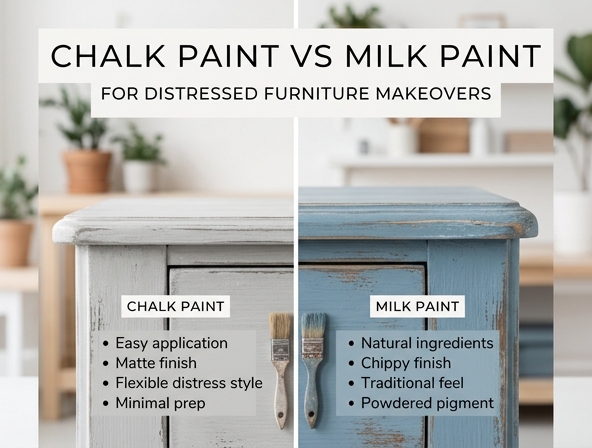
Chalk Paint is a specialized, water-based decorative paint famous for its chalky, ultra-matte finish. Originally popularized by Annie Sloan, its key ingredients include a calcium carbonate base which gives it an incredibly thick consistency. This thickness allows it to adhere to almost any surface with ease, making it a beloved staple for modern furniture makeovers.
The Cost-Saving Advantage of Zero Prep
The primary reason DIYers flock to this option is its ability to skip the laborious sanding and priming phases. Because it grips surfaces so tenaciously, you can paint directly over old varnish, lacquer, or laminate. Skipping these steps translates directly into savings, as you do not need to purchase expensive primers or endless packs of sandpaper. For busy creators, time is money, and this paint delivers rapid results.
Milk Paint: The All-Natural, Historic Challenger
The Chemistry of an Organic Classic
Milk Paint is an ancient, completely non-toxic coating made from simple, organic ingredients: milk protein (casein), lime, and natural earth pigments. Unlike modern synthetic alternatives, it contains zero volatile organic compounds (VOCs), making it an environmentally friendly choice for indoor furniture revival projects.
The Beauty of Natural Flaking and Zero Waste
What sets this medium apart is its unpredictable, highly authentic distressed finish. When applied over existing glossy finishes without a bonding agent, it naturally resists adhesion in some areas, causing the paint to chip and flake away as it dries. This creates a genuine, aged look that is hard to replicate manually. Additionally, because it is sold in a dry powder form, you only mix what you need with water. This powdered state gives it an indefinite shelf life in storage, significantly reducing waste and saving you money on future projects.
Cost Breakdown: Which Paint Gives More Bang for Your Buck?
When comparing retail prices, a quart of premium pre-mixed Chalk Paint typically costs between $35 and $45. In contrast, a package of powdered Milk Paint that makes a quart when mixed with water usually retails for $20 to $30. This represents an immediate upfront saving of up to 30% for the dry powder option.
In terms of coverage, a quart of the thicker chalky medium covers approximately 100 to 150 square feet, while a quart of the thinner dairy-based mixture covers around 70 to 120 square feet. However, the true long-term financial difference lies in preservation. Leftover liquid paint in a can eventually dries out, clumps, or spoils within a few years. Liquid paint storage is notoriously inefficient. Conversely, the powder formulation can be sealed in its bag and stored indefinitely in a dry environment. You can mix tiny batches for small touch-ups years later without buying new supplies.
Prep Work and Application: Time is Money
The Instant Gratification of Chalk Paint
Applying the thick chalky medium is incredibly straightforward. You open the can, stir, and start painting. This direct application eliminates hours of stripping, sanding, and priming. If you are flipping furniture for a profit, this saved labor time means you can complete more pieces per week, maximizing your earning potential.
The Hidden Costs of Mixing Milk Paint
The organic powder option demands more preparation. You must measure and vigorously mix the powder with water, often waiting for the bubbles to subside before application. Furthermore, if you want a smooth, non-chippy finish on a non-porous surface, you must purchase and add a liquid bonding agent to the mixture. This extra additive increases your total material cost and adds another step to your application workflow.
Achieving the Distressed Look: Two Different Styles
Manual Precision with Chalk Paint
To achieve a distressed look with the modern matte medium, you must wait for the paint to dry completely and then use sandpaper or a damp cloth to manually wear away the paint along the edges, corners, and details. This process gives you total control over where the underlayer or raw wood is revealed, creating a clean, controlled shabby-chic look.
Spontaneous Aging with Milk Paint
The historic organic formula acts completely differently, offering a more rustic, random distressed finish. It naturally resists smooth, glossy surfaces, pulling back and peeling in random spots to create a genuine chipped aesthetic. If you want a piece that looks like it naturally aged in an old farmhouse for eighty years, this self-distressing behavior provides an unmatched authenticity that manual sanding cannot replicate.
Sealing and Durability: Factoring in the Topcoat Costs
Both finishes are highly porous and require a quality topcoat to protect them from stains, moisture, and daily wear. Factoring in the price of these sealants is essential for an accurate total project budget calculation.
- Chalk Paint Sealants: Typically sealed with furniture wax or a water-based polycrylic. Quality finishing wax costs around fifteen to twenty-five dollars per tin and requires manual buffing, which must be reapplied every year. Polycrylic costs about twenty dollars per quart but offers a permanent, highly durable shield.
- Milk Paint Sealants: Commonly finished with natural hemp oil or finishing wax. Hemp oil is highly economical at roughly fifteen to twenty dollars a bottle, absorbing deeply into the wood fibers to create a rich, waterproof matte finish that is easy to touch up.
Quick-Reference Comparison: Chalk Paint vs. Milk Paint
| Budget Category | Chalk Paint | Milk Paint |
|---|---|---|
| Initial Cost | Higher ($35 - $45 per quart) | Lower ($20 - $30 per dry pack) |
| Prep Time | Minimal to none | Moderate (requires mixing) |
| Ease of Use | Very high (pre-mixed) | Moderate (consistency control) |
| Distressing Style | Controlled manual sanding | Natural spontaneous chipping |
| Shelf-Life Cost | Shorter (liquid spoils) | Excellent (powder keeps indefinitely) |
Step-by-Step Budget Makeover Guide
- Source Cheap Furniture: Scout thrift stores, garage sales, and online marketplaces for solid wood furniture with good bones, aiming for pieces under fifty dollars.
- Clean the Surface: Scrub the furniture thoroughly with a simple mixture of warm water and dish soap or a TSP alternative to remove oils, dust, and grime.
- Decide on Your Paint and Prep: Prepare your workspace and your paint. Wipe down the furniture, sand lightly if using the organic powder on a glossy surface, or open your can of ready-to-use modern matte paint.
- Apply Two Thin Coats: Use a high-quality synthetic brush to apply your first coat. Let it dry completely before applying the second coat to ensure solid coverage.
- Distress the Finish: Once dry, either let the natural chipping happen or use fine-grit sandpaper to manually distress edges, corners, and relief details.
- Seal and Protect: Apply your chosen topcoat-either a protective clear wax, polycrylic, or natural hemp oil-to lock in the beautiful finish and protect your hard work.
The Final Verdict: Which Paint Should You Choose?
Your choice between these two exceptional paints depends on your project goals, available time, and budget. If you are short on time and prefer a controlled, velvet-smooth finish with zero prep work, investing in Chalk Paint is the wisest path. It saves you from buying extra primers and sanding tools, making it highly efficient for quick makeovers.
If you prefer an authentic, rustic look with natural chipping and want the most cost-effective solution for long-term storage, Milk Paint is your best option. Its lower initial purchase price and indefinite dry shelf life make it incredibly budget-friendly for serial DIYers who enjoy the organic process of mixing their own colors. Weigh these factors against your project needs to ensure a beautiful, affordable furniture transformation.
Leave a comment