
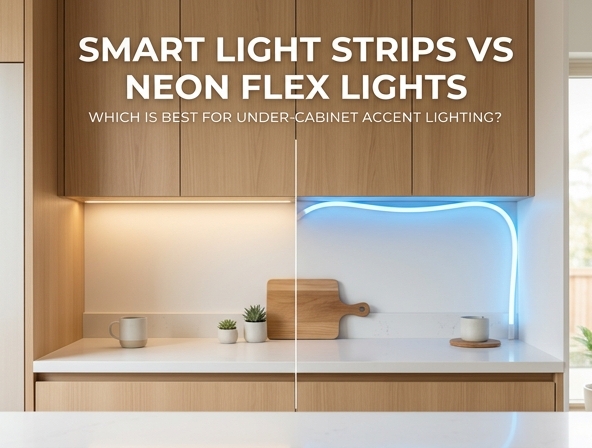
Many homeowners struggle with dark, shadowed kitchen countertops that make meal prep frustrating and leave otherwise beautiful spaces feeling flat and uninviting. Before rushing to purchase a quick fix, it is crucial to understand how under-cabinet illumination bridges the gap between essential task lighting and evening ambiance. Selecting the right modern system grants your kitchen an instant luxury upgrade, elevating its architectural design and market appeal without the cost of a full remodel.
However, achieving this premium look requires one major stipulation: your lighting choice must align with your kitchen's materials. For example, highly reflective polished granite or quartz countertops will mirror the harsh, individual "hotspots" of standard LED tape, whereas a diffuse silicone Neon Flex or a continuous COB strip delivers a flawless, dotless glow. This guide will compare smart light strips and neon flex across installation complexity, customizability, and aesthetic performance to help you make the perfect choice.
Illuminating Your Kitchen: The Under-Cabinet Lighting Dilemma
The kitchen is often called the heart of the home, serving as a hub for meal preparation, family gatherings, and late-night snacks. While overhead lighting provides general illumination, it is the under-cabinet accent lighting that truly elevates the space. This subtle addition enhances visibility on work surfaces and introduces a sophisticated warmth to your culinary environment. Choosing the right fixture can completely transform your kitchen's aesthetic and functionality.
Today, homeowners face a compelling choice between two dominant options: traditional Smart Light Strips and modern Neon Flex. While both solutions promise to banish shadows beneath your upper cabinets, they achieve this goal in vastly different ways. This detailed comparison will help you navigate the features, aesthetics, and practicalities of both choices so you can make an informed decision for your home renovation project.
Understanding Smart Light Strips: Features and Functionality
The Anatomy of Smart LED Strips
Smart light strips represent a classic, highly adaptable solution for accent lighting. These thin, flexible circuit boards are populated with surface-mounted light-emitting diodes (SMD LEDs) spaced at regular intervals. They are designed to fit into tight spaces and offer a low-profile lighting option that remains virtually invisible when installed correctly under cabinet lips.
Key Features and Integrations
- Peel-and-Stick Adhesive Backing: Most strips feature a pre-applied self-adhesive tape, making installation on smooth cabinet surfaces straightforward and quick.
- SMD Diode Structure: The visible, exposed diodes project light outward at a wide angle, providing direct illumination onto the countertops below.
- Smart Ecosystem Integration: These strips easily connect to your home Wi-Fi or Bluetooth networks, allowing seamless voice control through popular smart assistants like Alexa and Google Home.
Demystifying Neon Flex: The Modern Glow
What is LED Neon Flex?
LED Neon Flex represents a major technological leap forward in linear accent lighting. Unlike traditional strips where the individual light-emitting diodes are completely visible, Neon Flex utilizes a specialized design where the LEDs are housed inside a flexible silicone or PVC encapsulation diffuser. This dense, protective casing acts as a continuous lens, blending the individual points of light into a singular, cohesive stream of light.
A Seamless Aesthetic
The primary appeal of Neon Flex is its ability to replicate the classic, unbroken glow of traditional gas-discharge neon signs but with modern, energy-efficient LED technology. The thick diffusion layer eliminates the harshness of direct diode glare, projecting a soft, premium radiance that spreads evenly across your kitchen backsplash. This creates a highly polished, architectural lighting look that elevates the overall design of modern kitchens.
Visual Appeal: Hotspots vs. Seamless Diffusion
When comparing these two options, the most noticeable difference lies in how the light interacts with your kitchen surfaces. Traditional light strips often suffer from "diode spotting" or the "hotspot effect." This occurs when the individual LEDs reflect off polished granite, quartz, or marble countertops, creating a series of bright, distracting dots rather than a continuous wash of light. For high-gloss kitchen surfaces, this reflection can disrupt the visual harmony of your design.
In contrast, Neon Flex relies on its thick, milky diffuser to blend the light perfectly before it ever reaches your countertops. The result is a smooth, continuous line of light with absolutely no visible hotspots. Even when placed directly above highly reflective materials, the output remains perfectly uniform, producing a premium, professional-grade aesthetic that resembles custom architectural lighting installations.

Installation Battle: Cut Points, Bending, and Mounting
Installing Traditional Smart Strips
Standard LED light strips are highly praised for their simple, user-friendly installation process. Because they are thin and lightweight, they can be easily manipulated on flat, two-dimensional planes. However, navigating corners and complex cabinet layouts requires specific techniques to avoid damaging the delicate copper circuitry.
- Precise Cut Points: Strips feature designated cut lines, usually spaced every few inches, allowing you to trim them to the exact length of your cabinets.
- Solderless Connectors: Making a 90-degree turn around corner cabinets typically requires cutting the strip and utilizing clip-on gap connectors or flexible ribbon cables.
- Simple Adhesive: Installation relies primarily on peeling back the protective film and pressing the strip firmly onto a clean, dry surface.
Installing Modern Neon Flex
Neon Flex is considerably thicker, heavier, and more robust than traditional light strips, which introduces a different set of physical installation demands. While it is incredibly flexible, it bends differently and requires a more structured mounting system to hold its shape over time.
- Directional Bending: Neon Flex typically bends on a single axis (either side-to-side or top-to-bottom), requiring careful planning when mapping out your cabinet runs.
- Mounting Brackets and Channels: Instead of relying solely on adhesive, Neon Flex is held securely in place using aluminum or plastic mounting clips, or continuous mounting tracks screwed directly into the underside of the cabinet.
- Waterproof End Caps: Cutting Neon Flex requires sealing the exposed ends with silicone sealant and specialized end caps to maintain its structural integrity and safety.
Smart Features, Color Control, and Brightness
From a technological standpoint, both options offer impressive features, but the underlying light engine heavily influences the final output. Traditional smart strips often utilize standard RGB configurations, meaning the entire strip changes color simultaneously. Advanced versions of both products use RGBIC (Independent Control) technology, which embeds a smart microchip in the light source, allowing different sections of the same strip to display different colors at the same time for animated transitions and dynamic lighting effects.
"While traditional LED strips offer high raw lumen output per watt, their bright points can feel overwhelming. Neon Flex manages its lumens through a heavy diffuser, trading raw, piercing brightness for a wider, visually comfortable distribution of custom color scenes and automated schedules."
Through companion mobile applications, both platforms support comprehensive smart integrations. Users can program automated schedules, synchronize the lights to music, or establish custom lighting scenes. Whether you want a bright, cool daylight white for morning meal prep or a soft, warm amber glow for late-night ambiance, smart apps allow you to control brightness levels, color saturation, and scheduling with a few taps on your smartphone or via voice commands.
Durability and Kitchen Environment Resistance
The kitchen is a demanding environment for electronics. Cooking processes generate significant grease, rising steam, heat, and moisture, all of which can threaten the longevity of your under-cabinet lighting. Protecting the light source from these elements is critical to ensuring your system functions safely and reliably for years to come.
Standard smart light strips often have a low IP (Ingress Protection) rating, such as IP20, meaning they have no protection against liquid contact. If steam from a stove or kettle rises directly onto an exposed strip, it can cause premature diode failure or short circuits. Even strips with a basic polyurethane coating can yellow and crack over time when exposed to cooking heat and grease. Cleaning these exposed strips is also difficult, as wiping them down can snag the components.
In contrast, Neon Flex is built to withstand harsh environments, routinely boasting IP65 or higher water-resistance ratings. The heavy-duty silicone or PVC casing completely seals the internal LEDs away from airborne grease, humidity, and liquid splashes. Maintenance is simple and safe; the smooth, continuous exterior surface can be easily wiped clean with a damp microfiber cloth, keeping your lighting system looking pristine without risking damage to the delicate electrical parts.
Budget Breakdown: Upfront Cost vs. Long-Term Value
Your choice of under-cabinet lighting will depend on your budget constraints and how you value ease of installation versus long-term aesthetic appeal and durability. Standard smart light strips offer a highly economical entry point, whereas Neon Flex requires a larger initial investment for the premium materials, robust diffusion housing, and specialized mounting hardware.
| Cost Factor | Smart Light Strips | Neon Flex |
|---|---|---|
| Initial Purchase Price | Budget-friendly, widely available at low entry costs | Premium price point due to specialized materials |
| Included Accessories | Built-in adhesive backing requires no extra purchases | Often requires separate tracks, brackets, or silicone sealant |
| Durability in Kitchens | Lower life expectancy due to steam and grease exposure | Highly durable silicone sleeve extends overall lifespan |
| Installation Cost | Simple DIY requires no professional tools or assistance | May require minor hardware tools or professional mounting |
The Decision Matrix: Which is Best for Your Kitchen?
Analyzing Your Kitchen Needs
Every home is unique, and the ideal lighting solution depends on your design priorities, kitchen countertop materials, and comfort level with home improvement projects. Below is a structured guide to help you match your profile to the perfect choice.
- The Budget-Conscious DIYer: If you want a quick, affordable, and functional lighting upgrade that you can install in under an hour, traditional Smart Light Strips are your best match.
- The Modern Minimalist: If you have high-gloss countertops, stone backsplashes, or a sleek modern kitchen design, Neon Flex offers the dot-free, integrated look your space demands.
- The Long-Term Planner: If you cook frequently and generate a lot of steam and grease, the robust protective casing of Neon Flex will offer better value and easier maintenance over the years.
Final Verdict: Brightening Up Your Culinary Space
Selecting the right under-cabinet lighting comes down to balancing cost, installation effort, and your kitchen's unique visual layout. Traditional smart light strips remain a fantastic, accessible option for adding color and voice control on a budget. They perform exceptionally well when hidden behind deep cabinet lips where the light source cannot be directly seen or reflected.
On the other hand, modern LED Neon Flex represents the premium choice for homeowners seeking flawless aesthetics and long-lasting durability. Its continuous glow, freedom from distracting hotspots, and superior resistance to kitchen elements justify the higher price tag and more involved mounting process. Investing in Neon Flex ensures your culinary workspace is bathed in a professional, seamless radiance that enhances the design of your home for years to come.

Leave a comment