
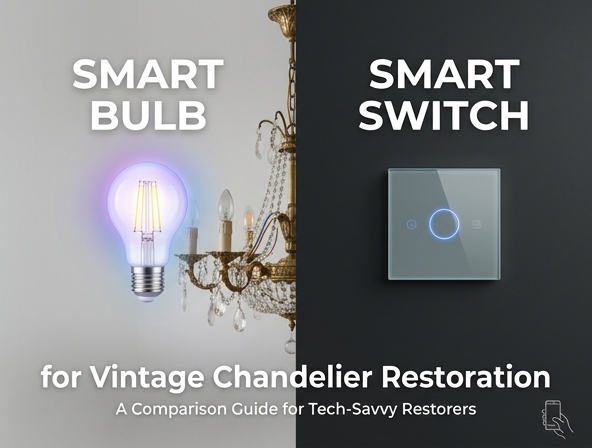
Restoring a vintage chandelier is a labor of love, yet integrating modern smart technology often presents a frustrating dilemma: how do you introduce contemporary convenience without stripping away the fixture's historic soul? Before addressing control options, it is vital to respect the delicate craftsmanship of these antique statement pieces.
The right upgrade grants you effortless automation while preserving the warm, nostalgic ambiance of your classic lighting. However, success hinges on a critical stipulation: vintage wiring and compact sockets-such as those on a 1920s crystal chandelier-rarely accommodate bulky, contemporary smart bulbs without compromising their aesthetic integrity.
This article compares smart switches against smart bulbs, analyzing compatibility, installation, and design aesthetics to help you make the optimal choice for your restoration project.
Modernizing History: The Vintage Chandelier Smart Lighting Dilemma
Vintage chandeliers hold an undeniable allure, casting intricate shadows and carrying the whispers of bygone eras through their ornate brass, wrought iron, or cascading crystal frames. However, bringing these antique masterpieces into the 21st century presents a modern conundrum. Homeowners are faced with a difficult choice: how do you introduce voice commands, scheduling, and automation without stripping away the fixture's timeless character? The conflict between installing smart switches or upgrading to smart bulbs sits at the heart of this dilemma, as choosing the wrong path can easily compromise the delicate aesthetic of a cherished heirloom.
The Unique Preservation Challenges of Antique Light Fixtures
Restoring and updating a vintage chandelier is vastly different from installing a modern light fixture from a big-box store. Preservationists and homeowners face distinct challenges when dealing with the physical and electrical integrity of old pieces.
- Delicate, degraded wiring covered in frayed fabric or brittle rubber that poses safety hazards.
- Hard-to-find candelabra sockets, such as E12 or European E14 sizes, that do not easily accommodate modern bulb shapes.
- The critical need to preserve original metal patinas, hand-blown glass drops, and historical authenticity.
- Weight limitations of original plaster ceilings and mounting brackets.
Smart Switches: How They Work with Classic Fixtures
The Mechanics of Wall-Based Control
Smart switches shift the intelligence of your lighting setup from the light fixture itself to the wall outlet control. By replacing your existing physical wall switch with a smart-enabled switch, you gain wireless control over the electrical current flowing through the circuit. This setup allows the entire chandelier to be integrated into your smart home ecosystem without requiring any modifications to the fixture's internal wiring or sockets. The vintage chandelier retains its original operational path while gaining modern features like scheduling, remote app control, and voice integration.
The Benefits of Choosing Smart Switches for Your Restoration
Opting for a smart switch is often the preferred route for serious preservationists because it preserves the exterior beauty of the light fixture.
- Authentic Replica Filament Bulbs: You can use beautiful, hand-spun replica carbon-filament or LED filament bulbs that match the historical period of the chandelier.
- Cost Savings: Instead of purchasing up to a dozen expensive smart bulbs, you only need to buy a single smart wall switch to control the entire fixture.
- Traditional Functionality: Wall switches continue to work normally for guests or family members, keeping the physical control intuitive.
The Drawbacks of Smart Wall Switches
While smart switches offer excellent aesthetic advantages, they are not without practical hurdles. The most prominent issue in historic homes is the electrical infrastructure. Older houses often utilize knob-and-tube or early-generation wiring that lacks a dedicated neutral wire inside the switch box, which most standard smart switches require to remain powered. Additionally, smart switches do not allow for individual bulb control, meaning you cannot dim or turn off specific bulbs within the chandelier independently. The installation process can also be complex, sometimes requiring professional electrical help to update the wall box.
Smart Bulbs: Direct Intelligence in Every Socket
Power and Control at the Source
Smart bulbs bypass the need to modify your home's electrical wiring by placing the microprocessors, wireless receivers, and dimming hardware directly inside each individual bulb. By screwing these bulbs directly into the chandelier's existing sockets, you instantly connect the fixture to your Wi-Fi or Zigbee network. While early smart bulbs were bulky and sterile in appearance, manufacturers now produce vintage-style smart filament bulbs designed to mimic the warm glow and delicate glass envelopes of antique Edison and candelabra bulbs.
The Advantages of Smart Bulbs in Chandelier Upgrades
Smart bulbs offer a high level of versatility and ease, making them a popular choice for quick home improvements.
- Simple plug-and-play installation requiring zero electrical work or wiring modifications.
- Granular control with individual bulb dimming and scheduling capabilities.
- Advanced color temperature tuning, allowing you to switch from daylight white for cleaning to warm amber for dinner parties.
- Ideal compatibility with older homes that lack a neutral wire in the wall switch box.
The Hidden Downsides of Smart Bulbs for Antique Pieces
Despite their convenience, smart bulbs present notable drawbacks when paired with delicate antique chandeliers. The most egregious issue is the bulky plastic collar or base housing the internal radio transmitter, which can ruin the sleek, historical profile of slim candelabra sockets. Furthermore, replacing 6 to 12 bulbs in a single large chandelier can become prohibitively expensive. There is also the constant annoyance of losing all smart functionality the moment someone flips off the physical wall switch, rendering the bulbs offline and unreachable by voice or app.
Side-by-Side Comparison: Aesthetics, Installation, and Cost
| Feature | Smart Switches | Smart Bulbs |
|---|---|---|
| Visual Impact | Excellent (preserves original bulb aesthetics) | Fair (bulky bases may show) |
| Installation Ease | Moderate to High (requires wiring) | Very Easy (screw-in) |
| Total Cost of Ownership | Low (one-time switch purchase) | High (must buy multiple bulbs) |
| Control Variety | Whole fixture dimming | Individual bulb dimming & color tuning |
| Neutral Wire Required | Usually Yes | No |
The Final Verdict: Which is Best for Your Vintage Chandelier?
Choosing the right modernization path depends on your home's wiring, budget, and commitment to historical accuracy. If you own your home, have modern wiring with a neutral wire, and prioritize aesthetic purity, a smart switch is the superior choice because it lets you use beautiful, period-accurate replica bulbs. On the other hand, if you are renting your space, live in a historic home with ancient wiring, or want color-changing capabilities, smart bulbs offer the easiest and most versatile path to bringing your antique chandelier into the modern age.
Leave a comment