
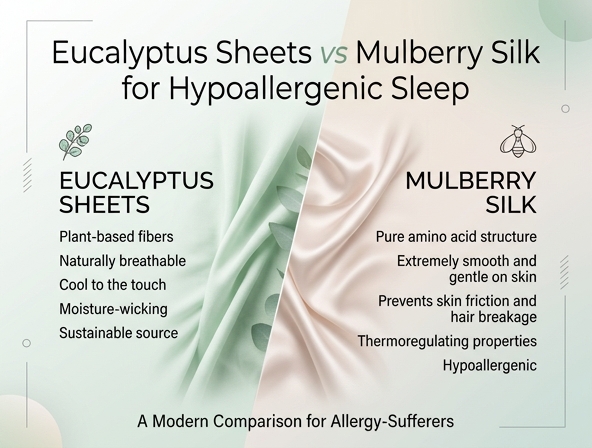
Waking up with congested sinuses, irritated skin, or disrupted sleep is a frustratingly common cycle for sensitive sleepers. Often, the culprit is not the pollen outdoors, but the very sheets we wrap ourselves in. Before upgrading your air purifier, it is crucial to understand how traditional bedding fabrics act as structural magnets, trapping microscopic dust mites, mold spores, and pet dander right against your face.
Transitioning to high-performance bedding grants you the ultimate health luxury: a clean sleep environment that actively preserves your skin barrier and respiratory ease. However, a key stipulation remains: "hypoallergenic" is not a universal standard, as different organic fibers repel allergens and manage moisture through entirely different mechanisms.
To help you invest wisely, this guide compares Eucalyptus sheets and Mulberry silk head-to-head-evaluating their weave, breathability, maintenance, and protective qualities-to determine the ultimate champion for your clean sleep sanctuary.
Introduction: The Quest for the Cleanest Sleep
Achieving a truly restorative night's rest goes beyond merely tracking your hours of shut-eye; it is about cultivating a clean, hygienic sleep sanctuary. The concept of clean sleep centers on creating a sleep environment free from allergens, dust mites, and chemical irritants that disrupt your body's recovery. For individuals dealing with chronic allergies, asthma, or sensitive skin, the fabrics that touch your body for eight hours a night are of paramount importance.
In the search for the ultimate clean sleeping surface, two premium materials lead the industry: Eucalyptus sheets and Mulberry Silk bedding. Choosing the right fabric is a complete game-changer for skin health and respiratory comfort. While both materials promise a hypoallergenic barrier against common sleep disruptors, they achieve this through entirely different natural properties. Understanding how these fabrics perform is the first step toward transforming your sleep health.
Understanding Eucalyptus Sheets: Nature's Cooling Shield
What is Tencel Lyocell?
Eucalyptus sheets are modern marvels of textile engineering, crafted primarily from Tencel lyocell. This advanced fabric is made by harvesting sustainable wood pulp from eucalyptus trees, which is then processed using a specialized spinning technique. The resulting fibers are incredibly smooth, offering a soft texture that rivals traditional luxury fabrics while remaining completely plant-based.
Eucalyptus fibers are inherently hypoallergenic and feature a naturally round, uniform surface that minimizes physical friction against the skin. This smooth structure prevents microscopic irritations, making it difficult for dust mites, mold, and bacteria to anchor themselves and multiply. For sleepers seeking a clean shield that actively repels household allergens, this wood-derived fabric offers an exceptional, protective barrier.
The Luxury of Mulberry Silk: The Gold Standard of Bedding
The Protein Structure of Sericulture
Mulberry Silk represents the historic pinnacle of luxury bedding, harvested from silkworms raised on a strict diet of fresh mulberry leaves. This meticulous cultivation process produces long, continuous silk threads that are woven into an incredibly soft, luminous fabric. For thousands of years, silk has maintained its reputation as the premier sleeping surface for royalty and wellness seekers alike.
The secret to silk's hypoallergenic defense lies in its natural protein structure, particularly sericin. This natural binding protein is highly resistant to environmental allergens, making the fabric hostile to dust mites and mold. Furthermore, the long, continuous fibers mean there are no microscopic raw ends to snag, scratch, or irritate delicate facial skin and hair during the night.
Hypoallergenic Face-Off: Dust Mites, Allergens, and Sensitive Skin
When battling microscopic intruders like dust mites, mold spores, and pet dander, the physical structure of your sheets acts as your primary line of defense. Both Eucalyptus and Mulberry Silk offer superior hypoallergenic protection compared to traditional cotton, but they do so through distinct mechanisms that benefit sensitive skin types prone to eczema, psoriasis, or acne breakout cycles.
- Eucalyptus sheets utilize a highly breathable, moisture-free physical environment that starves dust mites and halts mold propagation.
- Mulberry Silk relies on its natural protein composition to actively repel common household allergens and prevent microbial growth.
- Sensitive skin protection is achieved by Eucalyptus through minimal friction, preventing physical irritation on inflamed skin.
- Skin hydration preservation is silk's specialty, as it does not strip natural oils from the skin, helping to soothe dry eczema patches.
Breathability and Temperature Regulation: Keeping Cool at Night
Maintaining a stable body temperature is crucial for entering deep, uninterrupted sleep cycles. Eucalyptus sheets are famous for their unmatched breathability, utilizing an open-hole fiber structure that maximizes airflow. This makes them a premier choice for hot sleepers who need constant ventilation to dissipate trapped body heat.
Mulberry Silk takes a different approach by acting as a natural thermoregulator. It adapts dynamically to your ambient body heat, keeping you cozy and warm during cool winter nights, yet remaining delightfully cool and airy throughout the summer months. Silk's lightweight weightlessness ensures that your skin can breathe without ever feeling suffocated by heavy, heat-trapping fabrics.
Moisture-Wicking Performance: Combatting Night Sweats
Night sweats not only disrupt your sleep cycle, but the resulting damp environment also fosters rapid bacterial growth on your bedding. Eucalyptus sheets utilize hydrophilic fibers that draw moisture deep into the core of the thread, rapidly pulling sweat away from your skin and evaporating it into the surrounding air.
"The moisture-wicking capacity of eucalyptus lyocell is exceptionally efficient, absorbing liquids far faster than cotton, which keeps the sleep surface completely dry and prevents the humid climate that bacteria thrive in."
In contrast, Mulberry Silk features a natural moisture-repelling barrier. Rather than absorbing sweat deep into its fibers, silk allows moisture to glide over its surface and evaporate, keeping the fabric clean and dry without altering the natural hydration levels of your skin.
Durability and Care: Machine Washability vs. Delicate Maintenance
Comparing Longevity and Ease of Use
The practical, daily maintenance of your bedding plays a vital role in keeping your sleep environment clean and hygienic over the years. Overly complex care routines can lead to neglected washing cycles, which defeats the purpose of hypoallergenic bedding.
- Eucalyptus sheets are highly durable and convenient, easily surviving regular machine wash cycles on a gentle setting.
- Mulberry Silk bedding demands meticulous care, often requiring hand-washing with specialized pH-neutral detergents or professional dry cleaning.
- Resistance to wear is excellent in eucalyptus fibers, which retain their smooth texture and color through years of standard laundering.
- Delicate nature of silk means it is highly susceptible to snagging, tearing, and damage from high heat or direct sunlight during drying.
Sustainability and Eco-Friendliness: Green Lyocell vs. Traditional Sericulture
True peace of mind includes knowing your clean sleep does not come at the expense of the planet. Eucalyptus sheets are produced using a highly sustainable, closed-loop solvent system. This eco-friendly process recycles over 99% of the water and non-toxic solvents used to break down the wood pulp, creating minimal waste and utilizing fast-growing, rain-fed eucalyptus trees.
Mulberry Silk is a natural, biodegradable material, but its traditional production-known as sericulture-carries a larger environmental and ethical footprint. The cultivation of silkworms requires significant amounts of hot water and energy to heat rearing facilities and process cocoons. For eco-conscious shoppers, the low carbon footprint of eucalyptus lyocell often makes it the preferred green bedding option.
Cost and Value: Budget-Friendly Utility vs. Premium Investment
While both bedding types represent an upgrade over standard cotton, their price tags reflect differences in raw material sourcing and manufacturing complexity. Eucalyptus sheets offer an accessible middle ground, providing high luxury and utility at a reasonable price, whereas Mulberry Silk remains a high-end luxury investment.
The initial cost of silk is significantly higher due to the labor-intensive nature of harvesting silk cocoons. However, both options offer excellent long-term value because their natural resistance to allergens and fiber degradation ensures they outlast cheap synthetic sheets by several years.
| Bedding Material | Upfront Price Range | Lifespan Expectancy | Maintenance Overhead |
|---|---|---|---|
| Eucalyptus Lyocell | Moderate | 5 to 10 Years | Low (Machine Washable) |
| Mulberry Silk | Very High | 10+ Years (with proper care) | High (Delicate Hand-Wash) |
The Verdict: Aligning Bedding with Your Sleeping Profile
Choosing Your Perfect Clean Sleep Match
Selecting the ideal bedding comes down to matching these natural materials with your unique sleeping habits, health needs, and lifestyle preferences. Both fabrics provide outstanding hypoallergenic properties, but they serve distinct priorities in the bedroom.
The Eucalyptus Sleeper is someone who experiences intense night sweats, sleeps hot, prefers eco-friendly products, and values easy machine-washable convenience. This fabric delivers an incredibly cool, crisp feel that keeps allergies at bay without demanding special laundry days.
The Mulberry Silk Sleeper is focused on maximizing cosmetic benefits for hair and skin, values absolute sensory luxury, and does not mind the extra time required for delicate fabric care. Silk remains the undisputed champion for reducing sleep wrinkles, preventing hair frizz, and providing a soothing glide for sensitive skin.
Leave a comment