
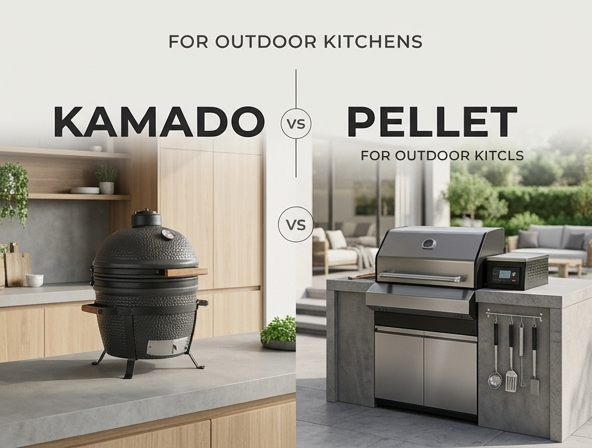
Designing the perfect outdoor kitchen is an exciting venture, yet many homeowners find themselves paralyzed when choosing the central cooking appliance. This high-stakes investment requires balancing aesthetic durability with culinary performance, bridging the gap between raw heat and precise control.
Selecting the right engine for your cooking space grants you unmatched culinary versatility and long-term value. However, we must stipulate that no single grill is a universal cure-all; success depends entirely on matching the tool to your specific entertaining habits. For example, while a pellet grill excels at hands-off, low-and-slow brisket, a ceramic Kamado remains unmatched for high-heat, wood-fired pizza searing.
To help you make an informed investment, this guide will compare both appliance types across temperature ranges, flavor profiles, maintenance, and built-in integration ease, ensuring your final choice perfectly aligns with your outdoor lifestyle.
Introduction: The Ultimate Backyard Cookoff
Designing a custom outdoor kitchen is a dream milestone for any backyard culinary enthusiast. As homeowners curate their ideal outdoor cooking space, they inevitably face a defining choice: selecting the primary cooking engine. This decision almost always boils down to a classic battle of traditions: the ancient, high-heat capability of the Kamado grill versus the high-tech, automated precision of the Pellet grill.
While both cooking platforms promise to elevate your backyard culinary game, they represent entirely different philosophies of outdoor cooking. One rewards the sensory, hands-on craft of fire management, while the other offers unmatched modern convenience. Understanding how each grill integrates into your lifestyle is essential to building a functional and luxurious outdoor sanctuary.
Understanding the Kamado Grill: Ancient Design Meets Modern Outdoor Cooking
The roots of the modern Kamado grill stretch back thousands of years to ancient earthenware cooking vessels. Inspired by the Chinese kamado and the Japanese mushikamado, these vessels were traditionally used for steaming rice and baking. Following World War II, Western grillers discovered these heavy clay pots and adapted them into the thick-walled ceramic outdoor ovens we see today.
The defining feature of a premium Kamado is its heavy-duty ceramic construction. This dense material provides extraordinary thermal efficiency, locking in heat and moisture far better than standard metal grills. In a luxury outdoor kitchen, a built-in ceramic Kamado serves as a striking focal point, representing the pure, raw element of cooking over direct fire.
The Rise of the Pellet Grill: Modern Convenience and Precision Tech
In stark contrast to ancient ceramic vessels, the pellet grill is a triumph of modern engineering. Originating in the heating industry during the 1980s, these appliances use a sophisticated delivery system to maintain precise cooking temperatures. Food-grade hardwood pellets are poured into a storage hopper, where a motorized auger feeds them into a combustion fire pot at a rate determined by a digital controller.
An internal fan stokes the fire, circulating heat and smoke throughout the cooking chamber like a convection oven. By constantly adjusting the feed rate of the pellets, the electronic brain of the grill can maintain a steady temperature within a few degrees of your target, allowing for effortless backyard barbecuing.
Temperature Control: High-Heat Searing vs. Set-and-Forget Smoked Meats
The Kamado Method: Raw Heat and Manual Mastery
Kamado grills are masters of extreme temperature ranges, capable of reaching scorching temperatures well over 700 degrees Fahrenheit for searing steaks, while also choking down to sustain a 225-degree low-and-slow smoke. However, controlling this heat is an active art form. It requires manual adjustments to the top and bottom air vents to regulate the oxygen feeding the coals. It takes patience to learn, but offers unmatched thermal feedback.
The Pellet Method: Digital Precision and Automated Ease
Pellet grills shine in their ability to maintain precise, low-and-slow temperatures without constant monitoring. Simply dial in your target temperature, and the onboard computer manages the rest. While modern pellet grills have made great strides in reaching higher temperatures, most struggle to match the intense, direct radiant heat of charcoal, making them best suited for steady smoking and roasting rather than ultra-high-heat searing.
Flavor Profiles: Charcoal Authenticity vs. Subtle Wood Smoke
The choice between these two grills often comes down to personal taste. Kamado grills utilize lump charcoal, which delivers a deep, robust smoky flavor with that classic backyard charcoal aroma. When you add chunks of hardwood to the hot coals, you get a heavy, traditional smoke profile that deeply penetrates the meat.
Pellet grills produce a lighter, cleaner smoke profile. Because the wood pellets burn extremely efficiently in the fire pot, the smoke is thin and blue rather than heavy and white. This results in a subtle, sweet wood-fired flavor that enhances the natural taste of the food without overpowering it.
"If you want that deep, old-school barbecue flavor that tastes like a traditional Southern smokehouse, charcoal is king. But if you prefer a subtle, elegant kiss of wood smoke where the natural flavor of the meat still takes center stage, pellet wood-fire is hard to beat." - Pitmaster Marcus Vance
Ease of Use: Manual Craftsmanship vs. Automated Convenience
For many cooks, the process of starting the grill is a sacred ritual; for others, it is a chore. The Kamado requires a hands-on approach, demanding that the cook actively participate in lighting the charcoal and dialing in the dampers. The pellet grill operates with the simplicity of a kitchen oven, removing the physical effort of fire management entirely.
Here is how the startup process compares for each grill type:
- Kamado Startup: Clean out the old ash, load premium lump charcoal, place fire starters in the coals, light them, wait 10 to 15 minutes for the embers to catch, adjust the top and bottom draft vents, and carefully monitor the temperature climb to prevent overshooting.
- Pellet Startup: Ensure the hopper is filled with wood pellets, plug in the power cord, flip the power switch, set your desired temperature on the digital controller, and let the automatic igniter light the pellets.
Cooking Versatility: From Baking Neapolitan Pizzas to Smoking Briskets
Both units excel at versatility, but they lean into different strengths. The thick ceramic walls of a Kamado allow it to function as a highly efficient brick oven. This makes it ideal for baking high-heat Neapolitan pizzas with crisp crusts, as well as baking bread and roasting whole poultry with exceptional moisture retention.
Pellet grills function beautifully as outdoor convection ovens. Because they circulate heat evenly, they excel at low-and-slow smoking of briskets, pork shoulders, and ribs without dry spots. While they lack the direct flame capabilities for authentic wok cooking or ultra-high-heat baking, they deliver incredibly consistent results for almost any standard baking or smoking task.
Durability and Lifespan: Ceramic Shells vs. Electronic Components
A custom outdoor kitchen is an investment designed to last for decades, making the lifespan of your cooking appliances a critical factor. Kamado grills are constructed from high-grade ceramics that do not rust or degrade over time. If cared for properly, a ceramic Kamado can easily last a lifetime, though you must guard against dropping the heavy lid or causing thermal shock by throwing cold water on hot ceramics.
Pellet grills, by contrast, are complex mechanical systems containing moving parts and delicate electronics. While high-end manufacturers use thick stainless steel, the reliance on a power source introduces vulnerabilities. Over time, components like the digital control board, the electric auger motor, and the induction fan will experience wear and tear, requiring eventual replacement, especially when exposed to outdoor humidity and temperature swings.
Outdoor Kitchen Integration: Aesthetics, Ventilation, and Custom Builds
Integrating these cookers into a custom outdoor kitchen island requires careful planning. A built-in Kamado is extremely heavy, often requiring a reinforced concrete shelf or heavy-duty steel support brackets. Its classic, rounded shape adds an artisanal, timeless aesthetic to stone or stucco islands. A built-in pellet grill, with its boxier shape and front-access hopper, offers a sleek, modern, professional-kitchen look.
Regardless of which style you choose, proper installation is paramount to safety and appliance longevity. When designing your island, ensure you meet the following requirements:
- Adequate Ventilation: Ensure proper island venting to prevent gas, heat, or moisture buildup beneath the counter.
- Non-Combustible Surrounds: Use only non-combustible materials like stone, concrete, or metal studs for the framing immediately surrounding the cookers.
- Power Access: Install dedicated, weather-proof GFCI outlets inside the island to power the pellet grill's electronics.
- Weight-Bearing Support: Verify that the structural platform can support the massive weight of a ceramic Kamado, which often exceeds 200 pounds when loaded.
The Verdict: Choosing the Right Centerpiece for Your Outdoor Kitchen
The decision between a Kamado and a pellet grill comes down to what you value most in your cooking experience. If you view barbecuing as an active, sensory hobby-enjoying the process of building a fire, tending to the coals, and mastering temperature control-the Kamado is an unrivaled tool that offers a lifetime of reliable service and incredibly rich charcoal flavor.
On the other hand, if your goal is to enjoy delicious, wood-fired meals without dedicating hours to monitoring a fire, a pellet grill is the perfect match. It fits seamlessly into a busy lifestyle, turning complex, long-running barbecue cooks into simple, worry-free tasks that require nothing more than a push of a button.
Consider these final guidelines to make your choice:
Choose the Kamado if: You prioritize long-term durability, love high-heat searing and baking, prefer traditional charcoal flavor, and enjoy the physical craft of fire management.
Choose the Pellet Grill if: You value convenience, want exact temperature control for effortless smoking, prefer a milder wood-smoke flavor, and plan to cook frequently on busy weeknights.
Leave a comment