
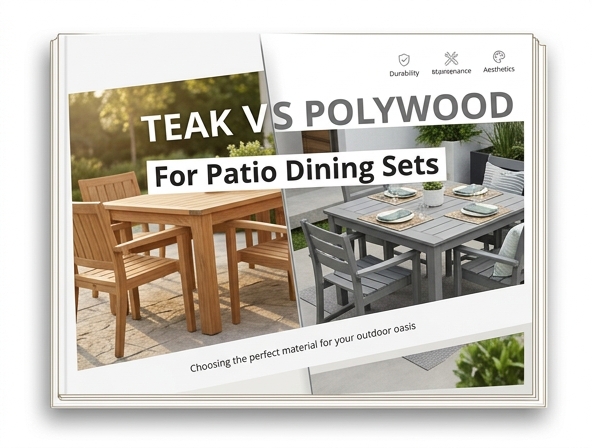
Choosing the perfect outdoor dining set often feels like a stressful compromise between timeless aesthetic appeal and enduring weather resistance. Homeowners frequently struggle to find furniture that won't warp, split, or require constant, exhausting upkeep. Before investing thousands in your outdoor living space, it is crucial to understand how different materials interact with your local climate and lifestyle.
Selecting the right material grants you long-term peace of mind and an elevated hosting experience. However, a proper evaluation requires acknowledging that neither option is universally superior; your ideal match depends entirely on your specific maintenance tolerance and budget. For example, while sustainably sourced Grade-A teak offers organic warmth that gracefully patinas to a silvery-grey, marine-grade HDPE Polywood provides unmatched resistance to moisture, chlorine, and fading.
This comprehensive comparison guide will break down teak and Polywood across key performance metrics-including durability, aesthetic evolution, maintenance requirements, and overall cost-to help you make the smartest investment for your patio.
Introduction: Choosing the Ultimate Patio Dining Set
Creating the perfect outdoor oasis requires selecting a dining set that balances beauty, resilience, and function. For decades, homeowners seeking high-end outdoor furniture have faced a classic dilemma: the timeless, natural luxury of Teak versus the modern, engineered resilience of Polywood. This choice represents a debate between the organic beauty of premium hardwood and the scientific innovation of weather-resistant composites.
While one material relies on centuries of proven maritime performance, the other harnesses advanced recycling technology to offer unmatched durability with zero maintenance. To help you choose the best centerpiece for your backyard gatherings, we will compare these two industry giants across several core criteria, including visual appeal, maintenance needs, environmental impact, cost, and overall comfort.
What is Teak? The Gold Standard of Natural Wood
The Origins of Premium Hardwood
Teak is a tropical hardwood tree species native to south and southeast Asia, known scientifically as Tectona grandis. For centuries, this prized timber has been revered for its extraordinary durability and natural resistance to the elements. Historically, shipbuilders favored teak above all other woods for construction of sailing vessels, decks, and marine equipment because it could withstand the relentless battering of saltwater and ocean storms.
Natural Oils and Unique Characteristics
What makes teak the undisputed gold standard for outdoor furniture is its dense grain structure packed with high concentrations of natural oils and rubber. Unlike other woods that require chemical treatments to stave off decay, teak retains its protective oils even after being harvested and dried. These natural compounds act as a built-in barrier against moisture, insects, rot, and decay, ensuring the wood remains structurally sound for generations. Its signature rich, golden-brown hue and warm aesthetic remain highly sought after by designers worldwide.
What is Polywood? The Modern Engineered Alternative
The Science of HDPE Lumber
Polywood is a brand name that has become synonymous with high-density polyethylene (HDPE) lumber. This engineered material is manufactured using post-consumer recycled plastics, such as milk jugs and detergent bottles, which are cleaned, melted down, and extruded into solid plastic boards. The result is a highly durable substance that possesses the heft and structural capability of traditional wood without any of its organic vulnerabilities.
Engineered for the Elements
By utilizing UV-inhibitors and pigment systems that run throughout the entire profile of the board, this synthetic timber is designed to mimic the texture and appearance of natural wood grain. Because it is non-porous and completely synthetic, it cannot absorb moisture. This technological breakthrough ensures that the material is impervious to rot, splintering, cracking, and insect infestation, offering an exceptionally long lifespan in any climate.
Aesthetics and Design: Classic Warmth vs. Contemporary Variety
The visual difference between teak and Polywood highlights a choice between organic warmth and modern precision. Teak begins its life with a rich, honey-golden hue that radiates classic luxury. Over time, when exposed to sunlight and rain, untreated teak undergoes a natural oxidation process, gradually developing a soft, silver-grey patina. This weathering does not affect the wood's strength, and many homeowners cherish this distinguished, weathered look as a symbol of rustic elegance.
The beauty of natural teak lies in its evolution; its shifting colors tell a story of seasons spent outdoors, whereas Polywood offers a pristine, unchanging aesthetic.
Polywood, by contrast, provides immediate design flexibility with a vast array of vibrant, fade-resistant colors. From crisp whites and deep navy blues to realistic simulated wood tones, these colors are baked into the material, ensuring they never need painting or staining. While Polywood lacks the unique grain imperfections and natural warmth of authentic hardwood, its clean lines and consistent appearance appeal to those who favor modern, contemporary outdoor spaces.
Durability: Weather Resistance and Structural Integrity
| Material | Moisture & Rot Resistance | UV & Fade Resistance | Pest & Insect Protection | Structural Longevity |
|---|---|---|---|---|
| Teak Wood | High (due to natural oils) | Excellent (silver patina forms) | Immune to most pests | Decades to generations |
| Polywood (HDPE) | 100% Waterproof (non-porous) | Excellent (UV-inhibitors added) | 100% Insect proof | Lifetime performance |
Maintenance Demands: Low-Effort vs. High-Care
Polywood's Hassle-Free Maintenance
For those who prefer to spend their weekends relaxing rather than refinishing furniture, Polywood is the clear winner. This material requires virtually zero upkeep. Because it is non-porous, dirt, pollen, and food spills cannot penetrate the surface. Cleaning is as simple as using a soft-bristle brush with warm, soapy water to wash away seasonal grime. You will never need to sand, paint, waterproof, or seal Polywood to preserve its integrity or color.
The Custodial Care of Teak
Teak furniture demands a higher commitment to care if you wish to maintain its original golden-brown luster. While it can be left alone to weather into a silver-grey color naturally, keeping it golden requires regular attention. This regimen involves yearly washings with specialized teak cleaners, followed by the application of teak sealers to block UV rays and preserve the natural oils. Sanding may also be required over time to smooth out raised wood grains caused by moisture cycles, making teak a high-care luxury investment.
Environmental Impact: Sustainably Harvested vs. Recycled Plastics
Evaluating the environmental impact of your patio set depends on whether your ecological goals lean toward carbon sequestration or waste reduction. High-quality teak is sourced from sustainably managed plantations, often certified by bodies like the Forest Stewardship Council (FSC). Trees absorb carbon dioxide as they grow, and when harvested responsibly, teak is a renewable resource that leaves a minimal carbon footprint. However, demand has historically driven illegal logging, making it crucial to verify the sourcing of your wood.
Polywood addresses environmental concerns from a different angle by directly tackling the global plastic waste crisis. It is constructed from recycled high-density polyethylene, converting landfill-bound milk jugs and ocean-bound plastics into durable lumber. Because these plastics are kept out of marine ecosystems and given a second life that can last decades, Polywood represents an exceptional choice for circular economy supporters. It is also entirely recyclable at the end of its useful life.
Cost Analysis: Upfront Investment vs. Long-Term Value
When analyzing the cost of outdoor dining sets, there is a distinct difference between the initial price tag and the lifetime value of the product. Teak sets require a substantial upfront financial investment. This high cost is driven by the slow growth rate of teak trees, the global logistics of harvesting tropical hardwoods, and the intensive craftsmanship required to build fine furniture. It is not uncommon for a high-quality teak dining set to cost several thousand dollars.
Polywood offers a highly competitive, mid-to-high range price point that is significantly lower than premium grade-A teak. Because it is manufactured domestically using recycled materials, the supply chain is highly efficient. Furthermore, Polywood sets usually come backed by a robust, multi-decade or lifetime residential warranty. When you factor in the absence of ongoing costs for sealers, stains, and specialty cleaners, Polywood represents an incredibly cost-effective option over the long term.
Comfort and Usability: Temperature and Weight
Thermal Regulation and Touch
Outdoor dining sets must be comfortable to sit on, even in the height of summer. Wood is a natural insulator, meaning teak does not absorb or retain heat from direct sunlight. Even on a sweltering afternoon, a teak chair or tabletop remains comfortably cool to the touch. Polywood, as a dense plastic composite, tends to absorb more heat when exposed to direct sunlight. Darker colors of Polywood can become quite hot, sometimes requiring cushions to ensure guest comfort during midday gatherings.
Weight, Stability, and Wind Resistance
Both materials offer excellent weight and stability, protecting your set from tipping over in high winds. Teak is a dense, heavy hardwood that anchors itself securely to your patio deck. Polywood is similarly heavy, boasting a dense plastic construction that easily resists strong gusting winds in open backyard environments or coastal patios. Teak offers a slightly softer, more yielding natural feel underhand, while Polywood provides a firm, rigid structure that feels incredibly solid.
The Verdict: Which Dining Set is Right for Your Patio?
Choosing between these two remarkable materials comes down to your personal priorities, design preferences, and lifestyle needs. Both offer exceptional weather resistance and outstanding lifespans, but they cater to very different outdoor living philosophies.
Choose Teak If:
- You desire the unmatched, authentic luxury of real hardwood.
- You appreciate the natural aging process and the classic silver-grey patina.
- You want furniture that remains cool to the touch even under intense midday sun.
- You do not mind performing occasional maintenance to protect your investment.
Choose Polywood If:
- You prioritize a zero-maintenance lifestyle and want to avoid staining or sealing.
- You prefer modern design aesthetics with clean lines and diverse color choices.
- You want to support plastic recycling and the reduction of landfill waste.
- You seek a cost-effective purchase backed by a lifetime warranty.
By weighing these priorities, you can confidently select a patio dining set that will serve as the backdrop for beautiful outdoor meals and memories for decades to come.
Leave a comment