
Every host knows the anxiety of watching a beautifully prepared buffet turn lukewarm and unappealing before guests can even finish their first plate. Before selecting your serving equipment, it is essential to consider the spatial logistics of your dining area and the specific menu you plan to execute. Investing in the right heating solution not only preserves culinary integrity but also elevates your presentation to a professional catering standard, granting you the peace of mind to actually enjoy your event.
However, a crucial stipulation remains: different culinary creations require distinct thermal environments to prevent drying out or overcooking. For example, while a dense, layered lasagna thrives under the gentle, moist steam of a traditional chafing dish, delicate flatbreads and skewered appetizers are better preserved by the direct, dry heat of an electric warming tray.
This article will analyze the practical differences between chafing dishes and warming trays, evaluating their capacity, power sources, and aesthetics to help you select the ideal food warmer for your next gathering.
Introduction: The Art of Keeping Buffet Food Warm
Hosting a buffet-style gathering is an excellent way to feed a crowd, allowing guests to mingle and customize their plates. However, home hosts and professional caterers alike face a major hurdle: maintaining the perfect food temperature. Serving a hot meal that has gone cold not only ruins the flavor and texture of your culinary creations, but it also poses serious food safety risks. To keep your menu items out of the food safety "danger zone," you need reliable equipment designed to hold heat over several hours.
Two primary solutions dominate the world of food presentation: chafing dishes and warming trays. Both appliances are built to maintain warmth, yet they function differently, offer distinct aesthetic styles, and serve different types of events. Understanding the nuances of these two food-warming tools is the key to executing a flawless buffet presentation.
Understanding Chafing Dishes: Traditional Elegance and High Capacity
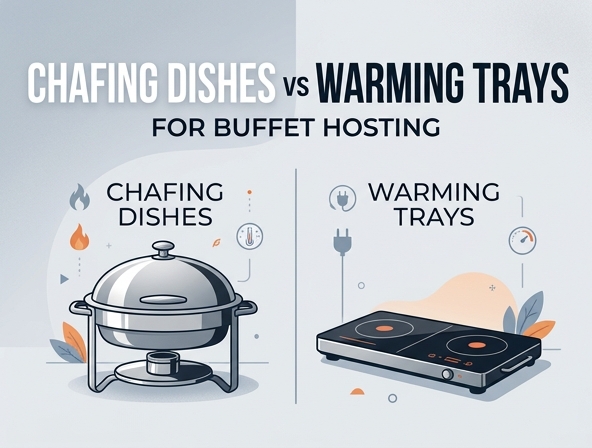
Chafing dishes are the classic, elevated food warmers long favored by professional caterers and banquet halls. The term "chafe" comes from the French word chauffer, meaning to make warm. Rather than cooking food, these multi-layered units are designed specifically to keep already-cooked food hot throughout an event.
The mechanics of a chafing dish rely on indirect, gentle heat distribution to prevent food from burning or drying out. To understand how they operate, it helps to break down their anatomy:
- The Outer Frame: A sturdy metal stand that holds all components above the tabletop.
- The Fuel Canister: A gel or liquid fuel cell sits in a holder beneath the unit, producing a steady open flame.
- The Water Pan: The bottom pan is filled with hot water, which is heated directly by the flame.
- The Food Pan: The top pan sits nestled inside the water pan, relying on the rising steam from the hot water to maintain food temperature.
Because they rely on steam, chafing dishes provide an incredibly gentle, even heat that is ideal for large quantities of food, making them a staple in high-volume catering where presentation and capacity are paramount.
Understanding Warming Trays: Modern Convenience and Flat-Surface Versatility
Warming trays present a modern, electric alternative designed for maximum convenience. Unlike chafing dishes, which utilize deep pans and hot water, warming trays are sleek, flat-surfaced appliances featuring integrated electric heating elements. They operate on a simple plug-and-play basis, heating up quickly once connected to an electrical outlet.
Warming trays are incredibly popular among home entertainers due to their flat-surface design, which allows you to place your own cookware directly on the heating surface. Key features of warming trays include:
- Electric Heating Elements: Built-in coils distribute heat evenly across the flat surface without the need for open flames or water.
- Flat-Surface Versatility: Because there are no recessed pans, you can place glass baking dishes, ceramic platters, or cast-iron skillets directly on the tray.
- Adjustable Dial Control: Most electric models feature simple temperature dials, letting you easily transition from a low simmer to a higher holding heat.
For home cooks who want to serve dishes directly from their favorite casserole pans or decorative serving bowls, warming trays offer unmatched ease and flexibility.
Heat Source and Temperature Control: Flame vs. Electricity
The fundamental difference between these two warmers lies in how they generate and control heat. Chafing dishes rely on a flame-based system powered by canned chafing fuel. This fuel provides a strong, steady output of heat, but it lacks precise control. While you can purchase different types of fuel with varying burn times, you cannot easily turn down the heat once the canister is lit. The water bath acts as a natural buffer, but the temperature remains relatively fixed and high.
In contrast, warming trays utilize electricity to power internal heating coils. This allows for adjustable temperature settings, typically ranging from a gentle warming zone to a hot holding zone. This precise control means you can adjust the heat depending on whether you are keeping delicate chocolate fondue warm or maintaining the temperature of a dense potato gratin. However, warming trays require proximity to an electrical outlet, limiting where you can place your buffet table, whereas chafing dishes can operate anywhere, completely independent of power cords.
Capacity, Portability, and Presentation Aesthetics
When planning your buffet layout, you must consider physical capacity and overall presentation. Chafing dishes are designed for large-volume catering. Their deep, recessed pans can easily hold gallons of food, making them the superior choice for feeding large crowds. From a design standpoint, they offer a traditional, formal aesthetic. The polished stainless steel, copper, or brass finishes of a chafing dish immediately signal a high-end, catered affair, adding a touch of elegance to any buffet line.
Warming trays, while highly functional, generally offer a lower capacity because they rely on a flat surface. You are limited to the size of the pots or platters you can fit on top of the tray. However, what they lack in deep-dish volume, they make up for in portability. Warming trays are lightweight, slim, and incredibly easy to pack away in a kitchen cabinet. Their visual appeal is modern and low-profile, keeping the focus on your beautiful home cookware rather than the warming appliance itself.
When to Choose Chafing Dishes: The Best Scenarios
Chafing dishes shine brightest under specific hosting conditions. If your event falls into any of the following categories, a chafing dish is your best option:
- Formal events like weddings, galas, and anniversary parties where a polished, professional catering look is desired.
- Outdoor gatherings, parks, or backyard barbecues where access to electrical outlets is limited or nonexistent.
- Large-volume menus featuring saucy, moist main courses such as meatballs, stews, baked pastas, or curries that require deep pans.
When to Choose Warming Trays: The Best Scenarios
For many home hosts, a warming tray is the more practical tool. A warming tray is the perfect fit for these scenarios:
- Casual family holiday dinners, like Thanksgiving or Christmas, where kitchen counter space is limited but electrical outlets are nearby.
- Appetizer parties where you want to keep bite-sized finger foods, dips, or sliders warm in their original baking dishes.
- Small-scale home hosting where quick setup, simple cleanup, and easy storage are your top priorities.
Direct Comparison: Pros and Cons at a Glance
| Feature | Chafing Dishes | Warming Trays |
|---|---|---|
| Heat Source | Open flame (chafing fuel) | Electricity (plug-in cord) |
| Temperature Control | Fixed, high heat buffered by water | Adjustable dial settings |
| Capacity | High (deep, dedicated pans) | Moderate (limited by surface area) |
| Aesthetic Style | Formal, elegant, classic catering look | Modern, low-profile, minimalist |
| Setup Time | Moderate (requires water and fuel) | Fast (plug in and heat) |
| Storage & Space | Bulky, requires cupboard or shelf space | Slim, easy to store flat or upright |
Safety, Setup, and Maintenance: What You Need to Know
Operating food warming equipment safely requires adhering to a few best practices. Because chafing dishes use an open flame, they must be monitored closely. Keep paper napkins, decorations, and tablecloths away from the fuel burners. When setting up a chafing dish, always add hot water to the water pan before lighting the fuel, and never let the water pan run dry during service. Cleaning a chafing dish involves washing the food and water pans, wiping down the frame, and safely extinguishing the fuel canisters with their built-in snuffer lids.
Warming trays eliminate the risk of fire but introduce the hazard of tripping over power cords. Ensure cords are taped down or positioned away from guest foot traffic. To set up, simply place the tray on a heat-resistant surface, plug it in, and turn it to your desired temperature setting. Maintenance for warming trays is remarkably simple; once the unit cool downs, simply wipe the flat glass or metal surface with a damp microfiber cloth and a mild detergent.
Conclusion: Choosing the Perfect Food Warmer for Your Next Event
The choice between chafing dishes and warming trays comes down to your personal hosting style, the scale of your guest list, and your physical venue. If you regularly host large, formal gatherings or outdoor parties where electricity is a luxury, investing in a set of elegant chafing dishes will give your buffet a professional edge and keep your food piping hot.
On the other hand, if your entertaining style leans toward cozy holiday dinners, casual game-day parties, and intimate gatherings, the modern convenience, precise heat control, and easy storage of an electric warming tray make it the ultimate household companion. By selecting the right food warmer for your needs, you can sit back, relax, and enjoy your guests, confident that every dish on your buffet will remain warm, delicious, and perfectly safe to eat.
Leave a comment