
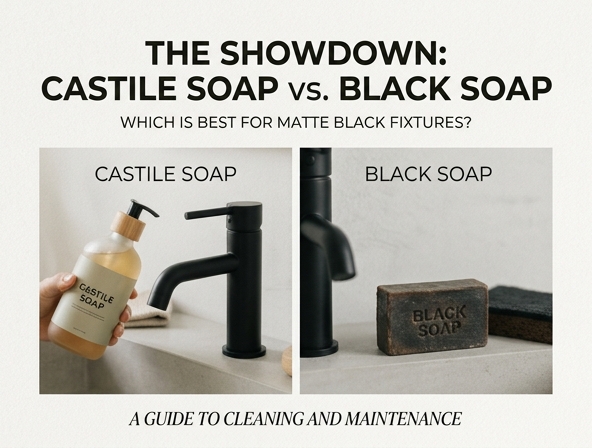
Matte black fixtures bring an undeniable modern elegance to kitchens and bathrooms, but keeping them pristine is notoriously difficult. Homeowners often struggle with unsightly water spots, fingerprint smudges, and the constant fear of stripping the delicate, non-reflective coating with harsh chemicals.
Because these fixtures lack the protective, glossy glare of chrome, traditional acidic or abrasive bathroom cleaners are out of the question-they will permanently etch the surface. This leaves design-conscious homeowners searching for gentle, natural alternatives. Choosing the right organic agent ensures you preserve that luxurious, velvety texture without risking costly damage. However, even eco-friendly options require a nuanced approach; using them incorrectly can leave a dulling film behind.
For instance, liquid Castile soap (such as Dr. Bronner's) and traditional African Black soap (like Dudu-Osun) both offer gentle, saponified oils that lift grime, yet they interact differently with matte surfaces. In this guide, we will compare Castile soap and black soap across cleaning efficacy, residue risk, and ease of use to help you determine the ultimate victor for your matte black hardware.
The Allure and Vulnerability of Matte Black Fixtures
Matte black fixtures have taken center stage in modern home design, offering a sleek, contemporary, and incredibly sophisticated aesthetic to bathrooms and kitchens alike. From minimalist powder rooms to industrial-style kitchens, these dramatic accents provide a bold contrast that instantly elevates any space. However, their stunning appearance comes with a unique set of maintenance challenges. Unlike traditional chrome or brushed nickel, the velvety, non-reflective surface of matte black is highly sensitive. It easily betrays the slightest imperfections, highlighting water spots, soap scum, greasy fingerprints, and micro-scratches that can quickly dull its luxurious appeal.
Why Traditional Cleaners Ruin Matte Black Finishes
The primary mistake homeowners make is treating matte black hardware like standard metal. Traditional bathroom and kitchen spray cleaners often contain harsh chemical agents, bleach, or acidic compounds like vinegar and lemon juice. These aggressive substances are highly detrimental to the specialized powder coating or electroplated finish of matte black fixtures. Instead of polishing the surface, they strip the protective sealant, leaving behind unsightly cloudy patches, uneven fading, or permanent discoloration. Acidic formulas can chemically etch the metal, while abrasive scrub powders and stiff sponges can leave fine scratches that ruin the smooth, flat finish. To keep these fixtures looking pristine, it is crucial to use gentle, pH-neutral alternatives that clean without stripping or scratching the delicate surface.
Exploring Castile Soap: A Gentle Cleaning Powerhouse
Castile soap is widely celebrated as an incredibly versatile, eco-friendly cleaner that is exceptionally gentle on delicate household surfaces. Originating from the Castile region of Spain, this soap was traditionally made from pure olive oil, though modern versions often incorporate other high-quality vegetable oils like coconut, hemp, and jojoba. Because it contains absolutely no synthetic detergents, artificial fragrances, or aggressive foaming agents, it provides a safe yet highly effective wash for sensitive surfaces, including matte black hardware.
- Formulated from 100% plant-based oils that naturally break down dirt and oils.
- Completely free of harsh synthetic chemicals, parabens, and sulfates.
- Highly concentrated, allowing for customizable dilution rates depending on the cleaning job.
- Safe for plumbing systems, septic tanks, and the surrounding environment.
Understanding African Black Soap: Natural and Purifying
African black soap, traditionally known as Anago Soap or Ose Dudu, is a revered natural cleanser originating from West Africa. Handcrafted using ancient recipes, this soap is celebrated for its deep-cleansing properties and entirely natural formulation. Unlike commercial soaps that rely on synthetic chemicals and artificial lye, African black soap uses the ash of harvested local plants to saponify its nourishing base oils, giving it a unique, earthy texture and color.
- Crafted from natural ingredients including plantain skins, cocoa pod ash, palm oil, and unrefined shea butter.
- Naturally rich in vitamins A and E, which provide exceptional conditioning properties.
- Contains natural ash particles that offer extremely mild, physical purifying action.
- Slightly crumbly in its raw form, requiring dissolution in water for smooth liquid application.
Castile vs. Black Soap: The Ultimate Matte Black Showdown
When choosing between Castile soap and African black soap for delicate matte black finishes, it is essential to compare how these natural options behave on sensitive hardware surfaces. Factors such as residue buildup, pH balance, ease of rinsing, and ease of preparation play a massive role in maintaining a streak-free, flawless finish.
| Feature | Castile Soap | African Black Soap |
|---|---|---|
| Residue Potential | Very low when diluted correctly | Moderate due to natural shea butter and plant ash residues |
| pH Level | Mildly alkaline (typically around 8.9 to 9.3) | Moderately alkaline (typically around 9.0 to 10.0) |
| Ease of Rinsing | Rinses away quickly and cleanly with warm water | Requires thorough wiping to avoid filmy buildup |
| Availability | Widely available in liquid and bar forms | Often sold in raw bars, requiring manual liquefying |
How to Clean Matte Black Fixtures with Castile Soap
- Prepare the Solution: Add one tablespoon of liquid Castile soap to two cups of warm water in a spray bottle or a small bowl, stirring gently to mix without creating excess foam.
- Dampen the Cloth: Submerge a clean, soft microfiber cloth into the soapy water mixture and wring it out thoroughly until it is just damp, not soaking wet.
- Wipe the Fixture: Gently wipe down the matte black handles, spout, and base, focusing on areas with fingerprint smudges and water spots without applying heavy pressure.
- Rinse Clean: Use a second microfiber cloth dampened with clean, cool water to wipe away any remaining soap residue.
- Dry Completely: Immediately buff the surface dry with a clean, dry microfiber cloth to prevent any new water spots from forming as the fixture dries.
How to Clean Matte Black Fixtures with Black Soap
- Liquefy the Soap: Shave a small piece of raw African black soap into a heat-safe glass container, pour warm water over it, and let it sit for a few hours until it fully dissolves into a smooth liquid.
- Dilute the Mixture: Mix one teaspoon of your liquefied black soap with two cups of warm water to create a highly diluted, gentle washing solution.
- Apply Softly: Dip a soft microfiber cloth into the diluted mixture, wring out the excess liquid, and gently wipe the matte black surfaces to break down grime.
- Rinse Thoroughly: Wipe the entire fixture down with a clean, damp cloth soaked in plain water, ensuring all trace elements of the natural plant ash are completely removed.
- Buff Dry: Use a fresh, bone-dry microfiber towel to gently buff the surface dry, preventing any streaks, water marks, or soap residue from settling on the matte finish.
Crucial Dos and Don'ts for Matte Black Hardware
Preserving the unique, velvety texture of matte black finishes requires adhering to strict cleaning rules. Using the wrong technique can permanently alter the look of your expensive bathroom or kitchen hardware.
- Do use only ultra-soft microfiber cloths to clean and dry your hardware, as they lift dirt without scratching.
- Do dilute any natural soap heavily to avoid leaving a film on the non-reflective surface.
- Don't use paper towels, scour pads, or steel wool, as these are highly abrasive and will leave microscopic scratches.
- Don't allow soaps or cleaning solutions to sit or dry on the metal finish, which can lead to permanent chemical spotting.
- Don't use any cleaners containing citrus, vinegar, alcohol, or bleach, as they will degrade the protective outer coating.
Pro Tips for Preventing Water Spots and Buildup
Maintaining a gorgeous matte black kitchen or bathroom faucet doesn't have to be a constant struggle. By establishing a quick daily routine and choosing your cleaning ingredients carefully, you can dramatically reduce the need for deep cleaning and prevent stubborn mineral deposits from bonding with your fixtures.
To keep water spots at bay, keep a dry microfiber cloth hanging nearby and make it a habit to wipe down and dry the fixtures after every single use. Additionally, always mix your soap solutions with distilled water rather than mineral-heavy tap water to completely eliminate the risk of hard-water scaling during the cleaning process.
The Verdict: Which Natural Soap Wins for Matte Black?
Both Castile soap and African black soap offer exceptional, plant-based cleaning power that avoids the harsh synthetic chemicals of traditional sprays. However, when it comes to the highly sensitive, non-reflective surfaces of matte black hardware, one option stands out as the clear winner. Castile soap takes the crown due to its consistent liquid consistency, reliable pH level, and lack of particulate ash, making it far easier to rinse away cleanly without leaving streaks or residue behind. To ensure long-term beauty, pair your diluted Castile soap washes with daily towel-drying habits, keeping your matte black fixtures looking as striking and modern as the day they were installed.

Leave a comment