
Few DIY frustrations match the sight of deteriorating bathtub caulk peeling away to reveal unsightly black mold. Homeowners frequently struggle to maintain a clean, watertight seal in a high-moisture environment, often repeating the recaulking process year after year.
To solve this, we must first look at the unique dynamics of the bathroom-specifically, how high humidity and temperature fluctuations force building materials to expand and contract. Choosing the right sealant grants you long-term peace of mind by protecting your home's subflooring from costly structural water damage. However, we must stipulate that even the highest-grade formula will fail prematurely if the joint is not thoroughly cleaned and dried before application.
Whether you are sealing a heavy cast iron tub against glazed ceramic tile or a flexible acrylic surround, material compatibility dictates your success. In this guide, we will directly compare siliconized acrylic and pure silicone, analyzing their durability, flexibility, and ease of application to help you make the optimal choice for your bath.
Introduction to Bathtub Caulking
Protecting your home from water damage starts with the smallest details. In a bathroom, the seal around your bathtub is your primary defense against moisture infiltration. Failing to choose the correct caulk can lead to catastrophic consequences, including hidden rot, structural deterioration, and hazardous black mold growth behind your walls. Making the right choice is crucial because a failed joint can cost thousands of dollars in repairs, transforming a simple weekend DIY project into a construction nightmare.
Understanding Siliconized Acrylic Caulk
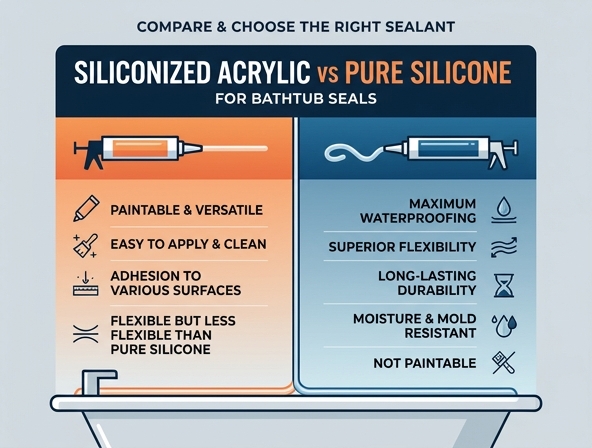
Siliconized acrylic caulk, often referred to as "tub and tile" caulk, is a water-based sealant enhanced with a small amount of silicone. This formulation combines the ease of use associated with traditional acrylic latex with the improved moisture resistance of silicone. It is highly favored by DIY enthusiasts due to its straightforward application process and forgiving nature during tooling.
- Composition: Water-based acrylic resin blended with silicone polymers for added flexibility.
- Ease of Application: Smooth consistency that is exceptionally easy to extrude, tool, and smooth out with a finger.
- Paintability: Readily accepts latex and oil-based paints, allowing it to blend seamlessly with surrounding walls.
- Common Uses: Sealing baseboards, crown molding, and joints around tubs or sinks where minor movement is expected.
Understanding Pure Silicone Caulk
Pure silicone caulk is a premium, non-organic sealant formulated entirely from silicone polymer. Unlike water-based options, it cures through a chemical reaction with moisture in the air. This chemical makeup makes it highly rubbery and completely impervious to water, making it the industry standard for demanding wet environments.
- Composition: 100% silicone polymer, containing zero acrylic or water fillers.
- Waterproofing: Superior moisture barrier that does not degrade, wash away, or break down when submerged.
- Flexibility: Exceptional elasticity that allows the joint to stretch and compress up to 25% or more without tearing.
- Typical Applications: High-moisture areas including bathtub rims, shower enclosures, sinks, and plumbing penetrations.
Durability and Lifespan Comparison
When analyzing the long-term performance of these two sealants in a damp bathroom environment, pure silicone consistently outperforms its siliconized acrylic counterpart. Over time, the wet conditions of a shower will cause acrylic-based products to degrade, shrink, and peel away from the tub surface, whereas silicone maintains its tight bond for decades.
| Feature | Siliconized Acrylic | Pure Silicone |
|---|---|---|
| Average Lifespan | 3 to 5 years | 10 to 20+ years |
| Shrinkage Rate | Moderate to High | Negligible |
| Water Exposure Resistance | Fair (degrades over time) | Excellent (completely waterproof) |
Application and Cleanup: DIY-Friendliness Compared
For many homeowners, the ease of applying the sealant is a major deciding factor. Siliconized acrylic is exceptionally user-friendly. Because it is water-soluble when wet, you can easily clean up mistakes, excess squeeze-out, and messy hands using nothing more than a damp cloth. It tools beautifully to a clean finish, making it perfect for beginners who want a professional look without the hassle.
In contrast, pure silicone is notoriously difficult to handle. It has a sticky, stringy consistency that resists easy smoothing and adheres stubbornly to fingers and surrounding tile. Since it is entirely hydrophobic, water will not clean it up. Anyone working with pure silicone must use mineral spirits, isopropyl alcohol, or specialized solvents to clean up mistakes and wipe down tools before the product cures.
Flexibility and Adhesion Under Joint Movement
Bathtubs are subject to substantial structural stress. When a tub fills with hundreds of pounds of water and a person steps inside, the entire fixture shifts downward, stretching the joint seal. When the tub drains, the joint compresses. The sealant must be capable of enduring this constant cycle of expansion and contraction without losing its grip on either the tub or the tile wall.
Pure silicone provides unmatched elastic memory, stretching and returning to its original shape without cracking or peeling, whereas siliconized acrylic lacks the high-level elongation required for joints subject to heavy load shifting.
Mold and Mildew Resistance in Wet Environments
The warm, humid atmosphere of a bathroom is the perfect breeding ground for mold and mildew. Siliconized acrylic contains organic compounds that can serve as a food source for fungal spores once the protective additives wash away. Over time, moisture penetrates the acrylic structure, leading to ugly black spots that cannot be scrubbed away.
Pure silicone is synthetic and non-organic, meaning it does not support mold growth on its own. Furthermore, premium silicone formulas are packed with powerful anti-microbial additives that actively repel fungal spores. This chemical defense ensures the seal remains bright and sanitary for years, making it the superior option for healthy indoor environments.
Paintability: Matching Your Bathroom Aesthetics
If your bathroom design features custom paint colors or unique wall finishes that extend down to the tub line, paintability is a key consideration. Siliconized acrylic caulk accepts paint beautifully. Once fully cured, you can paint directly over the bead with latex or oil-based paints to match your trim or drywall perfectly.
Pure silicone is completely unpaintable. Because of its slick, non-porous surface, paint will bead up and fail to adhere to silicone caulk. If you attempt to paint over silicone, the paint will quickly flake and peel off, leaving a messy, unappealing appearance. Therefore, if you choose silicone, you must rely on the manufacturer's pre-tinted options, typically restricted to clear, white, almond, or grey.
Cost vs. Long-Term Value
At the checkout counter, siliconized acrylic caulk is the more budget-friendly option, often costing half the price of a tube of pure silicone. This low entry price makes it attractive for quick touch-ups or tight-budget renovations where immediate expenses must be kept to a minimum.
However, when looking at the overall lifecycle of your bathroom, pure silicone offers far superior value. While you pay more upfront, silicone lasts up to four times longer than acrylic. Choosing the cheaper acrylic option means you will spend more money on replacement tubes, tools, and labor over the years, not to mention risking expensive water damage repairs if the acrylic seal fails prematurely.
The Final Verdict: Which Caulk Should You Choose?
Selecting the right caulk comes down to balancing your skill level against the specific performance demands of your tub environment.
When to Choose Siliconized Acrylic
This sealant is best for dry-zone accents, painted joints, or DIYers who want an easy-to-apply product that cleans up with water. It is a solid choice if you plan to paint the sealed line or if you are working on a low-moisture guest bath with light usage.
When to Choose Pure Silicone
This is the benchmark standard for master bathrooms, daily-use showers, and joints directly exposed to standing water. If you want a highly durable, mold-resistant, and completely waterproof barrier that lasts for decades, pure silicone is worth the extra cost and application effort.
Leave a comment