
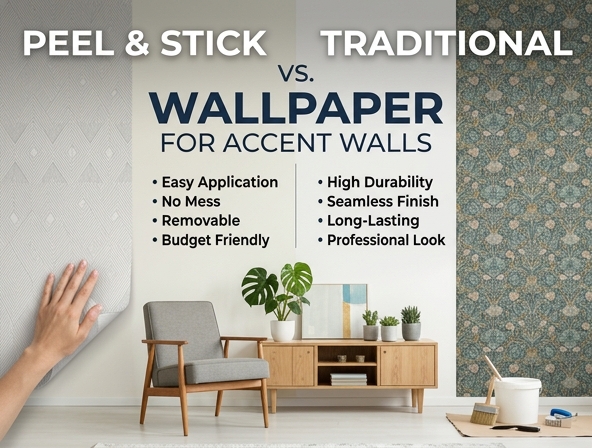
Staring at a blank, uninspired wall often sparks the desire for a dramatic home transformation, yet the fear of sticky messes, crooked alignments, and permanent damage frequently stalls DIY projects before they even begin. Before selecting your dream pattern, you must first navigate the technical realities of your installation environment.
Choosing the correct medium grants you the confidence of a flawless finish and long-term durability. However, an essential stipulation remains: while self-adhesive vinyl offers unmatched flexibility for temporary rentals, traditional paste-the-wall papers are still required for high-humidity areas, such as master bathrooms, or over textured plaster walls.
To ensure your project's success, this guide compares peel-and-stick versus traditional wallpaper across critical categories, analyzing prep work, application difficulty, longevity, and removal, helping you select the ideal product for your skill level and space.
Introduction: The Great Wallpaper Debate for DIY Accent Walls
Creating a DIY accent wall has become one of the most popular ways to inject personality, color, and texture into a home. Whether you want to revitalize a sterile home office or add a touch of drama to your bedroom, an accent wall serves as the perfect visual anchor. However, before you fall in love with a specific pattern, you must face a crucial design dilemma: choosing between modern peel-and-stick wallpaper and traditional pasted wallpaper.
This decision is not merely about aesthetics; it directly influences your project timeline, overall budget, and the durability of the final look. Understanding the core differences between these two options ensures that your weekend home improvement project results in a stunning masterpiece rather than a frustrating DIY struggle.
Understanding Peel and Stick Wallpaper: The Modern Quick-Fix
Peel-and-stick wallpaper is a self-adhesive wallcovering designed for quick and easy application. Often referred to as self-adhesive vinyl, this modern product features a sticky backing protected by a paper liner, much like a giant, high-quality sticker. Made primarily from durable vinyl materials, it resists moisture and can be wiped clean with ease, making it a highly practical option for busy households.
The primary benefits of self-adhesive wallpaper center on its user-friendly nature, which has revolutionized the home decor industry:
- Repositionability: If you misalign a strip during installation, you can simply peel it off and adjust it without damaging the adhesive or your wall.
- No Messy Adhesives: There is no need for external pastes, rollers, or mixing trays, which drastically reduces clean-up time.
- Renter-Friendly: It can be removed cleanly when it is time to move out, making it the perfect temporary option for apartments and rental homes.
Exploring Traditional Wallpaper: The Time-Tested Classic
Traditional pasted wallpaper is the gold standard of interior design, celebrated for its exquisite finish and classic elegance. This product generally comes in two main formats: pre-pasted wallpaper, which requires wetting a pre-applied dry adhesive layer, and paste-the-wall wallpaper, where you apply a specialized wet paste directly to the drywall before hanging the dry sheets. Made from high-quality paper or sturdy non-woven fabric fibers, traditional wallcoverings offer a richness that synthetic alternatives struggles to replicate.
The beauty of traditional wallpaper lies in its premium, seamless finish. The fibers expand and contract naturally, allowing the seams to interlock perfectly and virtually disappear once dry. For those seeking a permanent, flawless upgrade that feels luxurious to the touch, this time-tested method remains unmatched.
Durability and Longevity: Which Wallcovering Lasts Longer?
When investing time and money into a DIY accent wall, you want to ensure the results stand the test of time. The lifespan of your chosen wallcovering depends greatly on its material composition and how well it interacts with your home's environmental conditions.
The Environmental Impact on Peel-and-Stick Adhesion
Peel-and-stick options are susceptible to temperature fluctuations and humidity. In areas like bathrooms or kitchens, moisture can seep behind the edges, causing the self-adhesive backing to lose its grip and curl away from the wall. Direct, intense sunlight can also break down the synthetic adhesive over time, potentially leading to premature peeling.
The Permanent Bond of Traditional Paste
Traditional wallpaper paste creates a highly durable, chemical bond with the wall surface. This permanent adhesion is highly resistant to heat and humidity, ensuring that the wallpaper remains firmly in place for decades without lifting at the seams. For high-traffic areas and humid environments, traditional materials offer superior long-term reliability.
Installation Battle: DIY Simplicity vs. Professional Precision
The installation process highlights the starkest contrast between these two popular wallcoverings. While one values instant gratification, the other demands patience and meticulous attention to detail.
Installing peel-and-stick wallpaper is highly straightforward and perfect for beginners:
- Clean the wall surface and let it dry completely.
- Measure the height of the wall and cut your first wallpaper panel with a few extra inches for trimming.
- Peel back a few inches of the backing paper and align the top edge with your plumb line.
- Slowly smooth the panel downward using a squeegee, peeling the backing away as you go.
- Trim the excess material at the ceiling and baseboards using a sharp utility knife.
In contrast, traditional wallpaper installation is a complex craft that often requires two people or professional training:
- Prepare the wall by applying an acrylic wallpaper primer.
- Measure and cut the panels, paying close attention to the pattern match repeat.
- Apply paste evenly to the back of the paper or directly to the wall for non-woven options.
- Fold the pasted paper onto itself-a process called booking-and allow it to rest and activate for several minutes.
- Hang the heavy, wet paper, carefully sliding it into position to align the delicate seams.
- Squeegee out air bubbles and excess paste, then carefully trim the damp paper without tearing it.
Removability and Rental-Friendliness: Damage-Free Solutions
The ease of taking down wallpaper is just as important as putting it up, especially if you live in a rental property or like to change your interior decor frequently.
Peel-and-stick wallpaper is designed with easy removal in mind. When you are ready for a change, you simply grab a corner and pull the sheet down. It releases from the drywall effortlessly, leaving behind zero adhesive residue and keeping your paint job fully intact.
"Removing traditional pasted wallpaper, however, is a labor-intensive chore that typically requires specialized tools, chemical wallpaper stripping solutions, and a steam machine to soften the cured paste before you can painstakingly scrape it off the wall."
If you fail to prep the wall correctly before installing traditional wallpaper, the removal process can easily gouge the drywall, requiring extensive patching and sanding afterward.
Cost Analysis: Upfront Pricing vs. Long-Term Value
Understanding the full financial picture of your wallpaper project requires looking beyond the price tag on a single roll. You must factor in the tools, preparation materials, and potential labor costs required to achieve a professional result.
The Direct Comparison of Roll Prices
On average, high-quality peel-and-stick wallpaper carries a higher upfront price per square foot than standard traditional wallpaper. Because the manufacturing process requires applying a specialized adhesive backing to vinyl, the raw material cost is naturally higher.
Hidden Expenses and Professional Costs
Traditional wallpaper might look cheaper per roll, but it requires several essential accessories to install, including wallpaper paste, pasting brushes, a smoothing tool, primer, and a pasting table. Furthermore, because of the high difficulty of hanging traditional paper, many homeowners choose to hire professional installers, which adds significant labor fees to the budget. Peel-and-stick, on the other hand, requires nothing more than a utility knife and a plastic squeegee, making it a highly cost-effective true DIY endeavor.
Aesthetics and Texture: Which Offers the Premium Look?
The visual impact of your accent wall heavily depends on the material you choose. Traditional wallpaper is renowned for its exquisite aesthetic appeal and tactile variety. Because it is printed on thick paper or non-woven fabric, manufacturers can create deep embossed patterns, metallic finishes, and rich fabric textures like linen, grasscloth, or velvet. These materials absorb light beautifully, providing a deep, sophisticated look that adds instant architectural character to any room.
Peel-and-stick wallpaper, by contrast, is usually printed on thin vinyl. While high-definition printing has drastically improved the realism of these patterns, the flat, slightly reflective nature of vinyl can sometimes look synthetic under direct lighting. Additionally, vinyl seams can shrink slightly over time, exposing tiny gaps between panels, whereas traditional paper seams lay flat and flush for a perfectly seamless appearance.
Decision Guide: Which Wallpaper is Right for Your Space?
To help you confidently choose the perfect option for your upcoming project, evaluate your specific home environment and personal goals against the criteria below:
- Choose Peel-and-Stick Wallpaper if: You live in a rental property, desire a quick weekend project, have a limited tool budget, or enjoy switching up your interior design style every couple of years.
- Choose Traditional Wallpaper if: You own your home, want a permanent high-end feature wall, plan to wallpaper a high-humidity bathroom, or desire rich textures like grasscloth or raised embossing.
- Consider Your DIY Confidence: Complete beginners should start with self-adhesive options to build confidence, while experienced DIY enthusiasts can tackle the precise pasting and matching required for traditional products.
Final Verdict: Transform Your Space with Confidence
Selecting the right wallcovering is the foundation of a successful DIY accent wall. By balancing your budget, rental status, and aesthetic goals, you can make an informed choice that ensures your home improvement project is both enjoyable and rewarding.
Now that you understand the strengths and challenges of both peel-and-stick and traditional wallpaper, it is time to take action. Explore different patterns, order samples to test in your home's natural light, and start planning your stunning room transformation today.
Leave a comment