
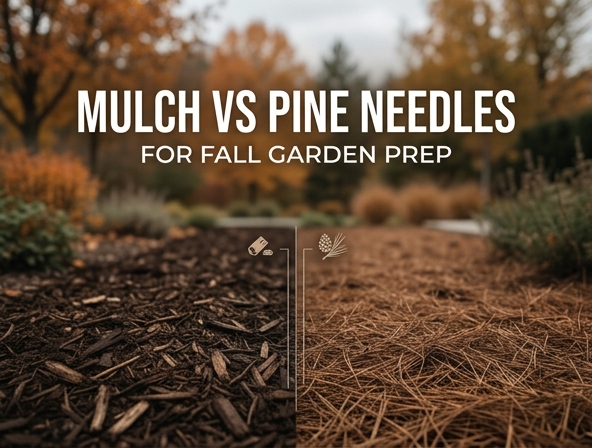
As autumn approaches, gardeners face the annual dilemma of preparing their beds for the harsh winter ahead, often agonizing over whether wood mulch or pine needles will provide the best protection. Before dumping bags of cover onto your soil, it is crucial to understand that fall preparation is about more than just tidy aesthetics; it establishes the biological foundation for your yard's winter survival.
Selecting the right organic cover now guarantees a thriving, low-maintenance landscape and robust root systems come spring. However, the ideal choice depends on a key stipulation: your garden's specific soil pH and plant types. For instance, acid-loving blueberries and azaleas flourish under the natural acidity of pine straw, whereas heavy vegetable beds benefit far more from the moisture-locking density of hardwood mulch.
In this guide, we will compare both materials across cost, durability, and soil impact to help you make the optimal choice for your autumn prep.
The Fall Gardening Dilemma: Mulch vs. Pine Needles
As autumn winds usher in cooler temperatures, gardeners must turn their attention to preparing their soil for the harsh winter months ahead. Protecting delicate root systems from freezing conditions requires a reliable ground cover that can insulate, retain moisture, and suppress cool-season weeds. Among the most popular choices for this seasonal task are traditional wood mulch and pine needles, also known as pine straw. Choosing the right material can significantly influence the health and survival of your perennials, shrubs, and trees when the deep winter freeze sets in.
Wood Mulch: The Heavyweight Champion of Soil Protection
Traditional wood mulch remains a favorite in home landscaping for several compelling reasons. Its primary strength lies in its dense physical barrier, which provides exceptional weight and stability against harsh autumn winds. As wood chips slowly decompose over time, they contribute valuable rich organic matter to the underlying soil, gradually improving soil structure and nutrient levels for future growing seasons. Additionally, wood mulch offers incredible aesthetic variety, available in various colors and textures-such as double-shredded hardwood, cedar, or dyed chips-allowing gardeners to customize their landscape's visual appeal.
Pine Needles: The Lightweight, Breathable Alternative
In contrast to heavy wood covers, pine needles offer an incredibly lightweight and highly functional alternative. This airy structure provides excellent breathability, preventing the soil from becoming overly compacted or waterlogged during heavy late-season rains. One of the most significant physical advantages of pine straw is its interlocking structure. The individual needles knit together naturally, creating a cohesive blanket that effectively resists sliding or washing away on slopes and hilly terrain where heavier wood chunks might fail to grip.
Moisture Retention in Freezing Temperatures
Keeping roots hydrated is a critical yet often overlooked aspect of winter garden care, as cold winds can dry out exposed soil rapidly. Wood mulch acts like a dense sponge, excelling at locking in deep soil moisture and slowly releasing it, making it highly effective during prolonged dry spells. Pine needles, while also offering solid moisture protection, allow more air and light rain to penetrate the surface. While both materials successfully prevent evaporation, wood mulch is slightly more effective at holding deep-seated moisture during severe, dry winter freezes.
Insulation: Shielding Roots from Frost Heaving
Frost heaving poses a significant threat to shallow-rooted perennials during late autumn and early winter. This destructive phenomenon occurs when the rapid cycle of freezing and thawing soil expands and contracts, physically pushing plant roots up and out of the ground where they freeze and die. A thick layer of wood mulch provides a dense insulating blanket that moderates soil temperature fluctuations, keeping the ground consistently cold rather than letting it cycle between frozen and thawed states. Pine needles insulate through a different mechanism, trapping tiny pockets of air within their interlocking layers to create a natural, lightweight thermos-like barrier that protects sensitive root crowns.
The pH Myth: Do Pine Needles Acidify Your Soil?
One of the most persistent myths in gardening is that using pine needles as mulch will drastically lower your soil's pH and harm non-acid-loving plants. While fresh green pine needles are slightly acidic when they fall from the tree, the neutralizing process of decomposition mitigates this effect. As the needles brown and break down on top of the soil, the microbes and chemical changes render them virtually neutral. They will not alter the soil chemistry of your garden beds to any measurable degree.
"According to horticultural research, pine needles do not significantly lower soil pH when used as mulch, making them perfectly safe for a wide variety of perennials, shrubs, and vegetables."
Longevity, Decomposition, and Budget
When planning a garden budget, looking at the lifespan and replacement frequency of your ground cover is vital. Wood mulch is generally more expensive upfront but has a much slower decomposition rate, often lasting two to three years before requiring a complete refresh. Pine needles are highly cost-effective, particularly in regions with abundant pine trees, but they break down faster and typically need a fresh top layer added annually to maintain their protective qualities.
- Wood Mulch: High initial cost, slow decomposition rate, lasts 2-3 years, provides long-term organic matter.
- Pine Needles: Low upfront cost, fast decomposition rate, requires annual replenishment, highly economical for large areas.
Weed Suppression and Pest Deterrence
Controlling cool-season weeds and managing winter pests are two critical tasks that your ground cover should assist with. Wood mulch excels at suppressing weeds by physically blocking sunlight from reaching weed seeds and creating a heavy physical barrier that prevents germination. However, some dense, damp wood mulches can occasionally harbor pests like termites, slugs, or earwigs if applied too close to home foundations. Pine needles create an interlocking matrix that also shades out weeds, though persistent weeds can sometimes slip through the lighter gaps. On the plus side, the sharp, dry texture of pine needles is naturally unappealing to many common garden pests, including slugs and rodents.
Ease of Application and Visual Appeal
Spreading ground cover requires varying levels of physical effort depending on the material chosen. Wood mulch is heavy and dense, requiring wheelbarrows, shovels, and significant manual labor to distribute evenly across garden beds. From an aesthetic standpoint, its tidy, uniform appearance is ideal for structured, formal landscapes and manicured garden paths. In contrast, pine needles are incredibly light, sold in easy-to-carry bales, and can be scattered quickly by hand with minimal physical strain. This lightweight ground cover delivers a rustic, natural aesthetic that beautifully complements woodland gardens, informal beds, and native plant groupings.
The Verdict: Choosing the Right Cover for Your Garden
Selecting the perfect ground cover comes down to understanding the unique needs of your property. If your garden features formal beds, flat terrain, and plants that crave consistent moisture, dense wood mulch offers the stability and retention you need. Conversely, if you are managing sloped hillsides, prefer a natural forest aesthetic, or need a lightweight, breathable material that is easy to apply, pine needles are an outstanding choice. Assessing your winter weather patterns, plant varieties, and personal budget will guide you to the ideal protective blanket for a healthy, thriving spring garden.
Leave a comment