
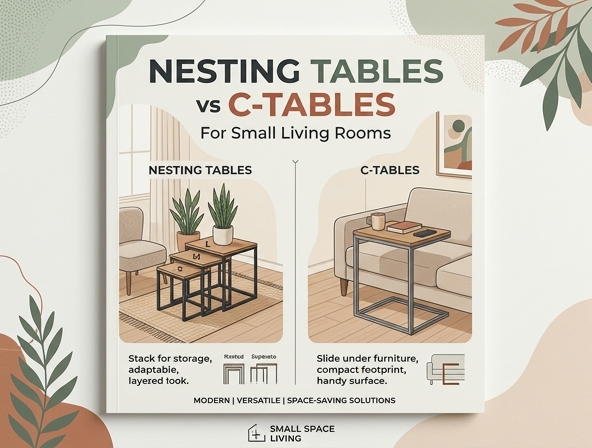
Designing a small living room often feels like a constant compromise between comfort and physical movement. Traditional, bulky coffee tables frequently dominate limited floor plans, restricting traffic flow and making the entire room feel cramped and static.
Fortunately, selecting the right compact furniture can instantly reclaim valuable square footage while elevating your overall design aesthetic. However, finding the perfect fit requires a nuanced approach; the ideal solution depends heavily on your daily habits and layout constraints. For instance, while a sleek C-table excels at sliding over a sofa arm to support a laptop, nesting tables offer modular, tiered surfaces that can be easily dispersed when hosting guests.
In this guide, we will compare nesting tables and C-tables across key performance metrics-including spatial efficiency, functional versatility, and design integration-to help you determine the ultimate space-saving asset for your home.
Introduction: The Small Living Room Dilemma
Furnishing a small living room can feel like an endless puzzle where every square inch counts. Trying to balance comfort, style, and utility without creating a cluttered mess often leaves homeowners feeling frustrated. When traditional bulky coffee tables swallow up precious floor space, alternative options become essential. Enter nesting tables and C-tables-the top two space-saving furniture solutions designed to maximize function while maintaining a clean, open layout.
Understanding Nesting Tables: Expandable Elegance
What Are Nesting Tables?
Nesting tables are a set of graduated tables, typically in groups of two or three, that fit seamlessly on top of or beneath one another. Their clever stackable engineering ensures they function as a single unit when compressed, but can quickly transform into multiple surfaces when spread across a room.
- They nest together in a tight, vertical stack, requiring only the footprint of the largest table when not in use.
- On demand, they can be pulled out to accommodate guests, hold drinks, or display decor.
- You can cascade them slightly for a layered look or scatter them in different parts of the room.
Understanding C-Tables: The Ultimate Over-the-Couch Companion
What Are C-Tables?
A C-table features a distinctive cantilevered frame that resembles the letter "C" from the side. This specialized design allows the base of the table to slide easily under the bottom of a sofa or armchair, positioning the tabletop directly over your lap or armrest.
- The tabletop hovers over seating, eliminating the need for side clearance.
- Keeps essential items like remote controls, coffee mugs, or smartphones directly in front of you.
- Slips under low-clearance furniture with ease, reclaiming wasted floor area.
Space-Saving Showdown: Footprint vs. Flexibility
When comparing physical footprints, the decision rests on how you prefer to utilize your living room layout. Nesting tables conserve floor space by consolidating vertically, meaning they require a dedicated, static spot on the floor when stored. In contrast, C-tables bypass the need for open floor space altogether by integrating with existing seating structures.
Choosing between these two depends on whether your layout benefits more from a centralized, expandable surface or a floating, low-profile utility piece that hovers right over your cushions.
Nesting tables give you the freedom of modular expansion, while C-tables excel at adapting to tight corners and narrow pathways where no standard table could ever fit.
Versatility in Action: Multi-Functional Living
Modular Party Hosts vs. Dedicated Workstations
Both table styles excel at multi-tasking, but they serve different daily habits and lifestyle needs. Depending on whether you host social gatherings or work from home, one style will naturally fit your routine better.
- Pull the nested tables apart to create separate drink-holding stations for guests seated around the room.
- Slide the C-frame over your lap to instantly create an ergonomic, comfortable laptop desk.
- C-tables act as the ultimate sturdy, personal TV tray for casual weeknight dinners.
- When nested halfway, stackable tables create beautiful tiered plant stands or decorative vignette bases.
Design and Aesthetics: Matching Your Decor Style
Visual weight plays a critical role in how spacious a small living room feels. Selecting the right materials ensures your furniture enhances the room rather than cramping it. Nesting tables with glass tops or open metal frames keep sightlines clear, making the room feel larger than it actually is. On the other hand, solid wood nesting tables bring warmth and traditional elegance, though they possess more physical visual weight.
Similarly, C-tables utilizing slender steel frames paired with thin stone or wood tops offer a minimalist aesthetic. This design easily blends into the background of modern and industrial spaces alike. Choosing materials that allow light to pass through or reflect off surfaces will keep your small room feeling breezy and bright.
Strategic Placement: Layout Ideas for Tight Spaces
Optimizing Traffic Flow and Usability
In narrow living rooms, placing furniture along pathways can block traffic. Nesting tables work exceptionally well when placed next to an armchair or in a corner, acting as a compact end table that can be pulled forward when guests arrive. This keeps central pathways completely clear during daily routines.
For square or extremely tight rooms where there is no space on either side of the couch, C-tables are the ideal choice. Position them over the middle of the couch or over the armrest. This eliminates the need for side tables, freeing up corner space for floor lamps, plants, or extra walking room.
Material Matters: Durability and Stability
Stability varies significantly between these two designs due to their structural engineering. Nesting tables are built with four legs or a solid cylindrical base, providing superior stability and a high weight-bearing capacity. They are highly durable, making them a safe choice for households with pets or active young children who might bump into furniture.
Because C-tables feature a cantilevered design supported by a single-sided frame, they can suffer from a slight bounce or wobble if overloaded. It is crucial to choose heavy-gauge steel bases and avoid putting excessive weight on the overhanging edge. When selected carefully, high-quality C-tables offer perfectly reliable stability for laptops, books, and dining plates.
Quick Comparison: Nesting Tables vs. C-Tables
| Feature | Nesting Tables | C-Tables |
|---|---|---|
| Primary Function | Modular hosting and expandable surface area | Close-reach utility and lap desk integration |
| Max Surface Area | High (spreads into 2 or 3 distinct tables) | Low (designed for single-user tasks) |
| Portability | Moderate (can be scattered across a room) | High (lightweight and easy to slide around) |
| Floor Footprint | Requires a dedicated static floor spot | Zero footprint (slides under existing furniture) |
The Verdict: Which is Best for Your Small Living Room?
Choosing the ideal piece comes down to identifying your daily habits and layout limitations. If you frequently host friends and family, value design flexibility, or need a heavy-duty option that can support heavy decorative objects, nesting tables are your perfect match. Their expandable design provides a beautiful, layered look that adapts to dynamic social situations.
If you live alone or as a couple, work frequently from the sofa, or have a tiny space with zero room for side tables, the C-table is the superior companion. It maximizes comfort and keeps your essentials within arm's reach while preserving precious floor space. Assess your space, evaluate your routine, and pick the table style that elevates both your interior design and your daily comfort.
Leave a comment